







Mega Doctor News

By Selene Rodriguez
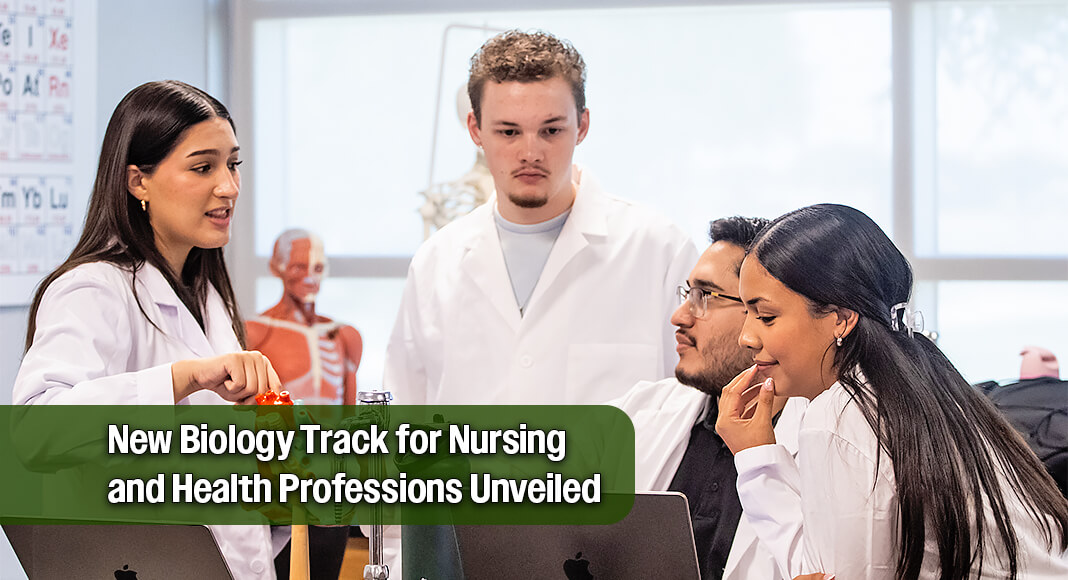
South Texas College will introduce a new Associate Degree in Biology track, designed specifically to prepare students to apply for admission to competitive health care programs at STC such as Associate Degree Nursing, Diagnostic Medical Sonography and the upcoming Dental Hygiene program.
The Biology to Nursing and Health Professions track, with most courses offered online, builds a strong foundation in Biology, Chemistry and Microbiology, and includes all required prerequisite coursework, allowing students to apply to the competitive programs fully prepared without needing additional classes.

“Our program has always done an exceptional job preparing students for medical careers, whether they continue here at STC or transfer to a four-year university,” said STC Biology Department Chair Maria Cervantes, Ph.D. “By intentionally aligning our coursework with STC’s health science professions programs, we are offering students a clearer, more accessible pathway that guides them directly toward those careers.”
The track is expected to be especially beneficial for dual credit students, who already have the opportunity to earn an associate degree before graduating from high school and will now benefit from a more structured pathway that allows them to apply directly to health care programs without additional coursework. The design also simplifies academic planning and advising for students, counselors and advisors.
“This is an exciting opportunity for our students and a strong reflection of our commitment to meeting the needs of our school district partners,” said Rebecca De Leon, Ed.D., associate vice president of Dual Credit Programs and School District Partnerships. “By expanding access to critical workforce pathways, we are helping students move closer to their academic and career goals.”
The current curriculum has long provided students with a strong, flexible foundation for a wide range of career options. Building on that strength, the Biology to Nursing and Health Professions track offers additional clarity by clearly mapping required coursework for students who already know they want to pursue health careers.
“This pathway is exceptional because of its solid science foundation,” said Anahid Petrosian, Ph.D., vice president and provost of Academic Affairs and Economic Development. “By completing key courses such as Biology I and II, Chemistry and Microbiology early in their academic journey, students gain the preparation competitive programs are seeking.”
In addition to the nursing program, students will be prepared to apply for other high-demand health care programs at STC such as Diagnostic Medical Sonography, Radiologic Technology, Physical Therapist Assistant, Occupational Therapy Assistant and Respiratory Therapy, as well as the upcoming Surgical Technology program.
The two-year curriculum also prepares students for transfer pathways such as pre-medicine, pre-dentistry, pre-pharmacy, pre-physical therapy, pre-occupational therapy and pre-physician assistant, while positioning them to pursue bachelor’s degrees in Biomedical Sciences and other biology-related fields such as Microbiology and Genetics.
As an added benefit, students who are set on becoming registered nurses will complete much of the coursework required for a Bachelor of Science in Nursing at STC before earning their associate degree.
“This track allows students to complete all of their prerequisites while earning an associate degree at the same time,” said Margo Vargas-Ayala, DNP, RN, STC interim dean of Health Science Professions. “That’s a significant advantage. Even if a student does not gain immediate admission into one of our programs, this track ensures they still earn an associate degree and maintain momentum.”
The Biology Nursing and Health Professions track will be available beginning spring 2026, and students are encouraged to work with academic advisors to determine how the pathway aligns with their career goals.
“Whether a student’s goal is nursing, pre-med or emergency medical services, this track provides a meaningful head start toward becoming a health care professional,” Petrosian said. “We are proud to support students as they take these first steps toward careers that will transform lives and strengthen the Rio Grande Valley.”
For more information on STC’s Biology program, visit southtexascollege.edu/academics/biology/


