loader image
Tuesday, February 24, 2026
73 F
McAllen
- Advertisement -

Senior VP of Education & Career Development at DHR Health, Addresses STC Nurse Graduates

Translate to Spanish or other 102 languages!

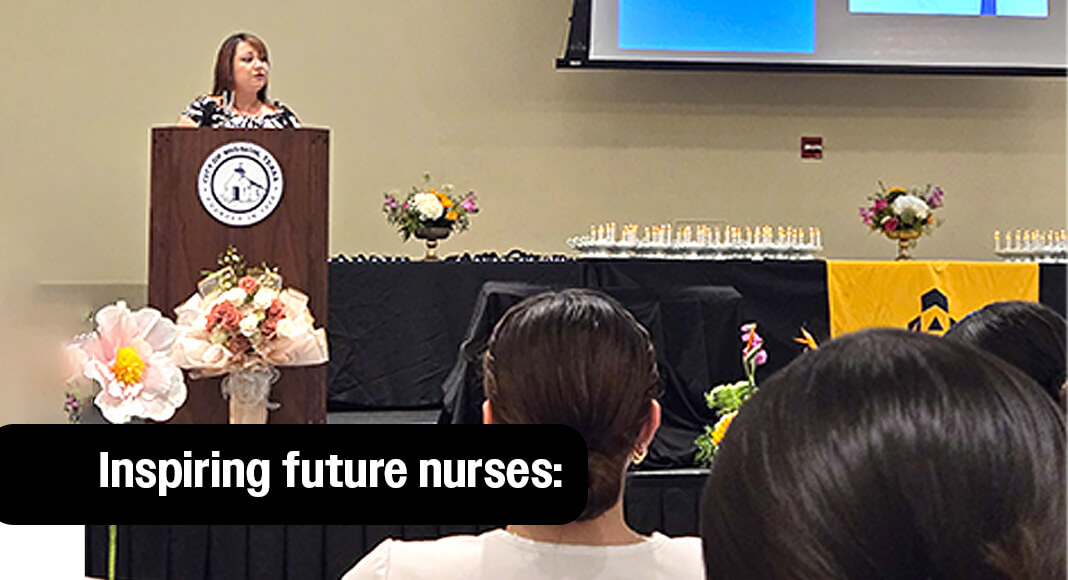
Nori Zapata Speaking to STC Nurse Graduates. Courtesy image
- Advertisement -

At STC’s nursing pinning ceremony, keynote speaker Nori Zapata, Senior Vice President of Education and Career Development at DHR Health, shared her personal journey from student to healthcare leader. She reflected on her challenges in nursing school, the support she received from Dr. Christie Candelaria, and her experience working in various nursing roles. Zapata also introduced the new Nurse Apprenticeship Program, a partnership between STC and DHR Health that allows students to earn wages while completing clinical hours and ensures job placement after graduation. She closed by emphasizing that nursing is not just a profession, but a commitment to service, resilience, and compassionate care.

- Advertisement -


- Advertisement -

- Advertisement -

More Articles

How UTIs Trigger Delirium and Speed Cognitive Decline in Older Adults

Although urinary tract infections (UTIs) are typically minor—albeit painful—health issues for most people, they can pose serious risks for older adults, particularly those with Alzheimer’s disease and other forms of dementia. In older patients, a common UTI can trigger delirium, a medical emergency marked by sudden confusion and altered awareness.

What happens when you stop using Wegovy?

Wegovy (semaglutide) is a glucagon-like peptide-1 (GLP-1) receptor agonist used for weight loss and weight management and to reduce the risk of major cardiovascular events.

Heart Disease in Women: The Myths Putting Lives at Risk

C. Noel Bairey Merz, MD, has a pretty good idea why many women with heart disease don’t get the healthcare they need.

Study Finds AI Medical Triage Tool Misses Many Emergencies

ChatGPT Health, a widely used consumer artificial intelligence (AI) tool that provides health guidance directly to the public—including advice about how urgently to seek medical care—may fail to direct users appropriately to emergency care in a significant number of serious cases, according to researchers at the Icahn School of Medicine at Mount Sinai.
- Advertisement -