

Mega Doctor News
By Kelsie Sandoval / Cedars-Sinai Newsroom
Every minute counts when someone has a stroke, which occurs when blood flow to the brain is blocked. Without rapid treatment, brain cells begin dying within minutes, often leaving patients with permanent speech, movement or memory disabilities.
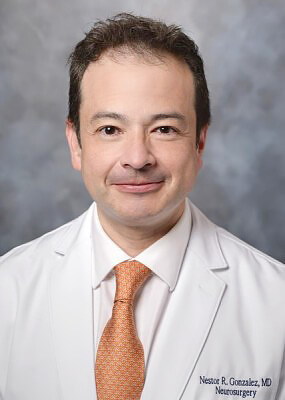
“Stroke is one of the most time-sensitive emergencies in medicine,” said Nestor Gonzalez, MD, director of the Neurovascular Laboratory in the Department of Neurosurgery at Cedars-Sinai. “The faster we restore blood flow to the brain, the more brain function we can preserve.”

Gonzalez’s advice is echoed in the American Heart Association and American Stroke Association’s new 2026 Guideline for the Early Management of Patients With Acute Ischemic Stroke. In the first update since 2019, the guidelines recommend more reliance on imaging, catheter-based procedures and emergency first responders. The guidelines also introduce the first national guidance for treating stroke in children.
Gonzalez, co-vice chair of the American Stroke Association group that developed the guideline, sat down with the Cedars-Sinai Newsroom to discuss the updates and leading-edge stroke research.
What are the most important changes in the updated guideline for acute ischemic stroke, in which a clot blocks blood flow to part of the brain?
Stroke treatment has advanced significantly over the past few decades, particularly with the development of clot-dissolving drugs and catheter-based procedures that can remove blockages in the brain. Since the previous stroke guidelines were published in 2019, new clinical trials have expanded our understanding of which patients can benefit from these treatments.
Previous guidelines recommended endovascular [minimally invasive] clot-removal procedures within six hours of stroke onset, with only a small group of selected patients eligible for treatment up to 24 hours after onset. The updated guideline broadens those criteria, allowing more patients to be considered for treatment in the 24-hour time frame.
The guidelines also expand treatment options for patients with large-core strokes—cases in which a significant area of the brain is affected. In the past, physicians were often hesitant to treat these patients because the potential benefit was uncertain. However, several recent studies have shown that intervention can still reduce disability in some cases.
The guidelines also expand eligibility for endovascular clot-removal procedures to include patients with preexisting disabilities, reflecting evidence that treatment may help them return to their baseline level of function.
You are a faculty member at Cedars-Sinai Guerin Children’s, and the updated recommendations include the first dedicated guidance for treating stroke in children. Why is that important?
Stroke can occur at any age, including in children. However, because it is rare, clinicians may not immediately consider stroke when a child presents with sudden neurological symptoms.
The updated guidelines provide clinicians with practical guidance for recognizing and managing stroke in children. Until now, there were no dedicated recommendations specifically addressing treatment in this population. The guidelines address early recognition of stroke symptoms, imaging strategies and circumstances in which treatments such as intravenous thrombolysis [clot-dissolving medication given through an IV] or endovascular thrombectomy [procedure removing clots from the brain] may be considered.
Over the past several years, specialized centers have begun applying some of the endovascular stroke treatments developed for adults to pediatric patients, and outcomes suggest that children can benefit from these interventions.
How will the updated guidelines change the treatment stroke patients receive in hospitals?
The guidelines emphasize improving the entire system of stroke care so patients can be evaluated and treated rapidly. That process begins with recognizing symptoms in emergency medical services, prompt evaluation and use of specialized treatment. They also synthesize a large body of research into recommendations that clinicians can apply in real-world practice.
The updated recommendations also highlight the importance of coordinated stroke systems that include rapid imaging, telemedicine support for smaller hospitals, and efficient patient transport to specialized stroke centers capable of performing advanced procedures, like Cedars-Sinai Medical Center.
For adult stroke patients, many of these systems are already in place. But for pediatric stroke, the impact may be even greater, as many hospitals are still developing formal systems for diagnosing and treating stroke in children.
What areas of stroke research are you most excited about right now?
Much of the recent progress in stroke care has focused on treating patients in the acute phase, when a clot suddenly blocks blood flow to the brain. But another challenge is helping patients whose brains receive chronically reduced blood flow, putting them at risk for repeated strokes. Two conditions that can cause this are Moyamoya disease, which often affects children and young adults, and intracranial atherosclerosis, which is more common in older adults.
In Moyamoya disease, the arteries at the base of the brain narrow or become blocked. To treat it, surgeons can perform bypass procedures that create new pathways to restore blood flow to the brain. My research has focused on improving these techniques and understanding how they benefit patients.
In adults with intracranial atherosclerosis, plaque buildup narrows, thickens or hardens the arteries in the brain. Medications help many patients, but in some cases, it is not enough. Working with the National Institutes of Health, we have been studying a surgical technique called indirect revascularization, or EDAS. Originally developed for children with Moyamoya disease, this approach is now being adapted for adults with severe vascular disease. Early clinical trials have shown encouraging results, and we are working to expand those studies to multiple centers to determine whether the technique can improve outcomes for patients who currently have limited treatment options.
Information source: Cedars-Sinai Newsroom