





Mega Doctor News
By American Academy of Otolaryngology – Head and Neck Surgery
Newswise – Alexandria, Virginia — A comprehensive new study published in Otolaryngology–Head and Neck Surgery, the peer-reviewed journal of the American Academy of Otolaryngology–Head and Neck Surgery Foundation (AAO-HNSF), reveals alarming rates of hearing loss among adolescents, with 6.2% experiencing sensorineural hearing loss and 12.9% showing signs of probable noise-induced hearing damage by age 18.
The research, part of the Generation R Study—one of the world’s largest birth cohorts—followed 3,347 Dutch adolescents through standardized hearing assessments at ages 13 and 18. While overall prevalence rates remained relatively stable during this five-year period, the study uncovered concerning trends: bilateral hearing notches became more common, and among those already showing high-frequency hearing loss at age 13, their hearing deteriorated significantly by age 18.

“Our longitudinal study shows that while the overall prevalence of hearing loss in adolescents remains relatively stable from ages 13 to 18, the severity of both sensorineural and noise-induced hearing loss increases over time,” said corresponding author Stefanie N. H. Reijers, MD, of the Department of Otorhinolaryngology and Head and Neck Surgery at Erasmus University Medical Center Rotterdam. “These findings highlight the importance of early monitoring and prevention, as even mild changes in hearing during adolescence may have long-term consequences.”
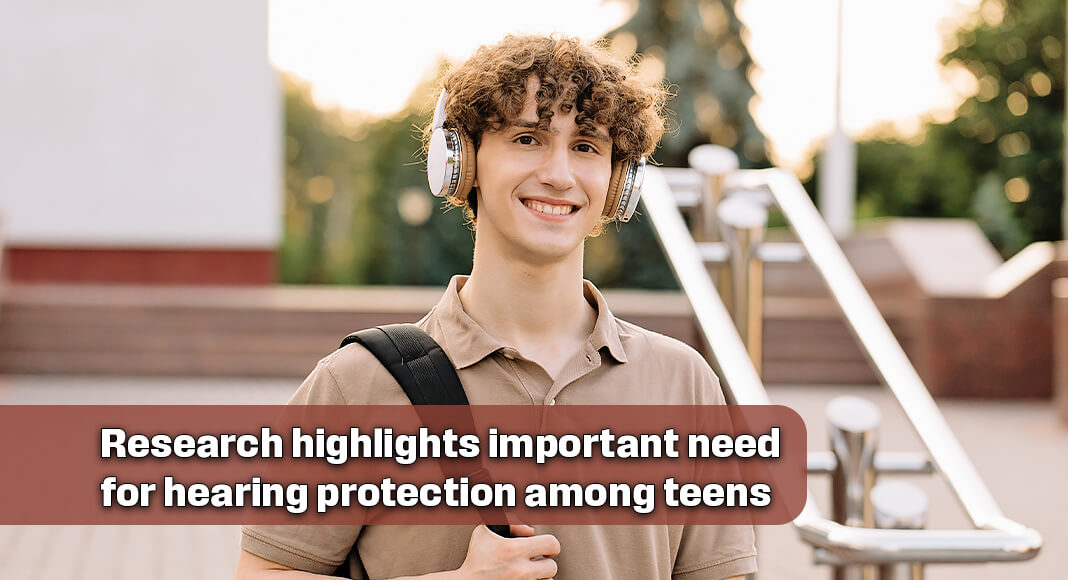
The study employed rigorous audiometric testing to identify hearing loss patterns characteristic of noise exposure, including distinctive “notches” in hearing thresholds—a hallmark sign of noise-induced damage. Recreational noise exposure from personal music players, gaming, and attending loud venues are known contributors to permanent hearing damage in young people.
Understanding the Risk: What Parents Need to Know
Noise-induced hearing loss (NIHL) occurs when loud noises damage the delicate hair cells of the cochlea in the inner ear. These sensitive structures convert sound energy into electrical signals that travel to the brain. Once damaged, these hair cells cannot regrow and lose the ability to transmit sound, resulting in permanent hearing loss.
According to the AAO-HNSF patient information website ENThealth.org, as many as 17% percent of teens (ages 12 to 19) already have features of their hearing that suggest NIHL in one or both ears. The damage can occur through a single exposure to an intense sound or by continuous exposure to loud sounds over time.
Long or repeated exposure to sounds at or above 85 decibels (dB) can cause both temporary and permanent hearing loss. Common sources of dangerous noise exposure include:
- Personal listening devices: The average portable music player is played at 100 dB, and cellphones or listening devices in the U.S. can produce a maximum of 115 dB
- Concerts and live music: Sound levels often exceed 85 dB, with some reports suggesting intensity may reach 90 to 122 dB
- Other: Fireworks, motorcycles, and sirens can range from 95 to 150 dB
Why This Matters for Public Health
Hearing loss in adolescence can have far-reaching consequences beyond difficulty hearing. Research shows that even mild hearing loss can:
- Disrupt communication skills and social interactions
- Impair academic performance and cognitive development
- Lead to social isolation and reduced quality of life
- Accelerate age-related hearing loss later in life
The symptoms of NIHL can be hard to detect in early stages. Hearing loss tends to occur first for high-pitched sounds only, meaning the volume of sound heard may be unchanged but the quality lessens. Over time, speech may be heard but not completely understood, and background noise can make speech hard to understand. Ringing or buzzing (tinnitus) may also occur as a result of NIHL.
Call for Prevention and Education
The researchers emphasize several key implications for parents, educators, and policymakers:
- Awareness is critical: Many adolescents may be unaware they’re damaging their hearing through everyday activities
- Prevention is possible: Unlike genetic or age-related hearing loss, noise-induced hearing damage is largely preventable
- Early intervention matters: Identifying at-risk youth early could prevent progression to more severe hearing loss
- Systematic monitoring needed: Regular hearing screenings during adolescence could catch problems before they worsen
The study authors call for future research to examine specific sources of recreational noise exposure and their cumulative impact on hearing health, as well as exploration of why some adolescents appear more susceptible to hearing damage than others.
More Patient Resources:
ENThealth.org: Noise Induced Hearing Loss in Children
Video: Understanding Noise Induced Hearing Loss in Children
ENThealth.org: Your Ear Gear and Hearing Health
About the Study
The research was conducted as part of the Generation R Study, a large-scale prospective birth cohort in Rotterdam, the Netherlands, which follows children from fetal life into adulthood. The hearing assessments were performed between 2016-2019 (age 13) and 2020-2024 (age 18) using standardized audiometric protocols in soundproof booths.
The study appears in the December 2025 issue of Otolaryngology–Head and Neck Surgery, the official journal of the American Academy of Otolaryngology–Head and Neck Surgery Foundation.
Study Citation: Reijers SNH, Vroegop JL, Paping DE, Pronk M, Goedegebure A, Kremer B, van der Schroeff MP. Longitudinal Insights into Sensorineural and Noise-Induced Hearing Loss in Adolescents Aged 13-18 Years. Otolaryngology–Head and Neck Surgery. 2025;00(00):1-8. doi:10.1002/ohn.70042
About Otolaryngology–Head and Neck Surgery
Otolaryngology–Head and Neck Surgery (OTO Journal) is the official peer-reviewed publication of the American Academy of Otolaryngology–Head and Neck Surgery Foundation. Our mission is to publish contemporary, ethical, clinically relevant information in otolaryngology, head and neck surgery (ear, nose, throat, head, and neck disorders) that can be used by otolaryngologists, clinicians, scientists, and specialists to improve patient care and public health.
Developed by AAO-HNSF, ENThealth.org offers a roadmap for consumers seeking reliable and trusted health-related information about the ear, nose, throat, and head and neck. The content is developed from a team of ENT experts, and information is delivered via peer-reviewed articles, interactive features, and video content featuring physicians.
The AAO-HNS/F is one of the world’s largest organizations representing specialists who treat the ears, nose, throat, and related structures of the head and neck. Otolaryngologist-head and neck surgeons diagnose and treat medical disorders that are among the most common affecting patients of all ages in the United States and around the world. Those medical conditions include chronic ear disease, hearing and balance disorders, hearing loss, sinusitis, snoring and sleep apnea, allergies, swallowing disorders, nosebleeds, hoarseness, dizziness, and tumors of the head and neck as well as aesthetic and reconstructive surgery and intricate micro-surgical procedures of the head and neck. The Academy has approximately 13,000 members. The AAO-HNS Foundation works to advance the art, science, and ethical practice of otolaryngology-head and neck surgery through education, research, and quality measurement.

