







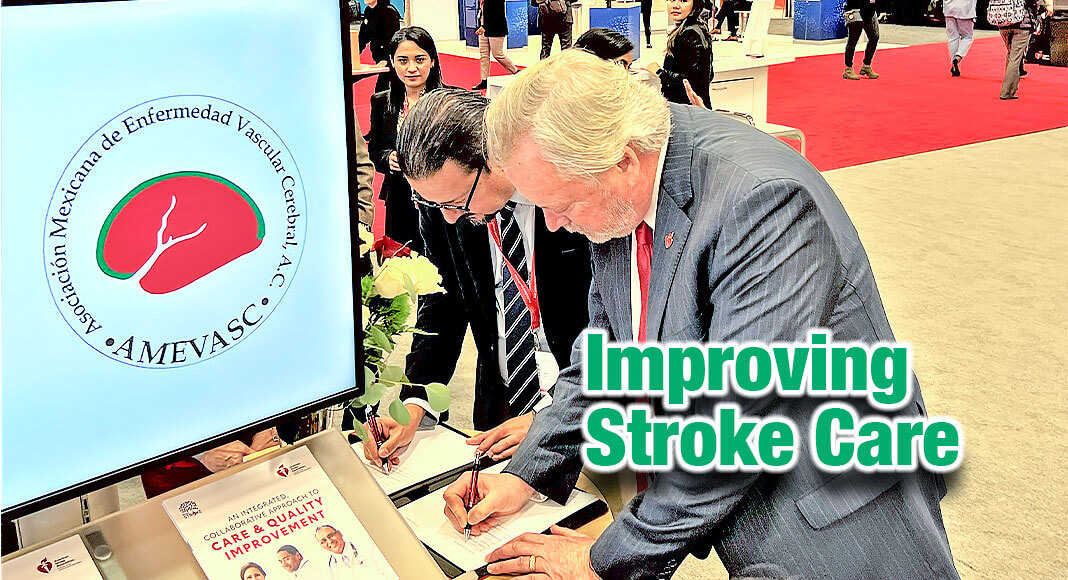
John Meiners and Juan Calleja Castillo signing contract
John Meiners, chief of mission-aligned businesses and health care solutions for the American Stroke Association and Juan Calleja Castillo, vascular neurologist and president of the Mexican Stroke Association sign the Collaborative Memorandum of Understanding between the American Stroke Association and the Mexican Stroke Association (AMEVASC) – Improving Stroke Care in Mexico. Image Courtesy of American Stroke Association
Mega Doctor News

American Heart Association
DALLAS, Texas — Hospital institutions in Mexico will have access to a single, comprehensive set of stroke certification services through a new collaboration between the Mexican stroke association, Asociación Mexicana de Enfermedad Vascular Cerebral A.C.(AMEVASC) and the American Stroke Association (ASA).
The American Stroke Association, a division of the American Heart Association, the world’s leading force for longer, healthier lives for all, uses its stroke certification model to assist hospitals with a framework, structure, management and delivery of high-quality care by standardizing and increasing the quality of – and access to – acute care for patients who suffer a stroke.

“ASA and AMEVASC are uniquely positioned to build upon shared leadership in translating guidelines into programs and services that shape clinical care and improve patient outcomes to offer a comprehensive set of stroke certification services for health care facilities in Mexico,” said Juan Calleja, M.D., vascular neurologist and president of AMEVASC.
Primary and comprehensive stroke center certification services will offer all regional hospitals and institutions a single resource with process improvement tools to integrate evidence-based science, quality initiatives, clinical best-practices and the latest stroke guidelines into their stroke care processes.
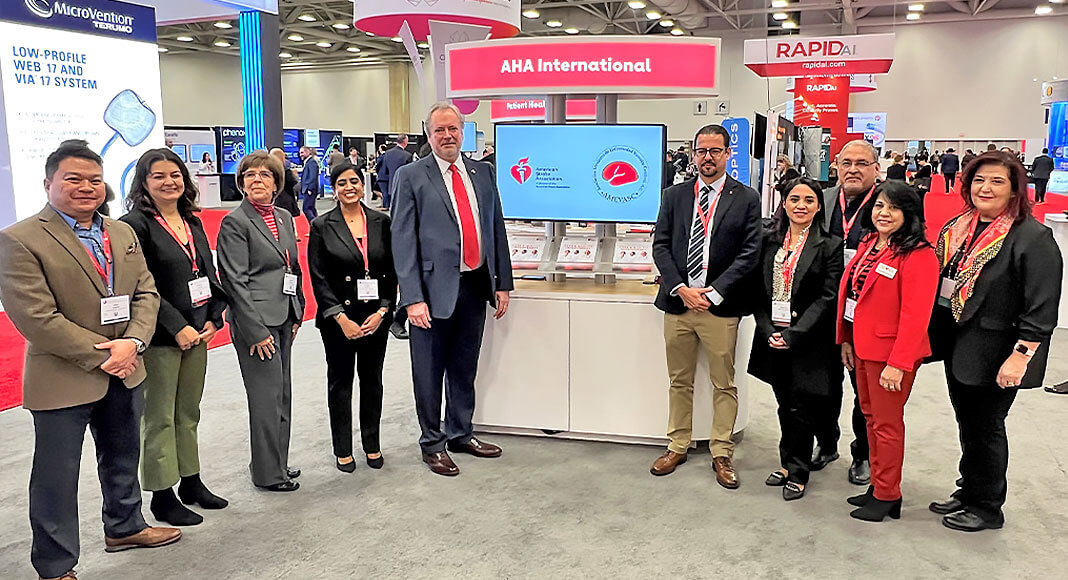
“Our two organizations share common priorities and interests in improving the quality of Primary Stroke Center and Comprehensive Stroke Center services provided to the public,” Mitchell S. V. Elkind, M.D., M.S., FAHA, FAAN, chief clinical science officer for the American Heart Association and the senior staff science leader for all Association initiatives related to stroke. “ASA and AMEVASC believe that the hospitals and the patients they serve would benefit from a coordinated certification program that provides enhanced value through shared governance, requiring compliance with the appropriate stroke clinical practice guidelines and an organized approach for performance measurement and improvement activities.”
“Research improves patients outcomes when medical professionals implement the most up-to-date, evidence-based treatment guidelines,” said Salvador Cruz-Flores, M.D., M.P.H., HEC-C, professor and founding chair of neurology at Texas Tech University HSC in El Paso, Texas, past member of the ASA Advisory Committee and ASA volunteer. “Working with AMEVASC to expand health care facility certification aligns with the goal for science-based assessment, diagnosis and treatment of stroke to save lives and reduce disability.”
This program is based on standards developed independently and overseen by two mission-driven organizations, reflecting decades of science and clinical expertise.
INFORMATION SORCE: American Heart Association


