Mega Doctor News

By Deb Balzer / Mayo Clinic News Network
Nearly half of all women who have had a mammogram to screen for breast cancer have been identified as having dense breasts. This makes it more challenging to detect breast cancer because dense tissue and tumors both appear white on a mammogram. That’s one reason why it’s recommended to have an additional screening done. But which one?
Dr. Richard Sharpe Jr., a Mayo Clinic radiologist, says it’s crucial to talk with your healthcare team to find the screening method that is right for you. An MRI is one option.

“The first thing to know if you get notified is that dense breast tissue is completely normal.
Half of all women will have dense tissue,” says Dr. Sharpe.
He says dense breasts are identified through a mammogram. Additional testing is the next step.
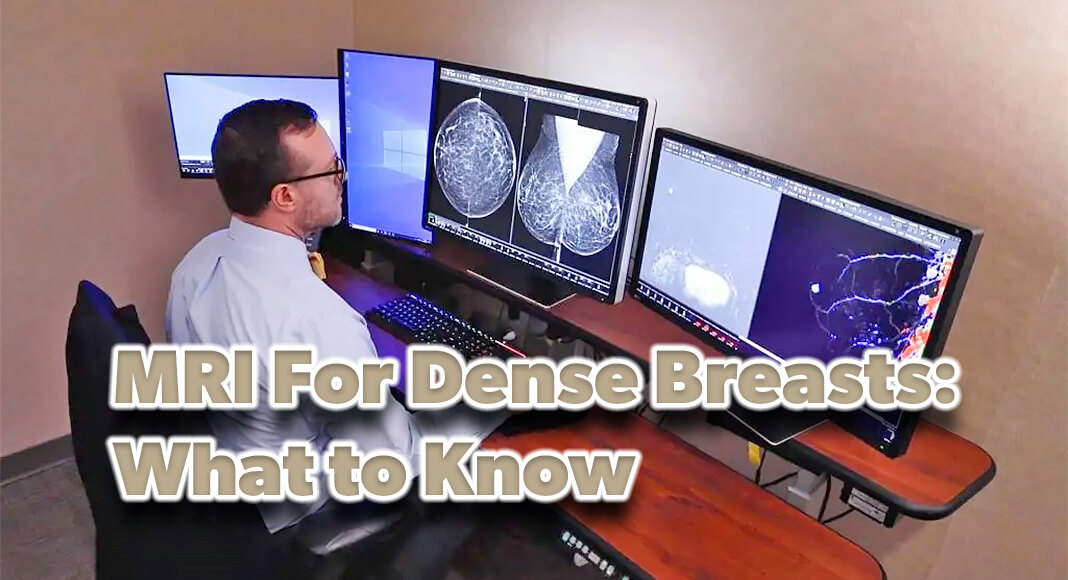
“The most widely available supplemental screening test for women with dense tissues is probably an ultrasound of the breast or an MRI,” says Dr. Sharpe. “There have been lots of studies showing that MRI is the most sensitive test for finding breast cancer.”
An MRI is meant to be used along with a mammogram, not instead.
“MRI is the most sensitive test we have for finding breast cancer. It can see through density. It can find hard-to-see, small cancers,” says Dr. Sharpe.
But it’s not for everyone. You’ll lie face down on a table and then guided into the MRI machine.”Some patients that have challenges with claustrophobia might struggle to be comfortable in the smaller space of the MRI scanner,” explains Dr. Sharpe.
The benefit is clear, he says.
“Women with dense tissue or high risk for breast cancer that undergo breast MRI, we are able to see cancers that would be hiding from the mammogram.”
Supplemental screening options
Other supplemental screening options include molecular breast imaging (MBI), ultrasound and contrast-enhanced mammography.
Dr. Sharpe says choosing what screening method works for you is an individual decision that should be made with your healthcare team, but he says it’s important to start with your annual screening.
“The most important thing for women to know is that you should get your annual mammogram, starting at age 40. Also, if you have dense tissue, consider a supplemental screening, another imaging test looking at the breast tissues in a different way — and you should get that exam regularly as well,” he says.
“The most important thing for women to know is that you should get your annual mammogram, starting at age 40. Also, if you have dense tissue, consider a supplemental screening, another imaging test looking at the breast tissues in a different way — and you should get that exam regularly as well,” he says.