








Mega Doctor News
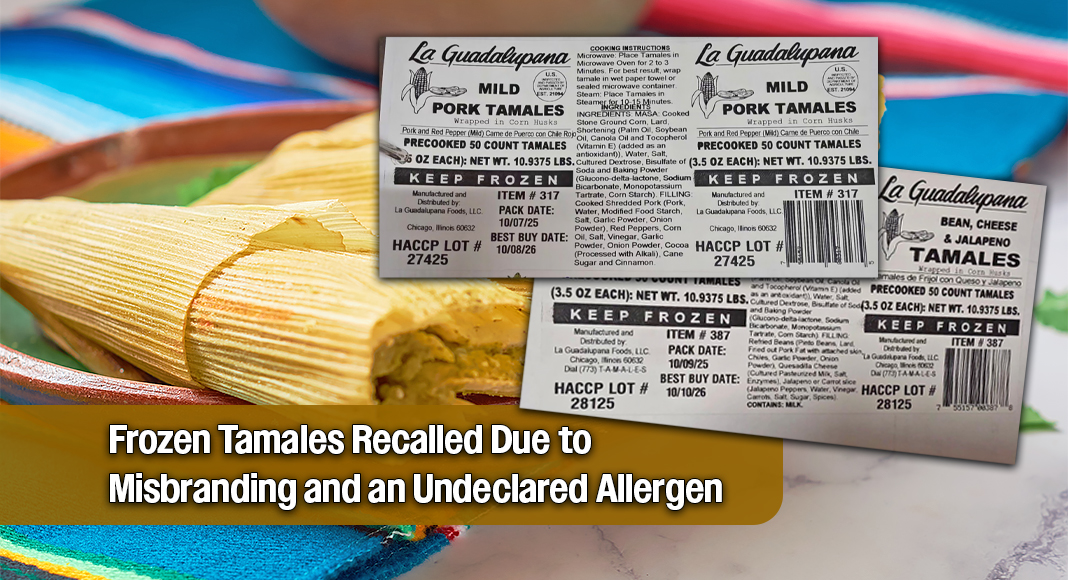
WASHINGTON, Dec. 14, 2025 – La Guadalupana Foods LLC, a Chicago, Ill., establishment, is recalling approximately 2,669 pounds of frozen tamale products due to misbranding and an undeclared allergen, the U.S. Department of Agriculture’s Food Safety and Inspection Service (FSIS) announced. The bean, cheese, and jalapeno tamales were mislabeled as mild pork tamales. The product contains cheese (milk), a known allergen, which is not declared on the product label.
The fully cooked tamales were produced Oct. 7, 2025. The following product is subject to recall [view labels]:

- 10.9-lb. plastic-lined boxes containing 50 frozen tamales and labeled as “La Guadalupana MILD PORK TAMALES Wrapped in Corn Husks,” with pack date “10/07/25” and best buy date “10/08/26” represented on the label.
The product subject to recall bears establishment number “EST. 21094” inside the USDA mark of inspection. These items were shipped to restaurant and retail locations in Illinois, Iowa, Ohio, and Wisconsin.

The problem was discovered when a restaurant notified the establishment that they had identified bean, cheese, and jalapeno tamales that had been mislabeled as pork tamales.
There have been no confirmed reports of adverse reactions due to consumption of these products. Anyone concerned about a reaction should contact a healthcare provider.
FSIS is concerned that some product may be in restaurant and consumer refrigerators or freezers. Consumers are urged not to eat this product; these items should be thrown away or returned to the place of purchase.
FSIS routinely conducts recall effectiveness checks to verify recalling firms notify their customers of the recall and that steps are taken to make certain that the product is no longer available to consumers. When available, the retail distribution lists will be posted on the FSIS website at www.fsis.usda.gov/recalls.
Consumers with food safety questions can call the toll-free USDA Meat and Poultry Hotline at 888-MPHotline (888-674-6854) or send a question via email to MPHotline@usda.gov. For consumers that need to report a problem with a meat, poultry, or egg product, the online Electronic Consumer Complaint Monitoring System can be accessed 24 hours a day at https://foodcomplaint.fsis.usda.gov/eCCF/.
Information source: USDA


