








How Artificial Intelligence Is Improving Prostate Cancer Diagnostics

Translate to Spanish or other 102 languages!

“MRI is used to help the urologists decide whether or not the patient needs a biopsy and also to decide where the sample of tissue needs to come from in order to accurately detect the cancer,” said Andrei Purysko, MD, diagnostic radiologist at Cleveland Clinic. Image courtesy of Cleveland Clinic
- Advertisement -

CLEVELAND CLINIC – September is Prostate Cancer Awareness Month. 

Prostate cancer is the second leading cause of cancer death for men in the United States.

Now, researchers are studying whether artificial intelligence can aid in diagnosis. 

- Advertisement -

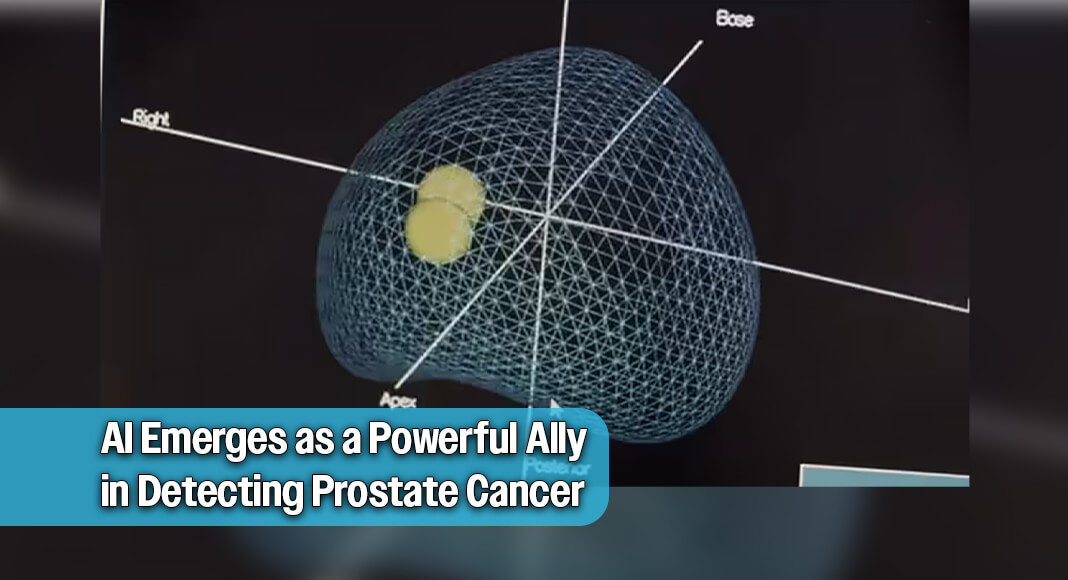
“MRI is used to help the urologists decide whether or not the patient needs a biopsy and also to decide where the sample of tissue needs to come from in order to accurately detect the cancer,” said Andrei Purysko, MD, diagnostic radiologist at Cleveland Clinic. “And so, the way this technology works is we use artificial intelligence to fast track that process where the images are analyzed by the computer algorithm and then the results are sent to us. That makes the interpretation of the images fast and potentially even more accurate.”

Dr. Purysko said before this AI technology, they would use a scoring system to determine whether there was a likelihood of prostate cancer.

This new program does that too.

Plus, it can identify suspicious locations, give a probability risk for cancer being present, and better guide surgeons during biopsies.

- Advertisement -

“Efficiency is one of the most important things behind our motivation to work with the software. We know that radiologists already do a fantastic job. But here, the main goal is to help us improve our efficiency, and patients will certainly benefit as well by getting results faster,” said Dr. Purysko.

Right now, the AI technology is being used as part of a clinical trial.

However, the hope is that it can one day be implemented as standard practice. 

- Advertisement -
- Advertisement -

- Advertisement -

More Articles

The Science Behind Why Dietary Changes Rarely Stick

Learning new eating habits isn’t simple. Our pre-existing feelings around food—whether it’s a distaste for olives or a love of pastries—could make it harder to learn new eating habits, according to new research from Yale School of Medicine.

STHS Hospitals Urge Community Action Against Bullying

Whether it comes in the form of hurtful words, social exclusion or online harassment, bullying can take a serious toll on a person's mental, emotional and social well-being.

STHS Children’s Annual Children’s Fall Festival, Oct. 23rd

Calling all little ghosts, goblins, princesses and superheroes! With Halloween just around the corner, it's almost time to put on those costumes and get ready for an eerie-sistibly exciting celebration. 

STHS Children’s & Spirit Halloween’s Halloween Party for Pediatric Patients, Oct. 14th

Being in the hospital can be an overwhelming experience for anyone, especially children. Between unfamiliar surroundings, separation from friends and family, and the need to undergo medical procedures, young patients can often face added stress and anxiety during their hospital stay.
- Advertisement -

