







Mega Doctor News

These tips can help you stay healthy during and after your cancer treatment.
The cancer experience is unique for each person. But it’s important for all people with cancer to take steps to stay healthy, both physically and emotionally.
“This is your new normal, so embrace it for what it is,” says Wenora, who has survived several kinds of cancer. “And continue looking forward to the future, because none of us know what that will bring.”

How to Lower Your Chance of Getting Cancer Again
If you have had cancer, you have a higher chance of getting cancer again than someone who has not had cancer. That’s why it’s very important for you to do things to stay healthy.
Follow-up care. When your treatment is finished, your doctor may tell you that you should get checkups or tests in the future. Be sure to follow your doctor’s instructions. These tests can help find early signs of a new cancer or the same cancer.
Healthy choices. Some of the best things you can do for your health include staying away from tobacco, protecting your skin from too much sun, and keeping a healthy weight.
Keys to Physical Health
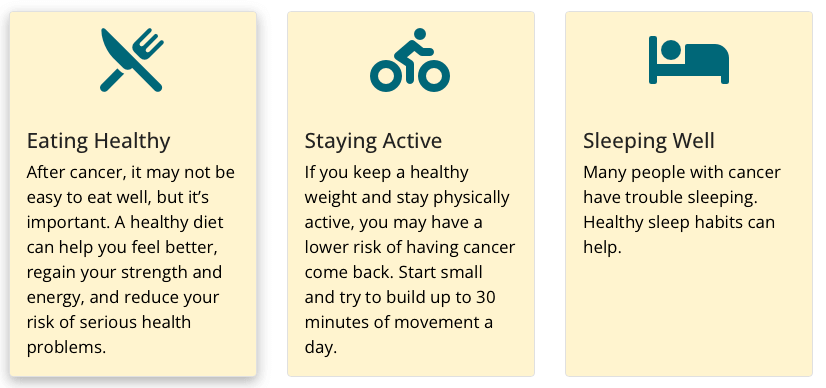
“A few months after my final remission, I’d go to the gym and struggle with just the bar, or just struggle with trying to walk on a treadmill for more than 2 minutes,” says Mark, who was diagnosed with Hodgkin lymphoma at age 26. “You have to take those baby steps to get out and make it better.”
Three areas of physical health are important for everyone who has cancer now or had it in the past. They are key to your recovery and well-being.
Keys to Emotional Health

After treatment, you may need time to recover, restore your mental health, and process your emotions. It’s normal to feel relief, gratitude, and excitement, and at the same time feel worried or sad.
“At 34, I had to have a radical hysterectomy to treat my uterine cancer,” says Xenia. “I’ve never felt more alone or lost in my life. But, through counseling with my psychiatrist and just reaching out to different young adult organizations, I was able to create a new normal.”


