Mega Doctor News
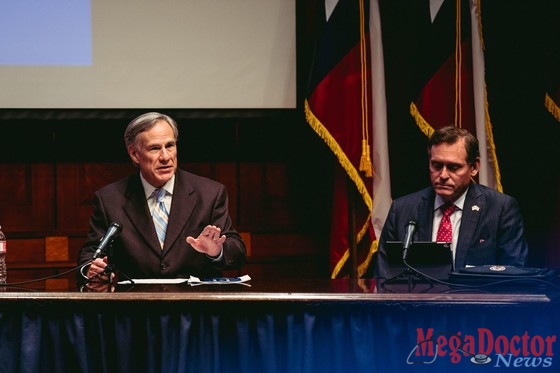
AUSTIN – Governor Greg Abbott today held a press conference to provide an update on Texas hospital capacity. The Governor was joined by Texas Department of Health Services Commissioner John Hellerstedt, MD, Executive Vice Chancellor for Health Affairs of the University of Texas System John Zerwas, MD, and Texas Division of Emergency Management Chief Nim Kidd. During the press conference, the Governor and Dr. Zerwas presented an overview of statewide hospital bed capacity, as well as a detailed analysis of bed availability by region. They also explained the state’s preparations to bring additional facilities online to provide supplementary healthcare capacity if needed. Hospital bed availability in Texas has increased by more than 140% since March 18th.
“The State of Texas is ahead of the curve to meet our hospital capacity needs in the coming weeks and months,” said Governor Abbott. “Over the past several weeks we have taken action to expand bed availability to make sure that every Texan who needs a hospital bed will have access to one. The best thing Texans can do to help maintain hospital capacity is to stay at home unless they are engaged in essential services or activities. Staying home saves lives and helps our healthcare workers during these challenging times. I thank all the doctors, nurses, medical workers as they fight on the front lines against COVID-19.”
Actions Taken to Expand Hospital Capacity:

March 22nd: Governor Abbott issued an Executive Order to expand hospital bed capacity. Under this order, the Governor directed all licensed health care professionals and facilities to postpone all surgeries and procedures that are not immediately, medically necessary to correct a serious medical condition or to preserve the life of a patient. The order also suspends certain regulations to allow for increased occupancy of hospital rooms.
March 24th: Governor Abbott issued an Executive Order requiring Texas hospitals to submit daily reports of hospital bed capacity to the Texas Department of State Health Services.
March 25th: Governor Abbott temporarily waived certain hospital licensing rules and the Texas Health and Human Services Commission (HHSC) adopted an emergency rule to meet Texas’ need for additional hospital capacity.
March 29th: Governor Abbott announced a joint effort between the state, the Texas Military Department (TMD), and the U.S. Army Corps of Engineers (USACE) to identify and equip additional locations to serve as health care facilities in the event that hospital capacity is exhausted. The Governor announced the Kay Bailey Hutchison Convention Center in Dallas as the first of these sites.
View the presentation on Texas’ hospital capacity.