








Mega Doctor News
Eating a diet with plenty of fruits and vegetables gives many health benefits. But it’s important to select and prepare them safely.
Fruits and vegetables add nutrients to your diet that help protect you from heart disease, stroke, and some cancers. Also, choosing vegetables, fruits, and nuts over high-calorie foods can help you manage your weight.
Sometimes, raw fruits and vegetables contain harmful germs that can make you and your family sick, such as Salmonella, E. coli, and Listeria. CDC estimates that germs on fresh produce cause a large percentage of foodborne illnesses in the United States.

The safest produce to eat is cooked; the next safest is washed. You can enjoy uncooked fruits and vegetables by taking the following steps to reduce your risk of foodborne illness, also known as food poisoning.
Download CDC’s printable poster: Steps to Safe and Healthy Fruits & Vegetables [PDF – 1 MB].
At the Store or Market
- Choose produce that isn’t bruised or damaged.
- If you buy pre-cut fruits and vegetables, choose items that are refrigerated or kept on ice.
- Separate fruits and vegetables from raw meat, chicken and other poultry, and seafood in your shopping cart and in your grocery bags.
At Home
- Wash your hands, kitchen utensils, and food preparation surfaces, including chopping boards and countertops, before and after preparing fruits and vegetables.
- Clean fruits and vegetables before eating, cutting, or cooking, unless the package says the contents have been washed.
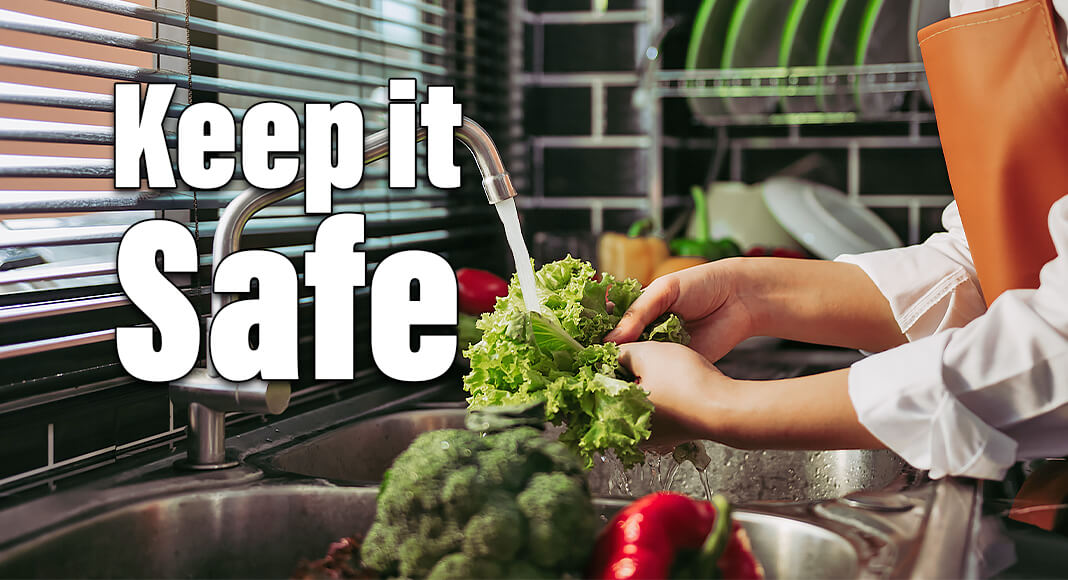
- Wash or scrub fruits and vegetables under running water—even if you do not plan to eat the peel. Germs on the peel or skin can get inside fruits and vegetables when you cut them.
- Washing fruits and vegetables with soap, detergent, or commercial produce wash is not recommended. Do not use bleach solutions or other disinfecting products on fruits and vegetables.
- Cut away any damaged or bruised areas before preparing or eating. Germs can more easily get into fruits and vegetables if the peel or skin is damaged or bruised.
- Get rid of any torn or bruised leaves. Also, get rid of the outer leaves of cabbages and lettuce heads because they are likely to have more dirt and germs on them.
- Dry fruit or vegetables with a clean paper towel.
- Keep fruits and vegetables separate from raw foods that come from animals, such as meat, poultry, and seafood.
- Refrigerate fruits and vegetables within 2 hours after you cut, peel, or cook them (or 1 hour if exposed to temperatures above 90°, like a hot car or picnic). Chill them at 40°F or colder in a clean container.
Groups With a Higher Chance of Food Poisoning
Anyone can get food poisoning, but people in certain groups are more likely to get sick and to have a more serious illness. These groups are:
- Adults aged 65 and older
- Children younger than age 5
- People who have health problems or take medicines that lower the body’s ability to fight germs and sickness (weakened immune system)—for example, people with diabetes, liver or kidney disease, HIV, or cancer
- People who are pregnant
Information Source: CDC


