








Mega Doctor News
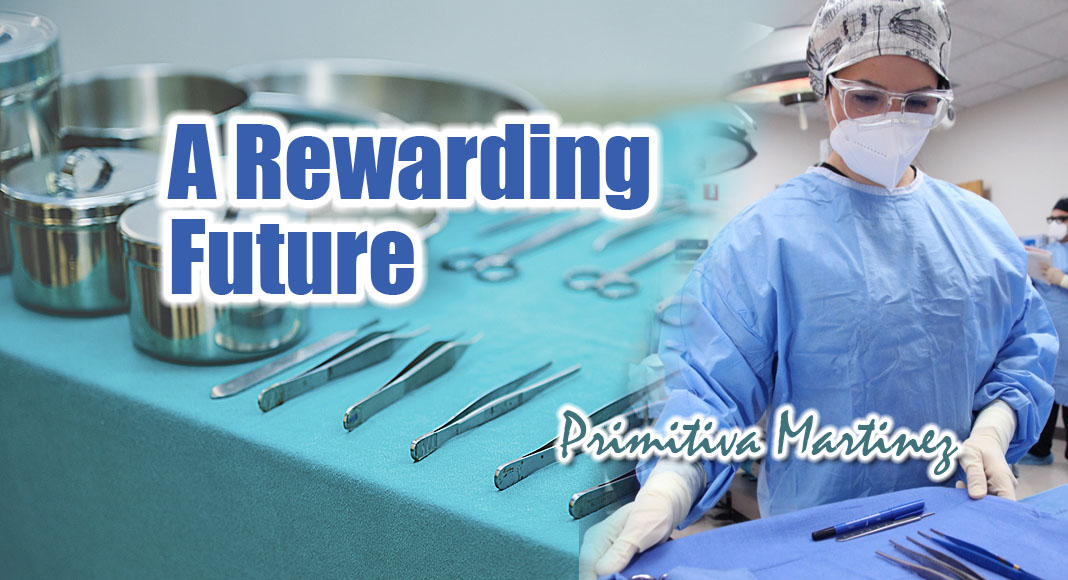
HARLINGEN, Texas – For six years prior to the pandemic, Primitiva Martinez, of Harlingen, was a paralegal. When the pandemic became a reality, she sought a new, more engaging career direction.
After she researched multiple educational options, the Surgical Technology program at Texas State Technical College’s Harlingen campus appealed to her.
“I really enjoyed what I read online about TSTC’s Surgical Technology program,” she said. “The program was described as fast-paced and working in an environment where you work with surgeons. There is a wide variety of specialties involved. You could assist the surgeon to save a person’s life. It could be doing something simple, such as a tonsillectomy.”

Martinez’s decision to enroll in the program turned out to be a great choice.
“This program is very exciting,” she said.
Martinez said her favorite part of the program is the clinicals.
“I am a hands-on person,” she said. “I can grasp in-class lectures, but I excel in the field. I noticed I retain anatomy, medical terminology and other procedures better as opposed to (reading about them in) a book.”
At the beginning of the program, instructors informed the students about potential internships that would be available at certain area hospitals. Martinez accepted a surgical technician intern position at Valley Baptist Medical Center in Harlingen in January.
“At the start of the job, I pull cases,” she said. “Then I visit the operating room board to learn about the assignment or which surgeon I am assigned to. There are usually three to four surgeries per day that I will assist in.”
The staff members at the hospital treat Martinez like a part of their team.
“An intern must remember to get to know the staff,” she said. “It is important to build rapport with them. By doing so, you will earn their trust.”
Martinez said it is important to be mentally prepared before going into the operating room to assist the surgical team.
“I have adrenaline going into a surgery,” she said. “It will happen if I am participating or not. It is a fast-paced environment. Surgeries take several hours, but there is a great deal that goes into a procedure. Even if it is not a major surgery, you must know your material.”
The in-person hospital training she is receiving is invaluable.
“Reading about a medical situation is one thing,” she said. “When you see it firsthand, your instincts immediately begin.”
According to onetonline.org, surgical technologists can earn a yearly median salary of more than $49,000 in Texas. Jobs are expected to increase 14% in the state by 2028.
TSTC offers Surgical Technology at the Harlingen campus, where students can earn an Associate of Applied Science degree.
To learn more about TSTC, visit tstc.edu.


