Mega Doctor News
WASHINGTON, DC – Super Bowl parties often feature takeout, delivery and foods that are served over several hours. To help prevent foodborne illness, the U.S. Department of Agriculture’s (USDA) Food Safety and Inspection Service (FSIS) is reminding fans to keep food safety in play on game day.
“When food is served throughout the Super Bowl, it can be easy to lose track of how long it’s been sitting out,” said USDA Under Secretary for Food Safety Dr. Mindy Brashears. “As Americans gather to enjoy the game, keeping food hot or cold and serving it promptly helps protect family, friends, and guests from foodborne illness.”
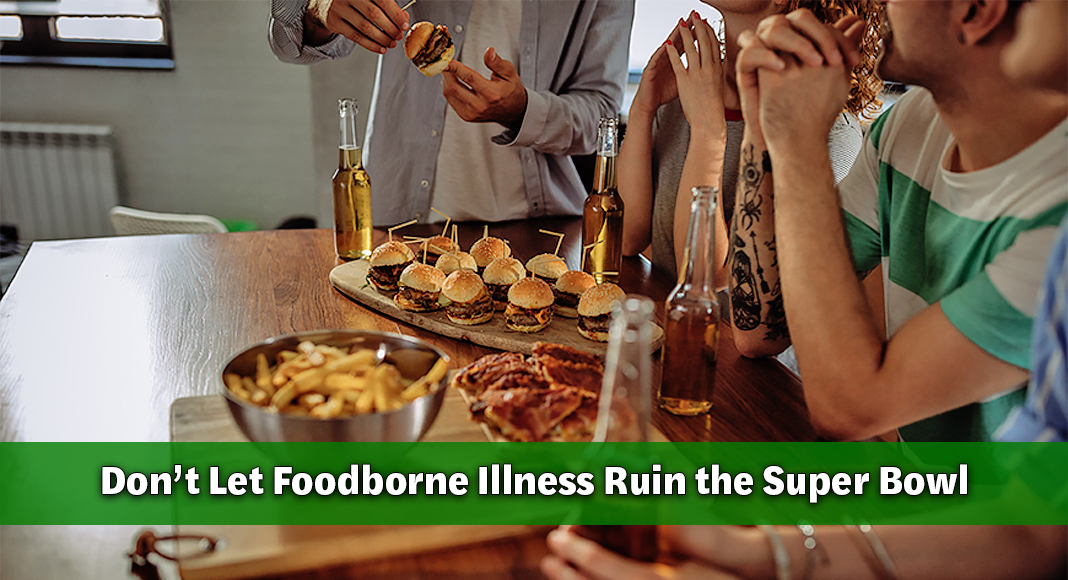
Many Super Bowl favorites including pizza, chicken wings, hamburger sliders, and chili should not be left out at room temperature for more than two hours, what USDA calls the Danger Zone (temperatures between 40 and 140 degrees F). If perishable food is left out without hot or cold sources for too long, bacteria will multiply to unsafe levels that can cause foodborne illness.

FSIS encourages hosts to follow these food safety tips:
#1 Handle Takeout and Delivery Safely
| Transport takeout in insulated bags if travel time exceeds one hour. |
| Serve food promptly or divide into smaller portions and refrigerate until ready to reheat and serve. |
| Keep food hot at 140 degrees F or above using a preheated oven, warming tray, chafing dish or slow cooker. |
| Reheat food containing meat or poultry to an internal temperature of 165 degrees F as measured by a food thermometer. |
| If reheating in the microwave, spread food evenly, stir thoroughly, and check for cold spots to ensure a safe internal temperature is reached throughout. |
| Reheat liquid foods like soups and sauces to a boil. |
#2 Keep Food out of the Danger Zone
| Serve food in smaller batches. Bring out one round of food during the first half of the game and another during the second to ensure your food doesn’t stay out for more than two hours. |
| Discard perishable foods left out for longer than two hours. To prevent food waste and enjoy leftovers after the game, refrigerate or freeze perishable items within two hours. |
| If food will be out for more than two hours: |
| Keep cold foods at a temperature of 40 degrees F or below by nestling in ice. |
| Keep hot foods at a temperature of 140 degrees F or above by placing food in a preheated oven, warming trays, chafing dishes or slow cookers. |
#3 Use a Food Thermometer
Ensure your food reaches a safe minimum internal temperature when cooking at home:
| Meat (whole beef, pork and lamb) 145 degrees F with a 3-minute rest |
| Ground meats 160 degrees F |
| Poultry (ground and whole) 165 degrees F |
| Eggs 160 degrees F |
| Fish and shellfish 145 degrees F |
| Leftovers and casseroles 165 degrees F |
If serving chicken wings, use a food thermometer on several wings to gauge the doneness of the entire batch. If one is under 165 degrees F, continue cooking all wings until they reach the safe internal temperature.
#4 Follow the Four Steps to Food Safety
| Clean: Wash hands for 20 seconds before and after handling your takeout or delivered food, as well as any raw meat or poultry you prepare at home. Clean hands, surfaces and utensils with soap and water before and after meal prep. Sanitize any surfaces that may have come in contact with food using a commercial or homemade solution (1 tablespoon of unscented, liquid chlorine bleach per gallon of drinking water). |
| Separate: Use separate cutting boards, plates and utensils to avoid cross-contamination between your takeout or delivery foods and any raw meat or poultry you are preparing at home. |
| Cook: Confirm foods are cooked or reheated to a safe internal temperature by using a food thermometer. |
| Chill: Chill foods promptly if not consuming immediately after cooking. |
For food safety questions, contact the USDA Meat and Poultry Hotline at 1-888-MPHotline (1-888-674-6854) or email MPHotline@usda.gov from 10 a.m. to 6 p.m. Eastern Time, Monday through Friday.
Information source: USDA