








Mega Doctor News

by Stellenbosch University
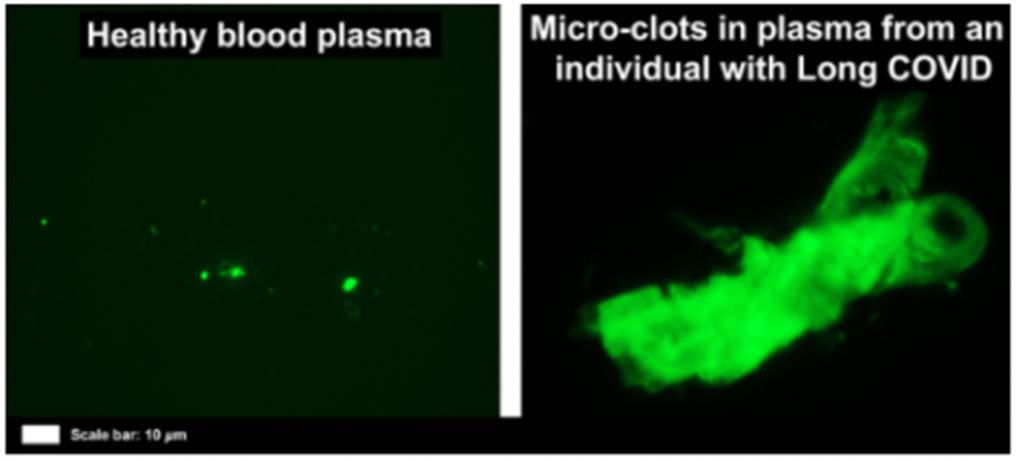
Newswise — New research indicates that an overload of various inflammatory molecules, literally “trapped” inside insoluble microscopic blood clots (micro clots), might be the cause of some of the lingering symptoms experienced by individuals with Long COVID.
This unexpected finding was made by Prof Resia Pretorius, a researcher in the Department of Physiological Science at Stellenbosch University (SU), when she started looking at micro clots and their molecular content in blood samples from individuals with Long COVID. The findings have since been peer-reviewed and published in the journal Cardiovascular Diabetology in August 2021.

“We found high levels of various inflammatory molecules trapped in micro clots present in the blood of individuals with Long COVID. Some of the trapped molecules contain clotting proteins such as fibrinogen, as well as alpha(2)-antiplasmin,” Prof Pretorius explains.
Alpha(2)-antiplasmin is a molecule that prevents the breakdown of blood clots, while fibrinogen is the main clotting protein. Under normal conditions the body’s plasmin-antiplasmin system maintains a fine balance between blood clotting (the process by which blood thickens and coagulate to prevent blood loss after an injury) and fibrinolysis (the process of breaking down the fibrin in the coagulated blood to prevent blood clots from forming).
With high levels of alpha(2)-antiplasmin in the blood of COVID-19 patients and individuals suffering from Long COVID, the body’s ability to break down the clots are significantly inhibited.
The insolubility of the micro clots became apparent when Dr Maré Vlok, a senior analyst in the Mass Spectrometry Unit at SU’s Central Analytical Facilities, noted that the blood plasma samples from individuals with acute COVID and Long COVID continued to deposit insoluble pellets at the bottom of the tubes after dilution (a process called trypsinization).
He alerted Prof Pretorius to this observation, and she investigated it further. They are now the first research group to have reported on finding micro clots in the blood samples from individuals with Long COVID, using fluorescence microscopy and proteomics analysis, thereby solving yet another puzzle associated with the disease.
“Of particular interest is the simultaneous presence of persistent anomalous micro clots and a pathological fibrinolytic system,” they write in the research paper. This implies that the plasmin and antiplasmin balance may be central to pathologies in Long COVID, and provides further evidence that COVID-19, and now Long COVID, have significant cardiovascular and clotting pathologies.
Further research is recommended into a regime of therapies to support clotting and fibrinolytic system function in individuals with lingering Long COVID symptoms.


