








DSHS Statement on Texas Residents Who Were on Board the MV Hondius

Translate to Spanish or other 102 languages!

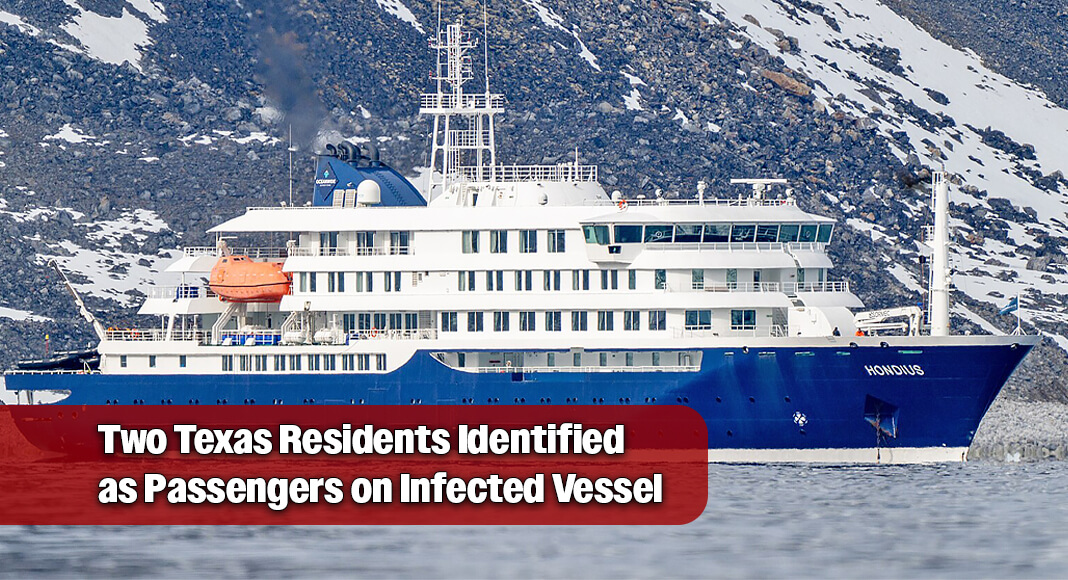
The Centers for Disease Control and Prevention has notified DSHS that two Texas residents were passengers on the MV Hondius, a ship that experienced an outbreak of hantavirus while traveling in the Atlantic Ocean. Image:  Stefan Brending / Lizenz: Creative Commons CC-BY-SA-3.0 de
- Advertisement -

The Centers for Disease Control and Prevention has notified DSHS that two Texas residents were passengers on the MV Hondius, a ship that experienced an outbreak of hantavirus while traveling in the Atlantic Ocean. The passengers left the ship and returned to the United States before the outbreak was identified.

Public health workers in Texas have reached the two individuals, and they report they are not experiencing any symptoms and did not have any contact with a sick person while aboard the ship. They have agreed to monitor themselves for symptoms with daily temperature checks and contact public health officials at any sign of a possible illness.

Hantaviruses are usually spread through contact with wild rodent droppings or urine. The strain in the Hondius outbreak, Andes virus, can spread from person to person in limited circumstances. It typically requires close, prolonged contact with a person who is actively sick with the disease. It is not known to spread through casual contact such as shaking hands or being in the same room for a few minutes. There have been no documented cases where a person without symptoms spread it to someone else.

- Advertisement -

DSHS will not release additional personal details about the passengers in order to protect their privacy.


- Advertisement -
- Advertisement -

- Advertisement -

More Articles

STHS Children’s Earns National Recognition for Advancing Cardiac Arrest Survival Through High-Quality

Although sudden cardiac arrest in children is uncommon, it remains a life-threatening emergency that requires immediate, specialized care.

What to Know About the Cyclospora Parasite in Your Grocery Cart

You’ve probably seen the headlines about a parasite spreading across the United States and making people sick, but what exactly is causing it? 

STHS Children’s Free Food Safety Webinar for Parents on July 15th

Every meal should help children grow and thrive, not put their health at risk.

How Extreme Weather and Air Pollution Put Your Heart at Risk

It’s not just high temperatures that can put stress on the heart. Other environmental factors, such as air pollution, extreme cold, hurricanes, wildfires, and other climate events, can contribute to or worsen cardiovascular conditions.
- Advertisement -
