








Mega Doctor News
By Roberto Hugo González / Mega Doctor News
EDINBURG, Texas — For residents of rural Texas, access to medical care can depend on where they live, whether they have health insurance, and how far they must travel to reach a physician. In some communities along the Texas-Mexico border, patients face hundreds of miles of travel for specialized treatment, while others live in counties without hospitals or primary care physicians.
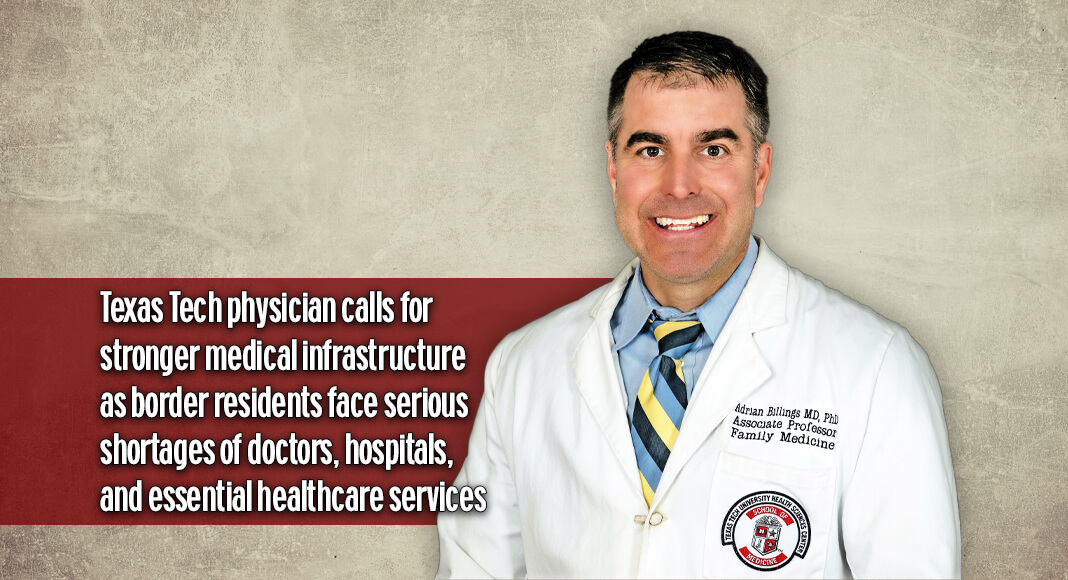
Dr. Adrian Billings, a physician and rural healthcare advocate at Texas Tech University Health Sciences Center, presented those challenges during the Texas Medical Association’s (TMA) 22nd Annual Border Health Caucus Conference, held August 21, 2026, at the Edinburg Conference Center at Renaissance in Edinburg.

Hosted by TMA’s Border Health Caucus, the conference brought together physician leaders, healthcare professionals, community stakeholders, and policymakers to examine healthcare challenges along the Texas-Mexico border and discuss possible solutions.
Participants included TMA President Dr. Bradford Holland, Border Health Caucus Chair Dr. Victor Gonzalez, and Edinburg Mayor Omar Ochoa. The program addressed healthcare coverage, workforce development, public health, and disparities affecting border communities.
Dr. Billings is the F. Marie Hall Endowed Chair of Rural Health and a senior fellow and professor at Texas Tech University Health Sciences Center. He delivered a presentation titled “Overview of Texas Rural Health.”
Born and raised in Del Rio, Billings described himself as a ‘fronterizo’, someone whose upbringing and identity are closely connected to the border.
“Soy fronterizo, born and raised in Del Rio in Val Verde County,” he told attendees, explaining his personal commitment to improving healthcare access in communities like the one where he grew up.
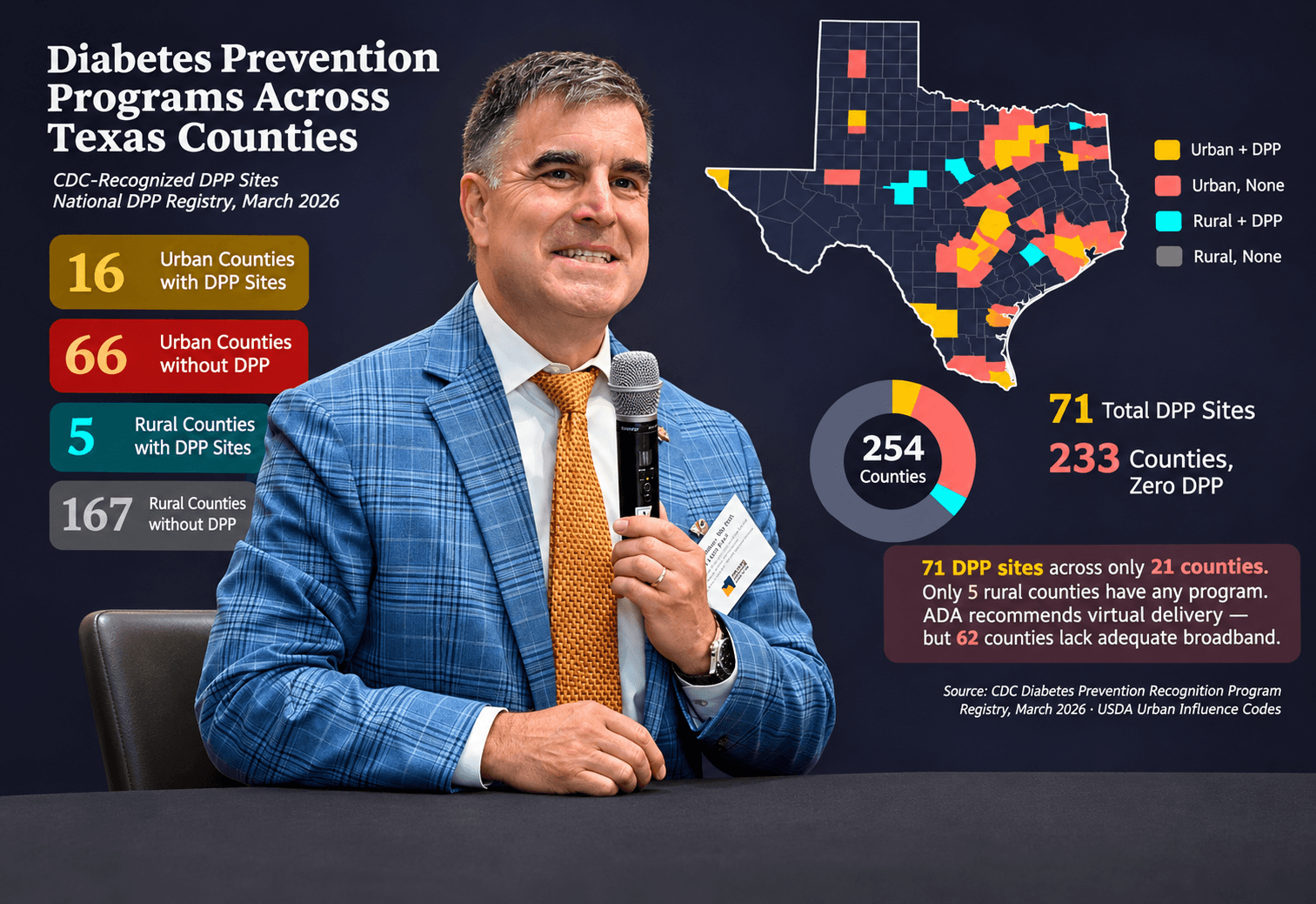
His presentation focused on the unequal distribution of healthcare resources across Texas, using diabetes as an example of how shortages of physicians, medical facilities, and preventive services affect patients.
According to figures Billings presented, Texas ranked 36th among 46 states with rural counties in overall rural health performance. The state ranked last among those states for access to care and had the nation’s highest uninsured rate.
Billings reported that approximately 40% of rural Texas hospitals operate at a financial loss, while 50% are vulnerable to closure. He also said 56% of rural hospitals no longer provide labor and delivery services, forcing some pregnant women to travel considerable distances to receive maternity care.
In the Big Bend region, Billings described patients traveling as long as three hours to reach maternity services in Alpine. He recalled cases in which women delivered babies along roadsides or inside ambulances because hospitals were too far away.
Hospital availability presents another serious challenge. Billings reported that 55 rural Texas counties have no hospitals. Statewide, 73 counties lack hospital facilities, including those rural counties.
He also cited data showing that 232 Texas counties have some form of healthcare professional shortage designation involving primary care, mental health, or dental services. The physician shortage is particularly severe in rural communities.
Of approximately 26,000 primary care physicians statewide, Billings said only about 1,900 practice in rural areas. That represents approximately 7.4% of the state’s primary care physicians serving about 11% of its population.
He reported that 40 rural counties have no primary care physicians. Specialized medical care is even more limited.
According to Billings, 179 rural counties lack endocrinologists, physicians who diagnose and treat diabetes and other hormonal disorders. Only nine rural counties have endocrinologists practicing within their boundaries.
These shortages can delay diagnosis, complicate treatment, and leave patients dependent on emergency departments for conditions that could otherwise be managed through regular medical care.
Billings said the statewide diabetes prevalence rate was approximately 13.4%, while some Texas-Mexico border counties reported rates exceeding 20%.
He identified poverty, inadequate health insurance, limited access to nutritious food, shortages of medical professionals, and unreliable internet service as overlapping barriers to effective diabetes management.
In Presidio County, where Billings has practiced for nearly two decades, approximately 40.7% of residents lack health insurance, according to figures he presented.
To explain the consequences, he compared two patients with diabetes receiving care in different parts of Texas. A patient in Houston with Medicare and secondary insurance may have access to an endocrinologist, diabetes education, a dietitian, community health workers, laboratory services, and a pharmacy within the same medical system.
A patient in Presidio County with an A1C reading of 8.2, indicating potentially uncontrolled diabetes, faces a different situation. The nearest endocrinologist may be 250 miles away. The county lacks a diabetes self-management education program and has no practicing dietitian.
Billings said community health workers are also unavailable locally, while limited internet access makes virtual healthcare difficult for some patients.
“The gap in our diabetes outcomes isn’t knowledge, it’s infrastructure,” Billings told the audience. He emphasized that patients cannot reasonably be expected to follow medical recommendations when the services required to carry them out are unavailable.
The shortage extends to diabetes prevention. Billings reported that 167 rural counties lack diabetes prevention programs, while 62 counties have inadequate broadband access to support reliable virtual healthcare services.
Food availability creates additional difficulties. In Presidio, he described limited fresh produce at local grocery stores and higher prices associated with transportation costs. Some residents have traditionally traveled across the border to Ojinaga, Mexico, where groceries may be more affordable.
Poverty adds another dimension. Billings presented figures showing that approximately 21% to 22% of Texas children live in poverty, compared with 23.3% in rural counties. He said child poverty exceeds 45% in some border communities. He connected those conditions to food insecurity, educational challenges, obesity, and increased risks of diabetes later in life.
Billings emphasized that improving rural healthcare requires more than recruiting additional physicians. Communities also need nurses, pharmacists, dietitians, behavioral health professionals, community health workers, medical assistants, and other personnel who support patient care. He reported that 100 rural counties have no community health workers and 93 counties have no dietitians.
Recalling the COVID-19 pandemic, Billings described how understaffed rural facilities struggled to care for seriously ill patients without sufficient personnel or outside assistance. He said those experiences demonstrated the consequences of inadequate investment in rural healthcare systems.
One solution he strongly supports is expanding federally qualified health centers (FQHCs). These facilities provide healthcare to underserved populations, including uninsured patients and people covered by Medicare and Medicaid.
Billings described how he merged his private medical practice with a federally qualified health center serving Marfa and Presidio approximately 14 or 15 years ago. That decision helped bring approximately $2.7 million in initial federal support to the region, allowing the organization to recruit another physician, expand dental and counseling services, establish a pharmacy, and develop rural family medicine residency training in partnership with Texas Tech.
He said federally qualified health centers could become essential providers in communities where hospitals have closed or face financial difficulties, as long as federal funding continues. Texas has experienced 27 rural hospital closures since 2010, according to figures Billings presented. He also discussed school-based clinics, mobile medical units, community telehealth centers, and improved transportation systems for laboratory specimens and medications.
Texas Tech has supported telehealth services at a small school district in Val Verde County, allowing students and staff to access medical care remotely. Billings described preliminary drone flights between Alpine and Presidio as another possible approach to transporting medical supplies and laboratory samples across long distances.
He also introduced a proposed Rural Admissions Medical Program intended to create more opportunities for students from rural communities to pursue medical careers.
Billings cited projections indicating that the Rio Grande Valley could face a 42% unmet demand for physicians by 2031, compared with 38% in Far West Texas and approximately 1.5% in Central Texas. He urged medical schools, healthcare institutions, government agencies, and community organizations to work together to address those shortages.
“We don’t need different standards,” Billings said. “Our patients deserve and have earned the same standards, but we need the same standards with systems to support them.”
His closing remarks emphasized the importance of cooperation and a shared commitment to improving rural healthcare.
“Many hands, many minds, but most importantly, many hearts can make an untenable or unimaginable task possible,” he said. For Billings, improving access means ensuring that patients in rural Texas can receive the same standard of medical care available in larger cities, regardless of their location.
“Sí se puede,” he concluded. “Together we can.”
See related story: