







Mega Doctor News

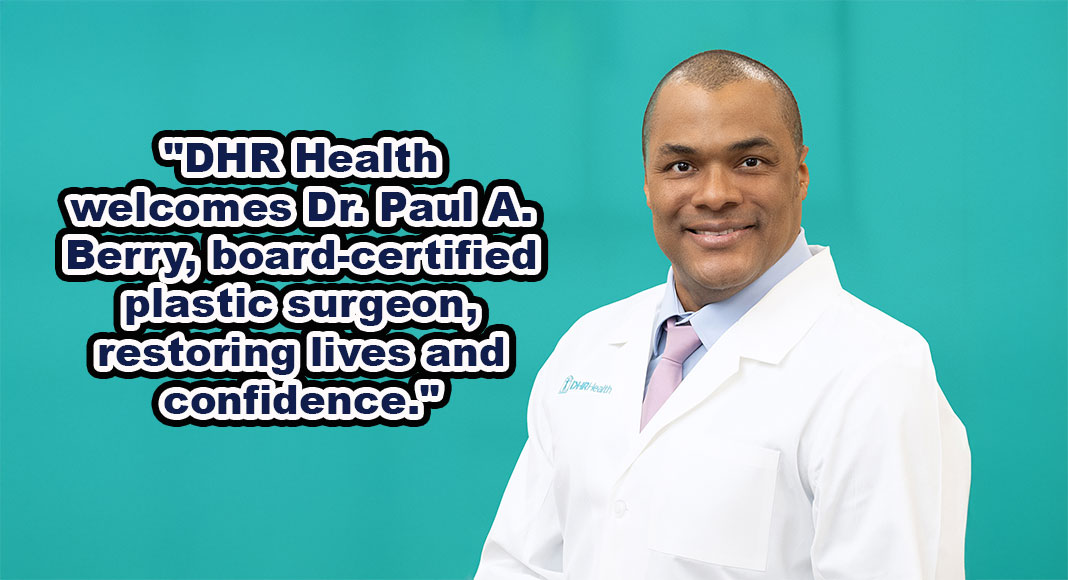
Edinburg, Texas: DHR Health, the largest physician-owned hospital in the U.S. and a proud healthcare provider in the Rio Grande Valley since 1997, is delighted to welcome Dr. Paul A. Berry to the DHR Health Plastic & Reconstructive Surgery Institute. Dr. Berry is a board-certified plastic surgeon who, like many of our dedicated plastic surgeons, is committed to transforming lives by restoring function, enhancing appearance, and empowering patients with renewed confidence and hope.
Dr. Berry brings a strong educational and professional background to DHR Health. He earned his medical degree at Washington University School of Medicine, where he was part of the NIH Medical Research Scholars Program. Afterward, he completed a combined residency (general surgery with specialized training in plastic surgery) at Texas A&M Health Science Center – Baylor Scott & White Medical Center.
Throughout his career, Dr. Berry has worked in various clinical settings, focusing on areas such as skin cancer, craniofacial reconstruction, breast reconstruction, body contouring, and aesthetic surgery. In addition to honing his surgical skills, Dr. Berry has been dedicated to teaching and mentoring surgical residents and medical students, helping shape the next generation of doctors while continuing to advance his own practice.

As a plastic surgeon, Dr. Berry believes in providing patient-centered care that prioritizes both aesthetic and functional outcomes. He takes the time to thoroughly understand each patient’s unique goals and concerns, making sure that treatment plans are tailored to achieve natural, personalized results. Dr. Berry is committed to promoting a supportive and compassionate environment, where patients feel empowered and confident throughout their surgical journey.
“As a plastic surgeon my approach is centered on helping patients through some of the most challenging moments of their lives. When faced with a diagnosis like breast cancer, patients are often overwhelmed by what they’ve lost. My goal is to not only focus on survival but to restore what’s been taken away and help them feel whole again. That’s why I got into this field—to offer care that rebuilds both their confidence and their quality of life,” said Dr. Berry.
When he’s not working, Dr. Berry likes staying active by going to the gym, playing chess, and keeping up with the latest research to make surgeries even safer. He is bilingual in Spanish and believes his diverse background helps him relate to his patients better.
Dr. Berry is currently accepting new patients at the DHR Health Plastic and Reconstructive Institute located at 1100 E. Dove Ave, Suite 400 in McAllen. To schedule an appointment, call (956) 362-8160.


