








Mega Doctor News
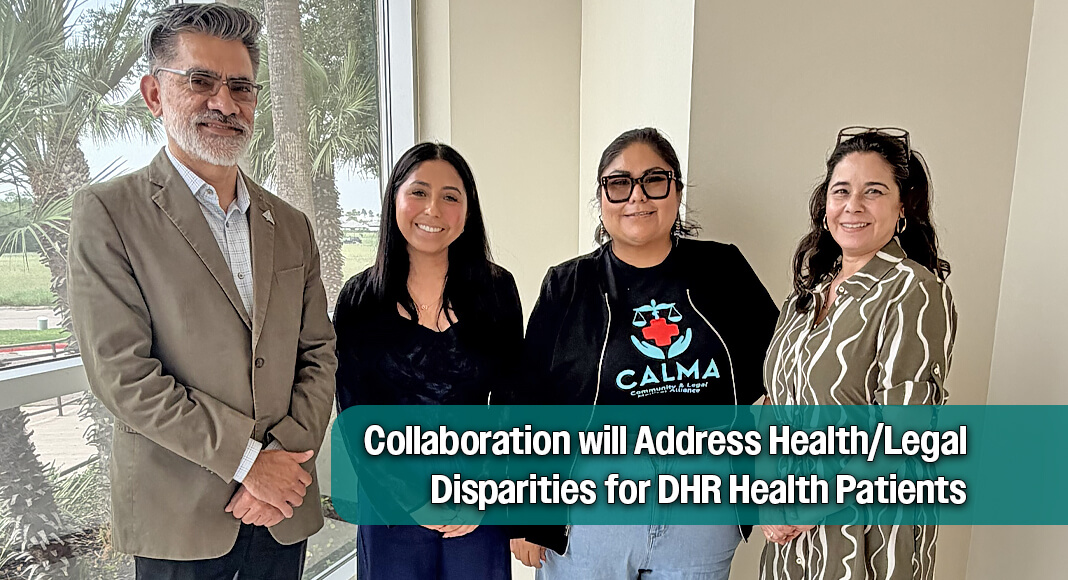
EDINBURG, Texas – DHR Health has partnered with the Texas A&M School of Law Legal Clinics to establish a unique medical/legal partnership that will help indigent patients, within its hospital system, who face legal issues outside the medical setting. The program, called CALMA (Community and Legal-Medical Alliance) will focus on helping patients, who meet certain income guidelines, to overcome legal barriers that impact their health. The goal of this program is not only to help patients but to strengthen DHR Health’s ability to deliver comprehensive care.
CALMA is supported by a moonshot grant from the Texas Access to Justice Foundation (TAJF) and managed by the Economic Justice Initiative (EJI) and Texas A&M University School of Law Legal Clinics. Attorneys, law students, and paralegals will provide free legal services to qualified patients in the areas of housing instability, public health benefits, advance care planning, and family law matters among others.
As DHR Health leadership explains, some patients who seek medical treatment face health inequities at home that often contribute to health-harming social needs.

“When legal issues remain unresolved for indigent patients, they create delays in seeking medical treatment, repeat visits, or even poorer health outcomes,” said Dr. Carlos Cardenas, DHR Health Chairman of the Board. “This partnership is designed to close this gap by embedding legal assistance into our healthcare delivery system and help our patients overall.”
To ensure support reaches those in greatest need, a patient must meet income criteria established by TAJF. Once enrolled, they may receive legal services in the areas of estate & health planning, housing & tenant rights, and public benefit appeals. Services will be administered on-site at DHR Health’s main hospital, located at 5501 S. McColl Road, by a team of legal access fellows and a staff attorney who will manage client intake, provide resources, and facilitate casework.
CALMA also partnered with the Texas Legal Services Center to help community members access additional resources via a legal kiosk located at the DHR Health main hospital location. Funded by TAJF, TLSC’s legal kiosk program is a statewide initiative to connect Texans with free legal resources. The legal kiosk gives patients free tools and resources to understand their rights, access court-ready forms, and receive free legal advice via real-time chat with a TLSC attorney on TexasLawHelp.org. Kiosk visitors at DHR Health spent almost 13 hours researching their legal issue or receiving legal assistance within the first 3 weeks of the kiosk installation.
“We are excited to expand the law school’s presence in the RGV and increase access to much-needed legal services,” said Fatma Marouf, director of Texas A&M Legal Clinics. “MLPs provide a critical service by recognizing legal needs as a social determinant of health.”
Pablo Javier Almaguer, senior attorney fellow at the Economic Justice Initiative, highlighted how such free services could positively impact the RGV community.
“In the Rio Grande Valley, access to legal services is deeply connected to health, stability, and dignity. Too many families face preventable crises—unsafe housing, loss of benefits, lack of planning—not because they don’t care, but because they lack access to legal support. CALMA recognizes that reality. This partnership is a powerful step toward treating legal help as an essential part of community wellbeing and ensuring RGV residents receive the holistic support they deserve.”
The legal kiosk is open 24 hours, and visitors may chat with an attorney Monday through Thursday from 10 AM to 2 PM. To learn more information, go to tlsc.org/kiosks. To learn more about DHR Health’s CALMA program that helps indigent patients with legal issues within DHR Health’s hospital system, email CALMA-DHR@tamu.edu.


