








DHR Health Hosts “Mammos for Moms” Mammogram Screening Special Throughout May

Translate to Spanish or other 102 languages!

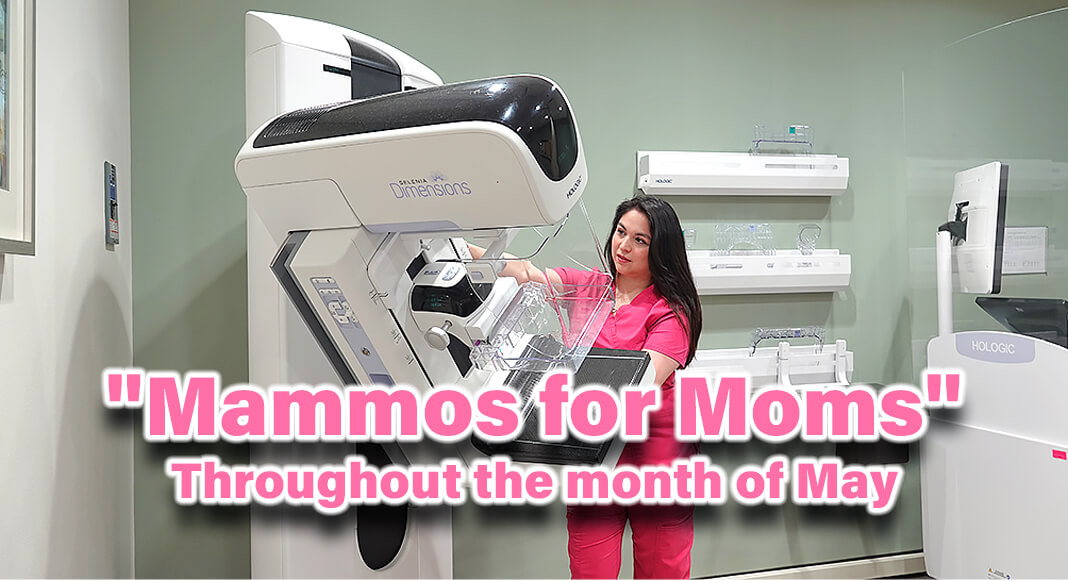
EARLY DETECTION IS KEY: DHR Health Mammogram Technician Valerie Suarez prepares the mammography unit for the next mammogram exam at DHR Health’s Medical Building located at 1100 E. Dove. Throughout the month of May, DHR Health is offering a "Mammos for Moms" at three different locations. The screening special includes a digital 3D tomo mammogram with radiologist interpretation for just $99. This initiative underscores DHR Health's commitment to facilitating accessible breast exam screenings. Exams require a referral from a primary care physician or gynecologist. Call today to make an appointment, (956) 362-7503. Image courtesy of DHR Health
EARLY DETECTION IS KEY: DHR Health Mammogram Technician Valerie Suarez prepares the mammography unit for the next mammogram exam at DHR Health’s Medical Building located at 1100 E. Dove. Throughout the month of May, DHR Health is offering a “Mammos for Moms” at three different locations. The screening special includes a digital 3D tomo mammogram with radiologist interpretation for just $99. This initiative underscores DHR Health’s commitment to facilitating accessible breast exam screenings. Exams require a referral from a primary care physician or gynecologist. Call today to make an appointment, (956) 362-7503. Image courtesy of DHR Health
- Advertisement -

As part of its commitment to women’s health, DHR Health is delighted to offer the “Mammos for Moms” screening special throughout the month of May. This screening mammogram will provide digital 3D (three dimensional) tomography imaging, with radiologist interpretation, for only $99. A referral from a primary care physician or gynecologist is required.

Breast cancer is a significant health concern, affecting millions of women worldwide. Early detection is crucial for successful treatment, and mammograms play a vital role in identifying breast abnormalities even before physical symptoms appear. 

Mammogram guidelines typically advise women with an average risk of breast cancer to start screening at age 40 and continue annually thereafter, according to the American Cancer Society, while the U.S. Preventive Services Task Force suggests starting at age 50 with biennial screenings for those aged 50 to 74. However, screening recommendations may vary based on individual risk factors, such as family history or genetic predispositions. Screening frequency is generally annual or biennial for those at average risk, though some organizations recommend stopping around age 75 or 80. Ultimately, screening decisions should be tailored to each woman’s unique circumstances, and it’s crucial to discuss screening options with a healthcare provider to determine the most suitable approach.

- Advertisement -

“Regular mammograms allow for the timely identification of abnormalities and provide personalized risk assessments, guiding further screening and preventive measures. By prioritizing mammograms, individuals empower themselves with knowledge and proactive steps toward maintaining breast health and overall well-being,” said Dr. Lisa Chapa, DHR Health Breast Surgical Oncologist.

The mammogram screening special is being offered at several DHR Health locations. These include: Women’s Imaging Center located at the DHR Health Medical Building, 1100 E. Dove, DHR Health Women’s Imaging Center, 300 Lindberg in McAllen and the DHR Health Imaging Center at Mid Valley located at 1121 James Street in Weslaco. To make an appointment, call (956) 362-7503. 

- Advertisement -
- Advertisement -

- Advertisement -

More Articles

DHR Health Transplant Institute Earns Top State and National Rankings

The DHR Health Transplant Institute announced today that it has been recognized among the state’s and nation’s top performing kidney transplant centers, earning the no. 2 ranking in the State and no. 16 ranking in the Nation, according to the Scientific Registry of Transplant Recipients (SRTR).  

New Noninvasive Tech Tracks Infant Vital Signs Without Wires

In the neonatal intensive care unit, the most fragile patients in medicine are often the most heavily wired. Premature babies, some weighing less than a pound, can be tethered to a tangle of cables, monitors, and sensors. Each blood draw to check sugar levels or electrolytes means another needle, another bandage, another moment of stress for an infant whose skin is still forming.

STHS McAllen Receives National Award for Advancing Cardiac Arrest Care & Improving Patient Survival

In the moments following cardiac arrest, every second counts. Rapid intervention, seamless teamwork and evidence-based care can make the difference between life and death.

STHS GME Consortium Welcomes Incoming Class of 65 Medical Residents

The future of healthcare in the Rio Grande Valley is brighter than ever as 65 new medical residents begin their training through the South Texas Health System (STHS) GME Consortium.
- Advertisement -

