
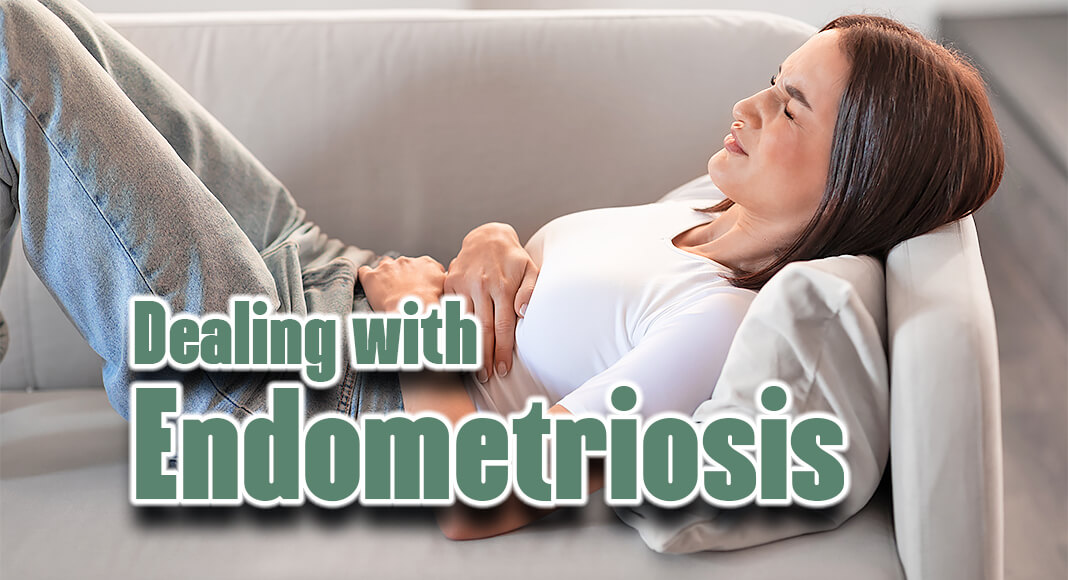
Dealing with Endometriosis

Translate to Spanish or other 102 languages!

Endometriosis can start at a person’s first menstrual period and last until menopause. Image for illustration purposes
- Advertisement -

By Texas Tech University Health Sciences Center El Paso

Gynecology specialist Mary Ann Son, M.D. with Texas Tech Physicians of El Paso. Image Courtesy of  TTUHSC El Paso

Newswise — Endometriosis is a disease in which tissue similar to the lining of the uterus grows outside the uterus. It can cause severe pain in the pelvis, cystic growths in the ovaries and other organ spaces, and makes it harder to get pregnant.

  • Endometriosis affects roughly 10% (190 million) of reproductive age women and girls globally.
  • Endometriosis can start at a person’s first menstrual period and last until menopause.
  • It is a chronic disease associated with severe, life-impacting pain during periods, sexual intercourse, bowel movements and/or urination.
  • Access to early diagnosis and effective treatment of endometriosis is important.
  • It is important to schedule an exam with an Ob Gyn to determine if you are at risk.
- Advertisement -


- Advertisement -

- Advertisement -

More Articles

New Study Explores Ear Acupressure as Relief for Chemo-Induced Neuropathy

Mega Doctor News by UTHealth Houston Newswise — A small point on the ear could...

New Ways to Treat Endometriosis and Fibroids

Endometriosis and uterine fibroids are two of the most common gynecological conditions. While they have important differences, they also have things in common.

Nursing Job Turnover Reaches Historic Highs

Mega Doctor News by University of Michigan Newswise - The COVID-19 pandemic did not...

How Sleepy Days and Restless Nights Damage Your Blood Pressure

A new study from Penn State College of Medicine to be presented at the SLEEP 2026 annual meeting found that excessive daytime sleepiness is associated with higher odds of both prevalent and incident hypertension, and taking 30 minutes or longer to fall asleep further increases that risk.
- Advertisement -