Mega Doctor News

By University of Virginia Health System
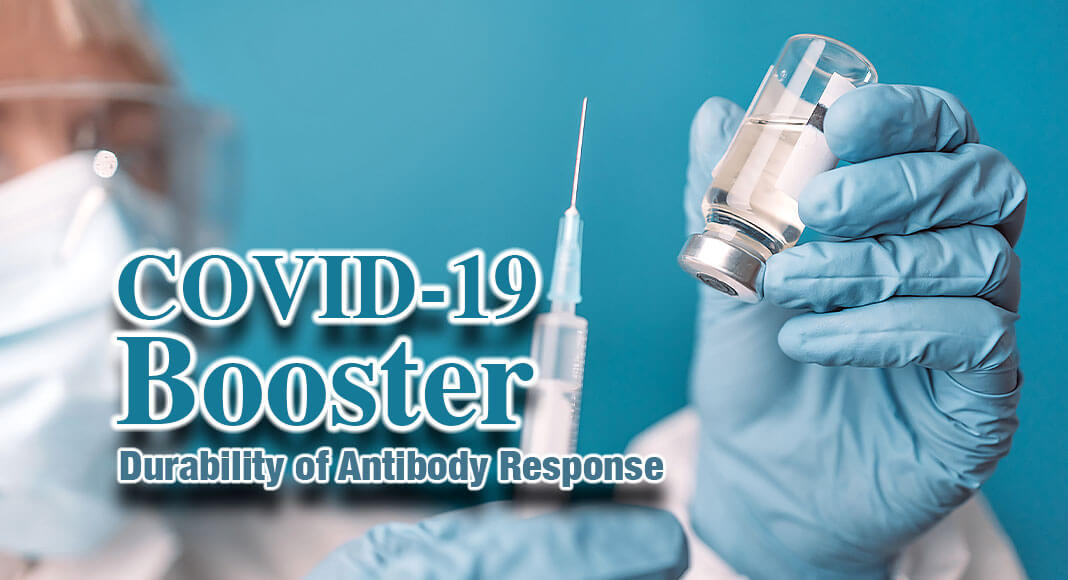
Newswise — New research from the University of Virginia School of Medicine speaks to the benefits of a COVID-19 booster.
The new findings shed light on how mRNA boosters – both Pfizer and Moderna – affect the durability of our antibodies to COVID-19. A booster, the researchers report, made for longer-lasting antibodies for all recipients, even those who have recovered from a COVID-19 infection.

“These results fit with other recent reports and indicate that booster shots enhance the durability of vaccine-elicited antibodies,” said senior researcher Jeffrey Wilson, MD, PhD, of UVA Health’s Division of Asthma, Allergy and Immunology.
Tracking COVID-19 antibodies
Wilson and his collaborators looked at antibody levels following a booster in 117 UVA employee volunteers and compared those results with the levels seen in 228 volunteers after their primary vaccination series. Antibody levels one week to 31 days after the primary series and booster were similar, but the boosted antibodies stuck around longer regardless of whether the person had had COVID-19.
“Our initial thought was that that boosters would lead to higher antibody levels than the primary vaccine series, but that was not what we found,” said researcher Samuel Ailsworth, the first author of a new scientific paper outlining the findings. “Instead, we found that the booster led to longer lasting antibodies.”
Antibody levels naturally decline over time after an infection or after vaccination, but higher levels are thought to be more protective. Thus, longer-lasting antibodies would be expected to provide more sustained immunity against severe COVID-19.
The researchers found that the antibodies generated by the Moderna booster proved longer lasting than those generated by the Pfizer booster. Moderna’s antibody levels exceeded Pfizer’s out to five months, the end of the study period. Although the findings were statistically significant, Wilson notes that both mRNA vaccine boosters provide enhanced and fairly similar levels of protection against COVID-19 in recently published large epidemiologic studies.
Because the frequency of COVID-19 infections in the community was relatively high when the boosters were being given, the authors also studied the effect of COVID-19 infection on antibody levels. The findings suggest that the “enhanced antibody durability observed after booster vaccination was not explained by hybrid immunity,” the researchers report in their paper.
The new results are the latest from Wilson’s team tracking the antibody response to the COVID-19 vaccines over time. The researchers previously found that after the primary vaccination series the antibodies generated by Pfizer’s COVID-19 vaccine rose more slowly and declined more quickly than those generated by the Moderna vaccine. That study also found that older recipients of the Pfizer vaccine generated fewer antibodies than did younger recipients – but this wasn’t the case for Moderna, where age did not appear to be a factor.
In the latest results, younger booster recipients initially generated more antibodies than did older recipients, but this difference disappeared with time.
Wilson notes that this study adds to the accumulating evidence that boosters are an important of protecting the community from COVID-19. “Although only about half of the U.S. population that is eligible for a booster has received one, it is increasingly clear that boosters enhance the protection that is conferred by the primary series mRNA vaccines alone,” he said.