
Mega Doctor News
By American Heart Association
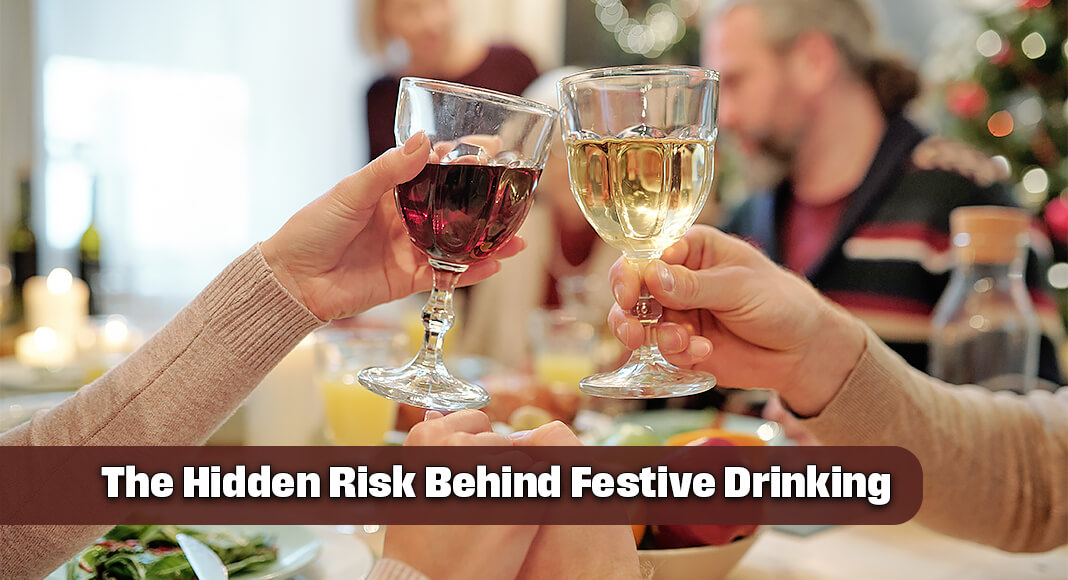
“Holiday heart syndrome” sounds almost joyful, perhaps something that would afflict an excitable elf. But for people who mix alcohol with their seasonal celebrations, it’s a potentially serious problem.
The term was coined in 1978 by a New Jersey doctor who observed a link between holiday binge-drinking and subsequent heartbeat irregularities. Since then, evidence of the links between drinking and the type of irregular heartbeat called atrial fibrillation, or AFib, have become clearer, said Dr. Mariann R. Piano, the Nancy and Hilliard Travis Professor of Nursing at the Vanderbilt University School of Nursing in Nashville, Tennessee.

And while the term “holiday heart” fits, given that alcohol sales spike between Thanksgiving and New Year’s Day, it’s potentially a year-round concern, Piano said. She led the writing committee for an American Heart Association scientific statement on alcohol use and cardiovascular disease that was published in the journal Circulation in June.
What is atrial fibrillation?
Although the term “holiday heart” is sometimes used casually for broader concerns, researchers have spent decades looking specifically at connections between binge drinking and AFib.
AFib occurs when the heart’s upper chambers, or atria, contract chaotically or quiver. This can make blood pool in the atrium, which can lead to blood clots. Those clots can enter the bloodstream, travel to the brain and cause a stroke.
Someone with AFib might feel faint or dizzy or feel a pounding in their chest, Piano said. “I think the scary thing is – people may not have any symptoms, so that’s what makes it a dangerous arrhythmia.”
Anybody who thinks they’ve had AFib symptoms should check with a medical professional, she said.
What are the links between AFib and alcohol?
Although large studies have suggested links between alcohol and AFib, efforts to study alcohol use and cardiovascular disease can be challenging, Piano said. One of the most thorough recent efforts on linking alcohol consumption and AFib, she said, was led by Dr. Gregory M. Marcus, who also was on the team that wrote the scientific statement on alcohol.
In the prospective study, published in the Annals of Internal Medicine in November 2021, 100 people who previously had AFib wore heart monitors and alcohol sensors and recorded their drinking in real time over four weeks. During the study period, 56% of the study participants had an AFib episode. People who had more than two drinks within four hours were more than 3 1/2 times as likely to have an AFib episode as compared with those who had not been drinking.
Older case studies of holiday heart syndrome have observed a correlation between drinking and AFib in people who binge-drank only occasionally. A more thorough look from 2024 studied 193 people in Germany, with an average age of about 30, who had been planning a night of heavy alcohol use. It found significant changes in heartbeats that peaked after four hours of drinking. About 5% of the drinkers had some kind of heartbeat-related irregularity within 48 hours of binge drinking.
What does alcohol do to the heart?
The exact ways alcohol might lead to AFib are still being figured out, Piano said, but alcohol can interfere with the atria’s electromechanical functions.
Alcohol could affect the heart indirectly as well, she said. Overdrinking can lead to vomiting, and that can lead to low levels of potassium and other electrolytes, which play many important roles with the heart.
It’s not clear exactly how much alcohol it takes to pose an AFib risk. But research suggests that the more you drink, the higher the odds of a problem.
Beyond AFib, heavy use of alcohol has also been linked to risks of elevated blood pressure, stroke, heart attack and other cardiac problems, she said.
The American Heart Association recommends that if you don’t already drink, don’t start. However, if people choose to drink, men should consider consuming no more than two drinks a day and and women just one drink. One drink equals a 12-ounce beer, 8 ounces of malt liquor, a 5-ounce glass of wine or 1.5 ounces of 80-proof liquor.
Piano noted a 2020 study from Australia where people who usually consumed 10 or more drinks a week lowered their risk of AFib by cutting back their drinking. People who don’t drink at all “definitely have a lower risk” of having AFib, she said.
What are some of the broader risks involving alcohol and the heart?
“Holiday heart” is a misnomer, Piano said, because the risks alcohol poses to the heart aren’t limited to AFib – or the holidays.
Having more than two drinks a day has been linked to an increased risk of stroke as compared with people who drink less. There’s also “really good data” showing that drinking increases blood pressure in the near term and over time, Piano said.
So if you already have high blood pressure, “reducing your alcohol intake could be a very important lifestyle change,” Piano said.
How should people approach drinking during the holidays?
If you choose to drink, be mindful about it, Piano suggested. “I don’t think people always pay attention to how much they are actually drinking.”
Before you go out, set a limit on how much you plan to drink, she said. If you know you’re going to a holiday party in the afternoon and plan to have two drinks there, commit to not drinking if you have another event that night.
You can slow down your consumption by alternating alcoholic drinks with plain water. Or, she said, consider the interesting new non-alcoholic alternatives many establishments are offering.
And be aware of the health effects of drinking too much every day, she said, “not just around the holidays.”
Looking for an eye-appealing, alcohol- and sugar-free drink for your holiday gathering? Try this recipe for sparkling green tea cranberry spritzers.