



Mega Doctor News
By Vincent Jacobbi / Mayo Clinic News Network
ROCHESTER, Minn. — Artificial intelligence (AI) applied to abdominal imaging can help predict adults at higher risk of falling as early as middle age, a new Mayo Clinic study shows. The research, published in Mayo Clinic Proceedings: Digital Health, highlights the importance of abdominal muscle quality, a component of core strength, as a key predictor of fall risk in adults aged 45 years and older.
Falls are a leading cause of injury, especially among older adults. Mayo Clinic researchers found that early markers of fall risk may be detectable in CT scans that many patients have for other reasons.

Working with radiology bioinformatics experts, they set out to determine whether AI-derived measurements of fat distribution, muscle size and density and bone quality could reveal early signs of noteworthy physical changes.
They found that muscle density, a measure of muscle quality, was a much stronger predictor of fall risk than muscle size.
“Muscle size is just a measure of how big your muscles are,” says lead author Jennifer St. Sauver, Ph.D., an epidemiologist at Mayo Clinic in Rochester. “Muscle density is different; on a CT scan, it’s a measure of how ‘dark’ and homogenous the muscles are.”
More homogenous muscles are denser and tend to have less fat in them, Dr. St. Sauver notes.
“Previous studies have suggested that muscle density, not size, is more strongly associated with physical strength and function,” she says. “Our results support the idea that we should be focusing on muscle density, not muscle size, when we try to understand physical function.”
The research team expected to see links between poorer performance on abdominal muscle measures and a higher incidence of falls in older adults, but what surprised them most was the strength of these associations in middle-aged adults and how strongly those measures predicted fall risk.
“Leg muscles have been associated with physical function, but our findings show that abdominal muscles also play a significant role,” Dr. St. Sauver says.
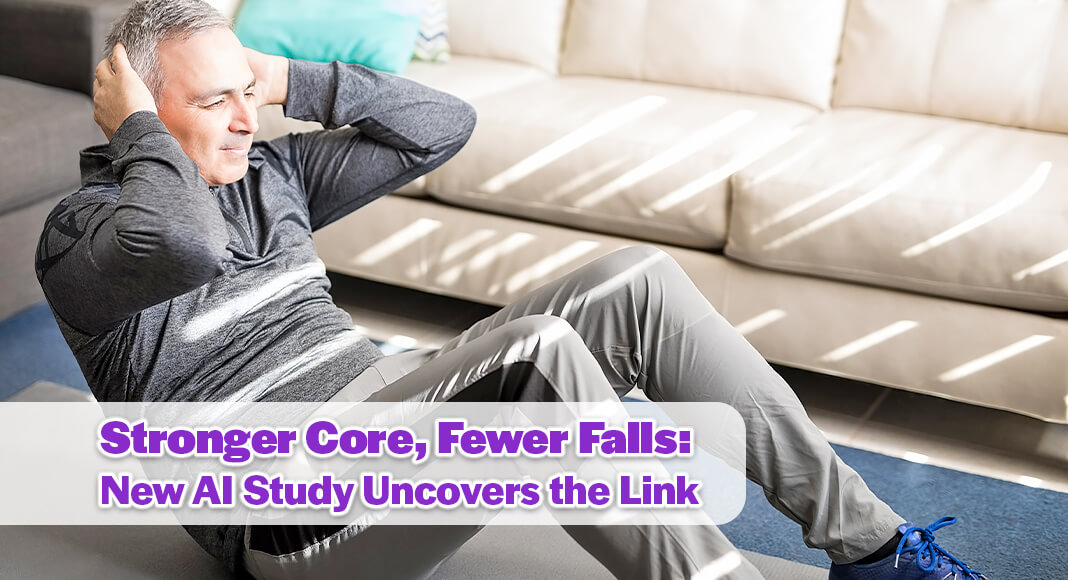
The findings underscore the importance of maintaining good core strength throughout adulthood, she adds.
“One of the most important messages from this research is to keep your abdominal muscles in the best shape possible,” Dr. St Sauver says. “Doing so may provide benefits that start in midlife and continue well into older adulthood.”
For tips on improving your abdominal core strength, visit mayoclinic.org.
Information source: Mayo Clinic News Network