








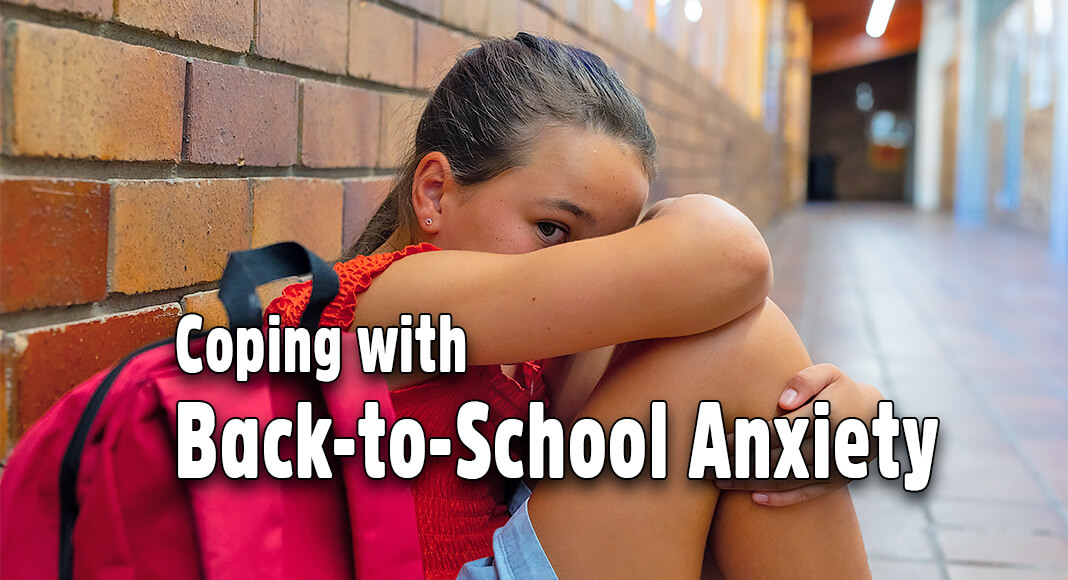
Coping with Back-to-School Anxiety

A child psychologist offers some tips to help ease your child's anxiety about heading back to school this month.

Translate to Spanish or other 102 languages!

“Try to focus on the positives. You don't want to minimize the worries. You never want to say, ‘You have nothing to worry about.’ If they're worried, they're worried,” said Dr. Jensen. Image for illustration purposes
“Try to focus on the positives. You don’t want to minimize the worries. You never want to say, ‘You have nothing to worry about.’ If they’re worried, they’re worried,” said Dr. Jensen. Image for illustration purposes
- Advertisement -

CLEVELAND CLINIC – If your little one is anxious about going back to school, they’re not alone.

It can be a common feeling.

So, what can you do to help them with those first day jitters?

- Advertisement -

“For kids who are more anxious, you don’t want to feed into that too much. You want to start with like, ‘I’m so excited about you going into fourth grade this year,’ and see what they say,” said Vanessa Jensen, PsyD, psychologist for Cleveland Clinic Children’s. “I find ‘I’ statements work better than asking questions. When you say, ‘Are you worried about this year?,’ you’re kind of setting them up.”

Dr. Jensen said a child may not always tell you that they’re anxious.

Instead, you’ll notice signs with their behavior.

For example, they may keep asking which kind of school supplies they should buy or seem to be obsessing over what to wear the first day.

- Advertisement -

Dr. Jensen said that can be a good time to ask if something is on their mind.

And again, avoid asking them if they are “worried.”

You could say something like, “it’s okay to have wondering thoughts.”

Another tip is to share stories from when you were in school, which can show them you understand how they may be feeling.

“Try to focus on the positives. You don’t want to minimize the worries. You never want to say, ‘You have nothing to worry about.’ If they’re worried, they’re worried,” said Dr. Jensen. “But to help them understand, you know, we’ll get through it. I know we can do it. I know you can do it. And we’ll keep talking about it.”

Dr. Jensen said if your child is regularly making excuses for why they don’t want to go to school, it’s worth talking with their teacher or guidance counselor about the situation.

It may also be helpful for them to speak with a mental health professional.

- Advertisement -
- Advertisement -

- Advertisement -

More Articles

UT Health San Antonio Introduces AI-Assisted Colonoscopies

A routine colonoscopy may last less than an hour. But what happens during that procedure can change, or even save, a life years before cancer ever has a chance to develop.

Why Less Might Be More for Antibiotics in Joint Replacements

For anyone undergoing a total hip or knee replacement, the goal is a smooth recovery and a return to pain-free movement. However, a possible risk from these procedures is periprosthetic joint infection.

How to Stay Hydrated as Summer Temperatures Soar

As the temperatures continue to climb this summer, so does the risk of dehydration. 

How to Manage Back Pain on Your Next Vacation

As the travel season hits its peak, millions are preparing to spend hours on planes, trains, and in cars. That can dampen the excitement for the 1 in nearly 12 people worldwide who live with chronic low back pain.  But with proper planning, it is possible to travel without aggravating back conditions and enjoy a well-deserved break, say Hackensack Meridian Health orthopedic specialists.
- Advertisement -

