









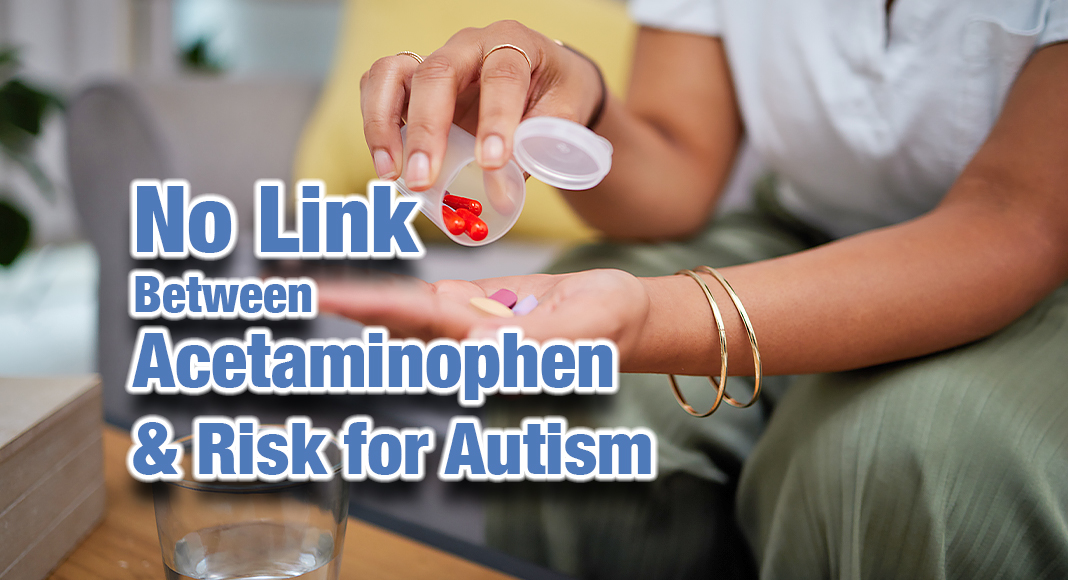
No Link Between Acetaminophen and Risk for Autism, Study Finds

An OB-GYN comments on a recent study which found no link between the use of acetaminophen during pregnancy and an increased risk for neurodevelopmental disorders, such as autism.

Translate to Spanish or other 102 languages!

Researchers looked at thousands of siblings and found no difference whether their mom took acetaminophen with one child but not the other while pregnant. Image for illustration purposes
- Advertisement -

CLEVELAND CLINIC – A recent study found taking acetaminophen during pregnancy does not increase the risk of neurodevelopmental disorders.

For those unfamiliar, the over-the-counter medication is commonly used for pain relief and fevers.

Catherine Caponero, MD. Image Source clevelandclinic.org

“This is something that I think is really important for moms and parents-to-be. There are not a lot of options out there right now for women just because this hasn’t been very well studied,” said Catherine Caponero, MD, obstetrician-gynecologist for Cleveland Clinic. “We want to make sure that we are providing mothers and parents-to-be with options to control pain and fever during pregnancy because these conditions truly can increase the risk of things like autism and other intellectual disabilities.”


- Advertisement -

Dr. Caponero said acetaminophen is actually one of the few medications pregnant women can take if they’re experiencing pain or a fever.

However, some choose not to for fear it could somehow harm the baby.

This study debunks those claims.

Researchers looked at thousands of siblings and found no difference whether their mom took acetaminophen with one child but not the other while pregnant.

- Advertisement -

As a result, they determined there to be no link between the medication and an increased risk for neurodevelopmental disorders, like autism or ADHD.

“The data is very clear that we can provide these medications, and that these are safe medications for moms. They should not feel guilt or shame around taking these medications,” said Dr. Caponero.

She advises women who are pregnant and unsure of which medications to take or how much to consult with their physician.


- Advertisement -
- Advertisement -

- Advertisement -

More Articles

STHS & Prominence Health to Host Seminar on Memory Loss, Cognitive Decline and Brain, Dec. 4

Changes in memory, thinking and behavior can affect an older adult's ability to manage daily activities and maintain independence.

FDA Approves First New Hormone Therapy for Early-Stage Breast Cancer in More Than 20 Years

The U.S. Food and Drug Administration has approved Wilserdly (giredestrant), used alone after surgery in adults with estrogen receptor–positive, HER2-negative breast cancer — the most common subtype of the disease. A once-daily oral tablet, Wilserdly is the first new hormone therapy for early-stage breast cancer in more than 20 years.

How to Avoid Getting Sick During Holiday Travel

Amid one of the busiest travel weeks of the year, an infectious disease specialist is sharing advice on how to lower your risk of getting sick when traveling this Thanksgiving.

STHS’s Latest “South Texas Healthy Living” Episode to Examine Bladder Health, Nov. 29

Healthy bladder function plays an important role in overall wellness, helping the body eliminate waste efficiently while supporting comfort, restful sleep and an active lifestyle.
- Advertisement -