
Mega Doctor News


By Michael Merschel, American Heart Association News
Your favorite summertime playlist probably has more songs about surfing than about potential health risks. But with much of the nation having already sweated out a historic heat wave in June, health experts would like to add a note of caution to the mix.
Hot weather is like a stress test for your heart, said Dr. Lance Becker, chair of emergency medicine at Northwell Health, a health care provider in New York. And some people respond poorly to such stress. “They could have a heart attack. Their congestive heart failure symptoms could get much worse. Or they could have an arrhythmia,” the medical term for an irregular heartbeat.

The risk to your heart and brain can be serious.
A 2020 report by the Centers for Disease Control and Prevention cited research showing that hospital admissions for cardiovascular problems jumped in the days after temperatures spiked. And a 2017 review of research in the American Heart Association journal Stroke concluded that hot temperatures seem to increase the immediate risk of having a clot-caused ischemic stroke, the most common type of stroke.
Heat regulation in humans is all about blood flow. A healthy body sheds heat by pushing blood to the skin. We also sweat, and as sweat evaporates, it carries more heat away.
It’s usually a “pretty darn good mechanism,” Becker said. But excessive heat can overwhelm it. And then things can become “very, very dangerous.”
Dr. Rachel M. Bond, director of women’s heart health at Dignity Health in Arizona, said anyone with a history of heart disease, high blood pressure, stroke or obesity is at higher risk for heat-related problems. Similarly, the CDC warns that people with diabetes may have damage to blood vessels and nerves that can affect their ability to cool off.
What can you do to stay safe?
Know these symptoms. Signs of heat exhaustion include headache, dizziness, weakness, nausea and cool, moist skin. It can be treated by moving out of the heat or using a damp cloth to cool off. If symptoms don’t improve within an hour, seek medical attention.
Heat stroke is more severe. Symptoms include a rapid, strong pulse; body temperature above 103 F; and red, hot, dry skin. “That is actually a medical emergency,” Bond said, and people should call 911.
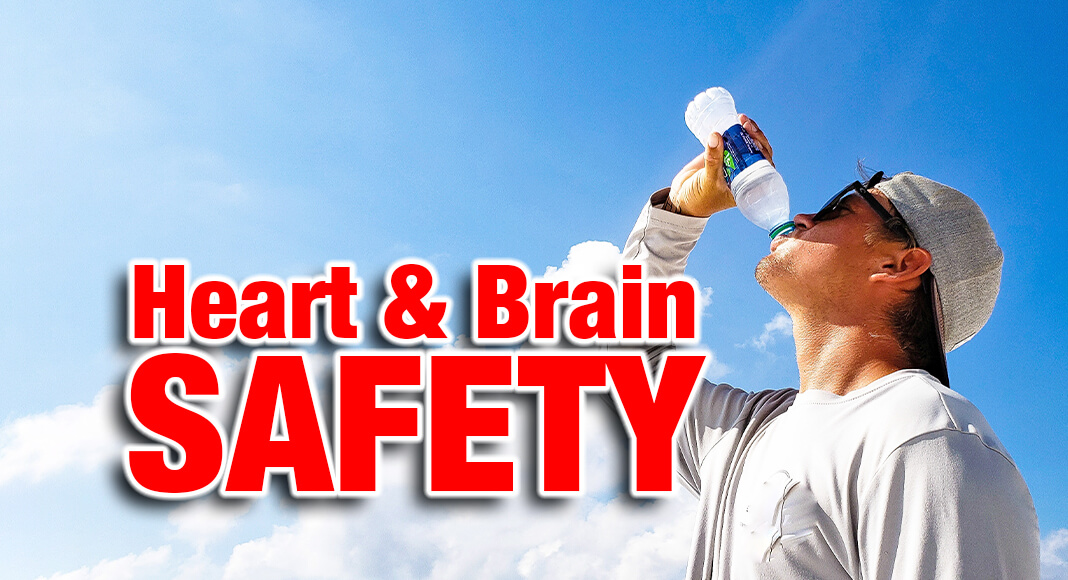
Drink lots of water. Hydration helps the heart pump more easily and helps the muscles work more efficiently, Bond said. The exact amount of fluids you need can vary. Bond typically encourages her patients to drink at least 64 ounces a day, unless they have cardiovascular conditions that would limit them.
But not alcohol. Avoid it, Bond said. It can dehydrate you.
Keep cool. If you don’t have air conditioning, or can’t get to a place that does, Becker suggests getting a fan and a spray bottle or damp cloth.
“The combination of sitting directly in front of a fan and then either spraying a little water on your body or taking a cold wash rag and putting water on your body and evaporating that water off of your skin will help cool you down,” he said. “That is actually one of the things we do to people in the emergency department.”
Monitor medications. Because of the extra strain on their systems, heart patients need to be diligent about keeping up with prescriptions.
Some situations might require a doctor’s help. People with high blood pressure or heart failure might use diuretics to help rid the body of excess fluid. But they also might need to increase their fluid intake to cope with the heat. It’s a confusing situation, Becker said. “Because of that, we generally recommend that those people simply avoid heat stress, because it is very difficult to manage that properly.”
Watch what you eat. If you grew up enjoying summertime staples such as watermelon or cucumbers, go right ahead, Bond said; they’re full of water.
But you may want to avoid heavy meals, Becker said. When your body is straining to push blood to the skin, that’s not the best time to eat a big meal that’s going to demand more blood go to your digestive system.
Watch the clock – and your clothes. In the triple-digit desert heat of Phoenix, Bond and other physicians routinely remind people to avoid going outdoors in the early afternoon and encourage people to wear loose, lightweight, light-colored clothing.
Exercise, but be smart about it. Even in the heat, exercise is important for long-term health. But if you have the option, move your workout indoors – or take up swimming.
Parents and coaches can encourage youth sports but need to be aware of the risks. “Unfortunately, we do lose young people this time of year,” Bond said. The CDC provides heat-related guidance for athletes.
Take care of one another. “This is really the time for community spirit,” Becker said. Social isolation is a root cause in many of the heat deaths he sees.
He suggests checking on at-risk neighbors, friends and relatives. Say, “It’s going to be really hot. Can I help you out?” Invite them to share time in an air-conditioned space. “Because this is truly a time where that kind of spirit can save people’s lives.”