Mega Doctor News
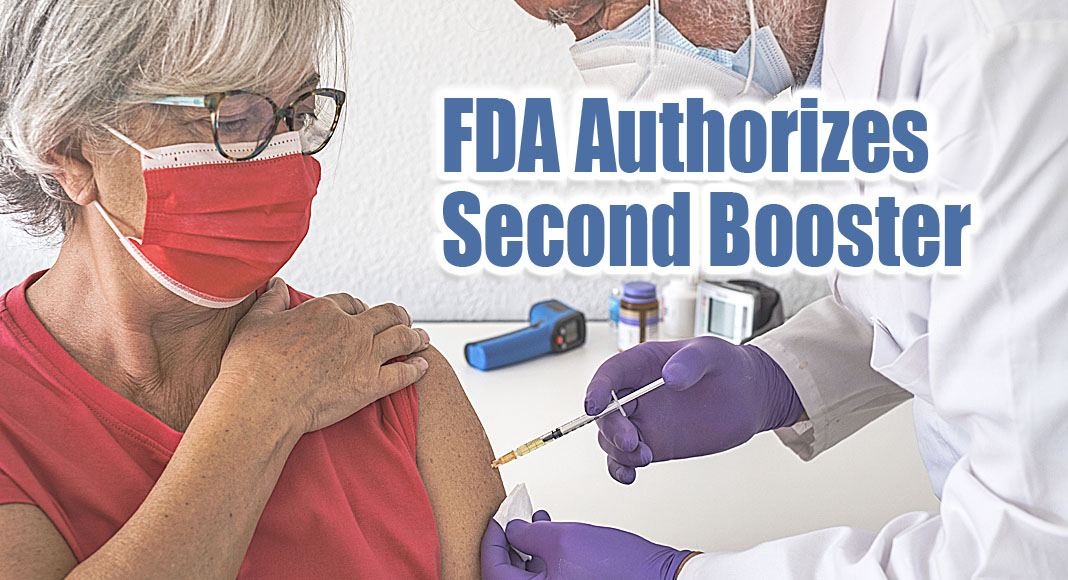
The U.S. Food and Drug Administration authorized a second booster dose of either the Pfizer-BioNTech or the Moderna COVID-19 vaccines for older people and certain immunocompromised individuals. The FDA previously authorized a single booster dose for certain immunocompromised individuals following completion of a three-dose primary vaccination series. This action will now make a second booster dose of these vaccines available to other populations at higher risk for severe disease, hospitalization and death. Emerging evidence suggests that a second booster dose of an mRNA COVID-19 vaccine improves protection against severe COVID-19 and is not associated with new safety concerns.
The agency amended the emergency use authorizations as follows:
- A second booster dose of the Pfizer-BioNTech COVID-19 Vaccine or Moderna COVID-19 Vaccine may be administered to individuals 50 years of age and older at least 4 months after receipt of a first booster dose of any authorized or approved COVID-19 vaccine.
- A second booster dose of the Pfizer-BioNTech COVID-19 Vaccine may be administered to individuals 12 years of age and older with certain kinds of immunocompromise at least 4 months after receipt of a first booster dose of any authorized or approved COVID-19 vaccine. These are people who have undergone solid organ transplantation, or who are living with conditions that are considered to have an equivalent level of immunocompromise.
- A second booster dose of the Moderna COVID-19 Vaccine may be administered at least 4 months after the first booster dose of any authorized or approved COVID-19 vaccine to individuals 18 years of age and older with the same certain kinds of immunocompromise.
“Current evidence suggests some waning of protection over time against serious outcomes from COVID-19 in older and immunocompromised individuals. Based on an analysis of emerging data, a second booster dose of either the Pfizer-BioNTech or Moderna COVID-19 vaccine could help increase protection levels for these higher-risk individuals,” said Peter Marks, M.D., Ph.D., director of the FDA’s Center for Biologics Evaluation and Research. “Additionally, the data show that an initial booster dose is critical in helping to protect all adults from the potentially severe outcomes of COVID-19. So, those who have not received their initial booster dose are strongly encouraged to do so.”

Today’s action applies only to the Pfizer-BioNTech and Moderna COVID-19 vaccines and the authorization of a single booster dose for other age groups with these vaccines remains unchanged. The agency will continue to evaluate data and information as it becomes available when considering the potential use of a second booster dose in other age groups.
The FDA-authorized Pfizer-BioNTech COVID-19 Vaccine and the FDA-approved Comirnaty can be used to provide the authorized booster dose(s). Similarly, the FDA-authorized Moderna COVID-19 Vaccine and the FDA-approved Spikevax are authorized to provide the authorized booster dose(s).
Information to Support Authorization of a Second COVID-19 Booster Dose
The FDA has determined that the known and potential benefits of a second COVID-19 vaccine booster dose with either of these vaccines outweigh their known and potential risks in these populations. The evidence considered for authorization of a second booster dose following primary vaccination and first booster dose included safety and immune response information provided to the agency as well as additional information on effectiveness submitted by the companies.
A summary of safety surveillance data provided to the FDA by the Ministry of Health of Israel on the administration of approximately 700,000 fourth (second booster) doses of the Pfizer-BioNTech COVID-19 Vaccine given at least 4 months after the third dose in adults 18 years of age and older (approximately 600,000 of whom were 60 years of age or older) revealed no new safety concerns.
The safety of Moderna COVID-19 Vaccine, when administered as a second booster dose, is informed by experience with the Pfizer-BioNTech COVID-19 Vaccine and safety information reported from an independently conducted study in which the Moderna COVID-19 Vaccine was administered as a second booster dose to 120 participants 18 years of age and older who had received a two-dose primary series and a first booster dose of Pfizer-BioNTech COVID-19 Vaccine at least 4 months prior. No new safety concerns were reported during up to three weeks of follow up after the second booster dose.
Immunogenicity data from an ongoing, open-label, non-randomized clinical study in healthcare workers at a single center in Israel were reported in a publication provided to the FDA. In this study, individuals 18 years of age and older who had received primary vaccination and a first booster dose with Pfizer-BioNTech COVID-19 Vaccine were administered a second booster dose of Pfizer-BioNTech COVID-19 Vaccine (154 individuals) or Moderna COVID-19 Vaccine (120 individuals) at least four months after the first booster dose. Among these individuals, increases in neutralizing antibody levels against SARS-CoV-2 virus, including delta and omicron variants were reported two weeks after the second booster as compared to 5 months after the first booster dose.
The amendments to the EUAs to include a second booster dose for these populations were granted to Pfizer Inc. and ModernaTX Inc.