The wearable flexible patch would completely eliminate the need for multiple finger sticks. Image for illustration purposes.
Mega Doctor News
- Advertisement -
By University of California San Diego Health
A physician and nanoengineers at UC San Diego have successfully tested a noninvasive skin patch prototype that monitors blood glucose levels, a daily requirement for many persons with diabetes. The patch is thin, lightweight, easily applied and removed, and works for up to eight hours.
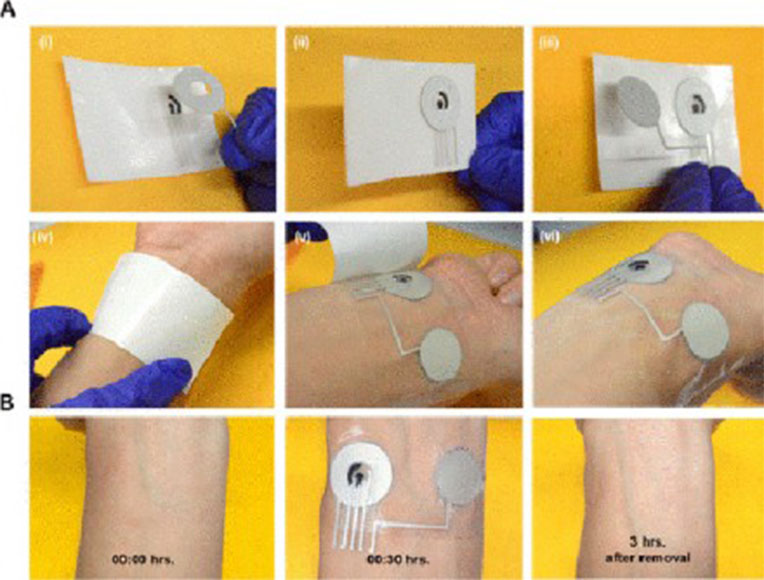
Assembly and the transfer process of the ISF glucose wearable patch. The screen-printed electrode system is transferred to a layer of adhesive tape. Afterward, the iontophoretic electrodes are placed on top of the adhesive layer, the cathode is placed on top of the screen-printed array, and the anode is set 1.5 centimeters away from the cathode). Next, a piece of agarose gel is placed on top of each electrode. The transfer process consists of placing the adhesive layer on the skin and removing the top layer of paper from the adhesive surface. Wrist pictures before transferring the sensing device onto the skin and three hours after removing the device. UC San Diego Health Sciences Image
Halloween may be known for its tricks and treats, but amid the excitement of the holiday, potential hazards can quickly turn a night of fun into an unexpected trip to the emergency room.
DHR Health Brownsville is bringing families together for a day of wellness and fun at its 2nd Annual Fall Fest and Health Fair. The event will be held from 8 a.m. to noon on October 24, 2026, at the DHR Health Brownsville Hospital, at 4750 North Expressway 77, in north Brownsville. The event is free and open to the public.
The Social Security Administration (SSA) announced on October 20, 2026, that it has corrected millions of Social Security number records in what the agency describes as its most comprehensive record-integrity initiative in 91 years.
Discovering a lump in the breast can cause immediate concern, but many breast abnormalities are not cancerous, according to Dr. Lisa Chapa, a breast surgeon who explained how physicians distinguish benign conditions from breast cancer.