







Mega Doctor News

As we approach this year’s World Lung Day, September 25, 2021, a day to encourage the importance of lung health, lung cancer is still the leading cause of cancer death for both men and women in the country, in part because it is so difficult to detect early.
Certain lung lesions may be at high risk for complications or impossible to detect with traditional biopsy methods. As a result, lung cancer can be advanced before it is even detected.
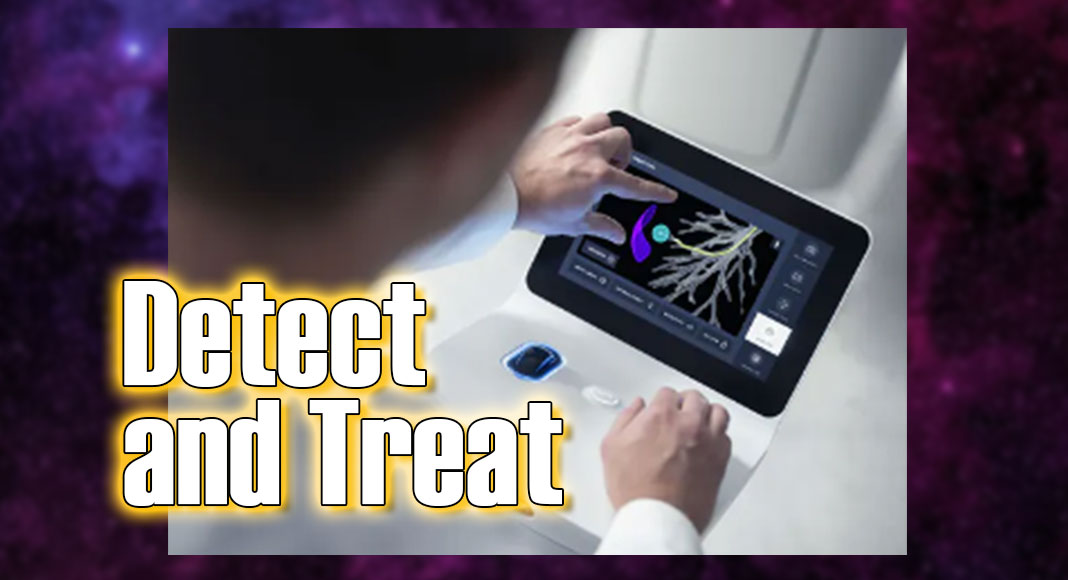
While lung cancer screening and CT scans have been able to detect abnormalities or potential cancers in the lung earlier, now, lung specialists have a new tool. Called Ion, the novel technology enables thoracic surgeons and pulmonologists to navigate the human lung which consists of intricate tissue and a vast network of narrow and delicate airways to access hard-to-reach nodules. The minimally invasive, robotic-assisted tool, shown in this video, can help doctors identify lung cancers earlier and more accurately than with existing technologies, allowing patients to start effective treatment sooner and obtain better outcomes – nobody knows this better than lung cancer survivor Kathleen Keenan Weil.

“Nearly 20 years ago I was diagnosed with lung cancer after doctors cut 8 inches from just under my right armpit down to my rib cage,” explains Kathleen who recently developed a new lung cancer. “This time, the biopsy was performed with the assistance of the Ion which pinpointed the cancer so my doctor could create a treatment plan and I could get on with my life.”
“It makes all the difference in the world,” says thoracic surgeon, Dr. Geoffrey Pelz, who compares working with the technology to driving with a GPS. “The Ion is so advanced, it helps guide you directly where you need to go, anywhere in the lung. I can use the technology either for biopsy, or to put dye in the lung nodule to localize it. In combination with the DaVinci Surgical Robot, I can resect the nodule in question during the same trip to the operating room saving time and unnecessary steps for the patients. It allows me to perform more lung sparing surgeries and help patients recover much faster and get back to living their lives cancer free.


