Mega Doctor News


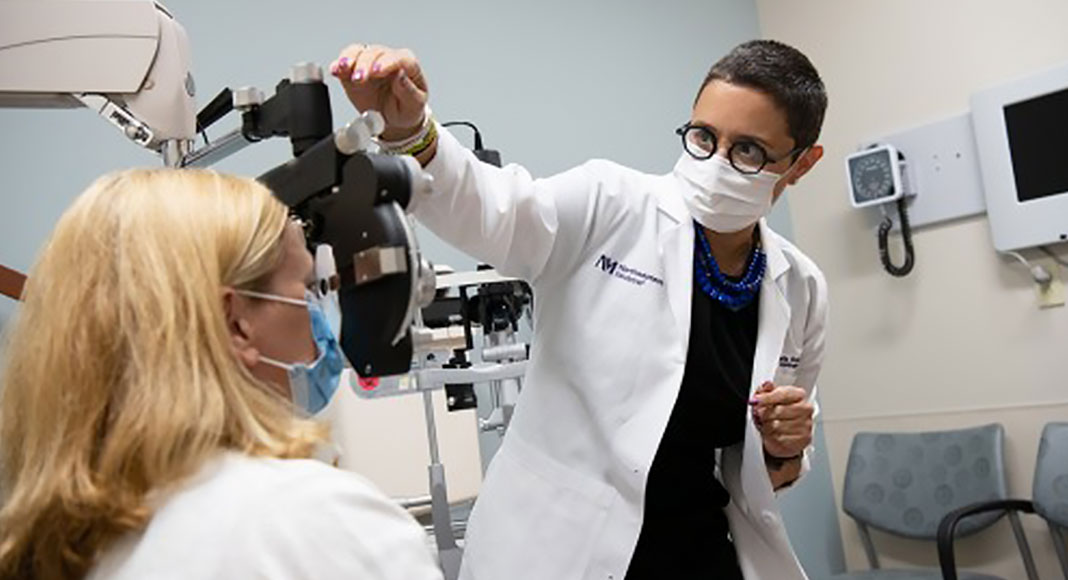
With in-person school just around the corner and a September target date for many to return to the office, a Northwestern Medicine eye expert is urging awareness of eye health. Michelle E. Andreoli, MD, an ophthalmologist at Northwestern Medicine Regional Medical Group Naperville, says the pandemic has been difficult on our eyes and now is a good time to break some bad habits.
During the pandemic, many students were remote-learning and adults were working from home with minimal breaks from the workday to the recreational day. People were also spending more time on screens and devices to stay connected with few other forms of recreation.
“We woke, we sat at our computers, we ended our workday, and then spent hours on our devices,” said Dr. Andreoli. “Too many hours per day staring at a screen causes eye strain. When working on a computer, we do not blink as often, causing the surface of the eye to become dry. This will cause our eyes to become hazy, blurry, and burn. In turn, you may feel tired and fatigued.”
Dr. Andreoli says the best solution is to take frequent breaks at the computer. She suggests the “Rule of 20s”: every 20 minutes, take a 20 second break to look at something 20 feet away. In addition, try to minimize screen time to let your eyes rest.
“The longer our eyes are on our screens, the more fatigued and strained our eyes become. Taking frequent breaks and minimizing recreational screen time helps our eyes stay healthy and makes them less tired,” said Dr. Andreoli.
Andreoli says another common cause of computer-related eye strain is that often glasses are not well suited to the task. One example of this is progressive, or graduated, bifocals.
“We all love the convenience of a progressive bifocal, but the section of our progressive lenses made for computer vision is near the bottom of the lens and is very narrow in the lens typically. With this situation, we have to tip our chin up to read clearly. This can cause significant eye strain and fatigue.”
If you stopped wearing contacts during the pandemic, but now want to return to daily wear, Dr. Andreoli says you may have to ease into it.
“Reintroducing contact lenses can be difficult, as our eyes have become drier from extensive computer work. The best way to start to wear your contacts is 2 hours per day the first day, 4 hours per day the second day, 6 hours the third day, 8 hours the fourth day, and continue this pattern until you can wear them for 12 hours,” said Dr. Andreoli. “Also, as one reintroduces contacts, be sure to keep the eyes well-lubricated with over-the-counter artificial tears for enhanced comfort.”
As kids return to school this autumn, likely in person, remember that children’s glasses may have been forgotten during remote learning, If children’s glasses are greater than one year old, they should get an eye exam. Additionally, in Illinois children need an eye exam to start kindergarten.
“As parents, this seems overwhelming, but do not panic! These exams can be fun and easy for children. We typically avoid eye drops and use sprays, play games, and are devoted to making the experience simple for kids,” said Dr. Andreoli. “After kindergarten, children should be undergoing eye exams every 2-3 years unless a teacher, parent or student notice a problem.”
And one lesson learned during the pandemic is always good for eye health. Keep the germs away by washing hands frequently and do your best to avoid touching the area around your eyes.