









Mega Doctor News
Families have been doing their part by staying at home as much as possible to help stop the spread of COVID-19. An unfortunate result is that many children missed check-ups and recommended childhood vaccinations. CDC and the American Academy of Pediatrics (AAP) recommend every child continues to receive recommended vaccinations during the COVID-19 pandemic.
These are challenging times, but you have the power to help keep your child healthy.
Making sure that your child sees their doctor for well-child visits and recommended vaccines is one of the best things you can do to protect your child and community from serious diseases that are easily spread.

Well-Child Visits and Recommended Vaccinations Are Essential
Well-child visits and recommended vaccinations are essential and help make sure children stay healthy and are protected. Children who are not protected by vaccines are more likely to get diseases like measles and whooping cough. These diseases are extremely contagious and can be very serious, especially for babies and young children. In recent years, there have been outbreaks of these diseases, especially in communities with low vaccination rates.
Well-child visits are essential for many reasons, including:
- Tracking growth and developmental milestones
- Discussing any concerns about your child’s health
- Getting scheduled vaccinations to prevent illnesses like measles and whooping cough (pertussis) and other serious diseases
As schools, day cares, and camps begin to reopen and offer in-person learning and care, it’s particularly important for parents to work with their child’s doctor or nurse to make sure they get caught up on missed well-child visits and recommended vaccines.
Extra Steps Are Being Taken to See Children Safely
If your child is due for a well-child visit, call the doctor’s office and ask about the special measures they have in place and ways they are safely offering well-child visits. Many medical offices and clinics are taking extra steps to see children safely during this time.
Routinely Recommended Vaccines for Children and Adolescents
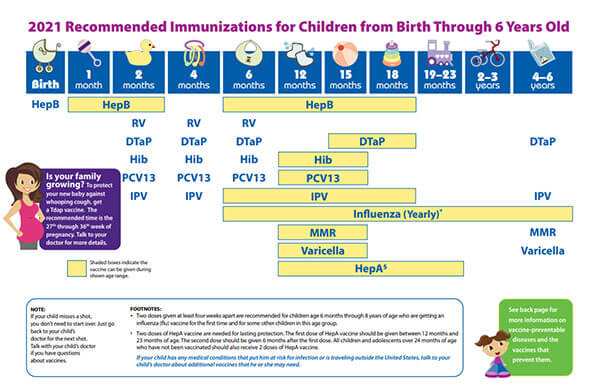
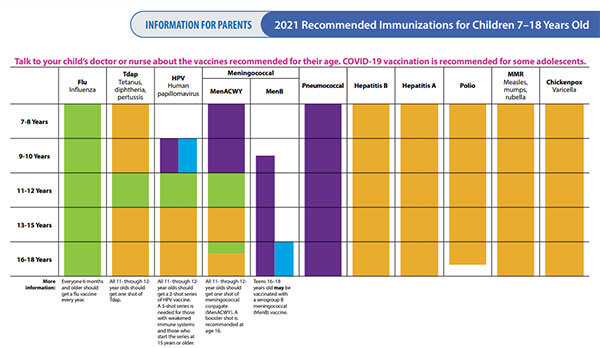
Getting children and adolescents caught up with recommended vaccinations is the best way to protect them from a variety of vaccine-preventable diseases.
The schedules below outline the vaccines recommended for each age group.
Need to Find Free Vaccines for Your Child?
The Vaccines for Children (VFC) program provides vaccines to eligible children at no cost. This program provides free vaccines to children who are Medicaid-eligible, uninsured, underinsured, or American Indian/Alaska Native. Check out the program’s requirements and talk to your child’s doctor or nurse to see if they are a VFC provider. You can also find a VFC provider by calling your state or local health department or seeing if your state has a VFC website.


