Mega Doctor News

HARLINGEN —About one in four persons in the Valley has diabetes. One of the long term consequences of diabetes is renal (kidney) failure. When kidneys fail patients need a treatment, called hemodialysis, to replace the nonfunctioning kidneys. This is a life-saving procedure where a machine is used to filter a patient’s blood, removing wastes and extra fluid, and then returning the filtered blood to the body. It is performed three times per week for the rest of the patient’s life, unless a kidney transplant is received.
For repeated dialysis, a vascular access, or opening, is required. The most common type of vascular access is an arteriovenous (AV) fistula. A vascular surgeon creates a connection between an artery and a vein as an access point for hemodialysis.
A frequent problem with the fistulas is that over time they all begin to close, and stop functioning. To treat this, an Interventional Radiologist uses a small balloon to reopen the fistula. However, the treatment with regular balloons only lasts a few months and patients return to repeat the procedure.

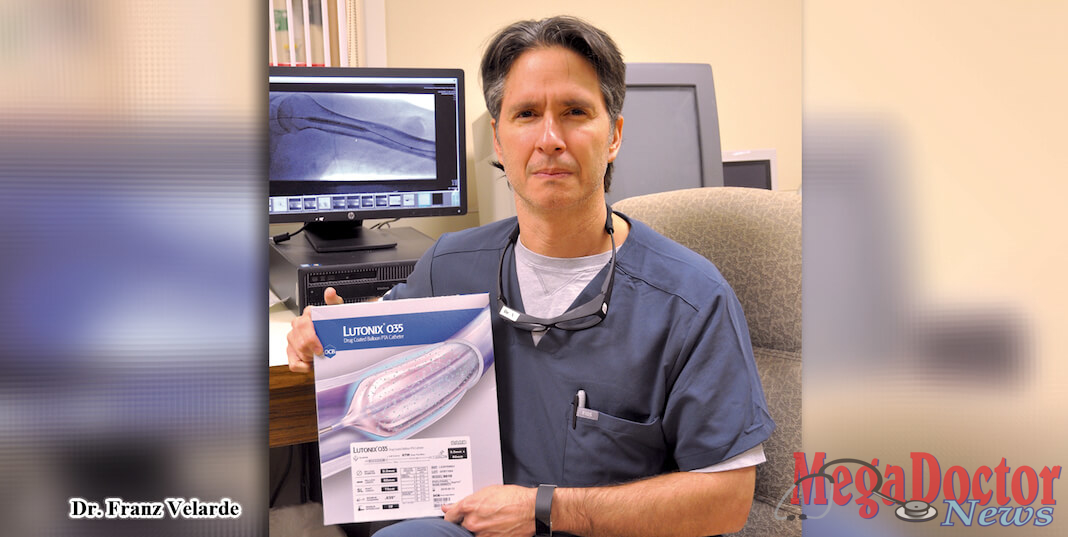
In August, 2017, the FDA approved the Lutonix 035 Drug Coated Balloon as another option to treat a narrowed or closed fistula. The method is similar to the balloon dilation used previously, but uses a balloon coated with the drug paclitaxel, which helps the fistulas remains functional longer than if re-opened by the traditional balloon dilation.
“As Interventional Radiologists, we are very enthusiastic about this new technology. Based on recently published data, the drug-coated balloon should work better than what we had before. This means less frequent interventions are needed, helping to improve the quality of life for dialysis patients, which is our main goal,” stated Dr. Franz Velarde, Interventional Radiologist at Valley Baptist.
Patients with renal failure spend three days each week, for four hours each time in dialysis. The goal of using the Lutonix 035 DCB catheter is to provide another option for physicians to help patients who are already spending so much time in treatment avoid additional medical visits.
“Regarding the imaging services and interventions we provide at Valley Baptist, we believe it is important to bring some of the latest technology and treatments to the RGV,” said Joey Govea, Director of Imaging Services at Valley Baptist Medical Center-Harlingen. “It’s not so much about being first, but rather about offering the services that put our patients and our community first,” he added.
Valley Baptist Medical Center-Harlingen became the first hospital in the Rio Grande Valley to utilize a new treatment which could help hemodialysis patients. The Interventional Radiologists at the hospital used the Lutonix 035 Drug Coated Balloon for the first time in September.