








Mega Doctor News

By Mega Doctor News
WASHINGTON, D.C. — The United States, Mexico and Bolivia have lost their measles elimination status after the highly contagious virus circulated continuously for more than 12 months, the Pan American Health Organization (PAHO) announced November 17, 2026.
The decision followed a November 10–13 review by PAHO’s regional commission responsible for monitoring measles elimination. The commission determined that sustained transmission had returned in all three countries.


Under PAHO’s criteria, a country loses elimination status when the same measles virus lineage circulates without interruption for at least 12 months.
“Losing measles elimination status is much more than losing a public health designation,” said PAHO Director Dr. Jarbas Barbosa. “It means the virus has circulated for a prolonged period, putting families and communities at risk of preventable illness, hospitalization and death.”
According to PAHO, the Americas reported 58,213 confirmed measles cases and 82 deaths as of November 13, compared with 12,806 cases during the corresponding period in 2025.
PAHO said measles is among the world’s most contagious diseases. One infected person can transmit the virus to as many as 18 susceptible individuals. Complications include pneumonia, brain inflammation, blindness and death.
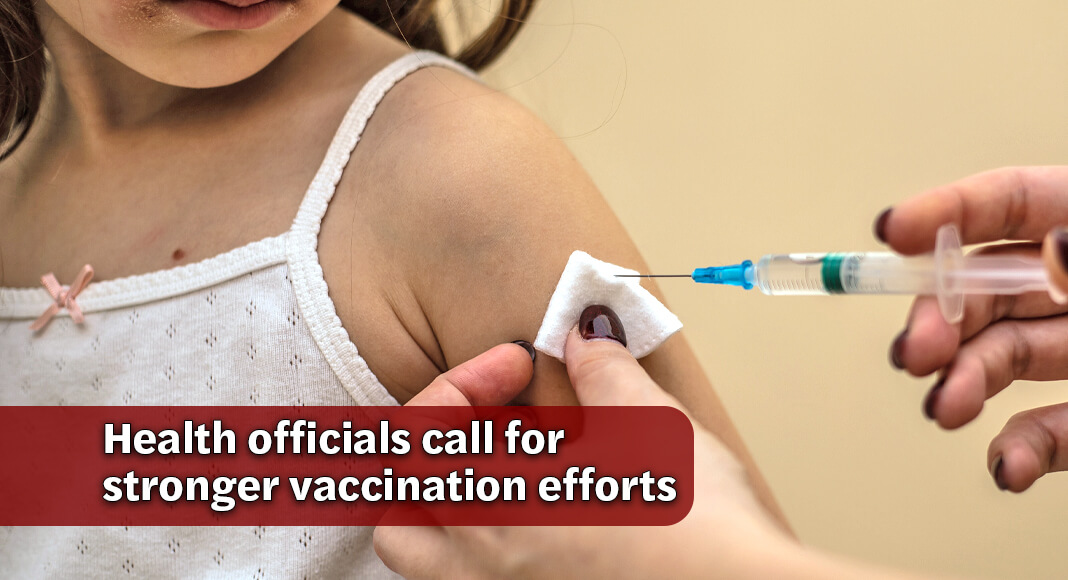
The organization attributed the resurgence to gaps in vaccination coverage, missed immunizations, barriers to health services, misinformation and vaccine hesitancy.
PAHO recommends maintaining at least 95% vaccination coverage with both doses of the measles vaccine in every community. National vaccination averages can conceal areas where protection remains insufficient.
The Americas first achieved regional measles elimination in 2016 and regained that designation in 2024 after interrupting sustained transmission in Venezuela and Brazil.
However, the region lost its elimination status again in November 2025 following prolonged transmission in Canada.
PAHO said Canada has since interrupted the transmission chain behind that decision and is working to regain its designation.
The organization urged governments to expand vaccination campaigns, strengthen disease surveillance, improve laboratory testing and respond rapidly to suspected outbreaks.
Health officials also recommended identifying communities with low vaccination coverage, protecting health care workers and ensuring adequate resources for outbreak investigations.
“This is a serious warning for our Region, but it is not an irreversible setback,” Barbosa said.
He emphasized that vaccination, surveillance and effective outbreak response can stop sustained transmission.
PAHO said countries must demonstrate that endemic transmission has been interrupted before their elimination status can be restored.
The organization continues working with national health authorities to strengthen prevention efforts and protect vulnerable populations, including infants too young for routine vaccination and people who cannot receive vaccines for medical reasons.
The November 17 announcement calls for coordinated action throughout the Americas to prevent further outbreaks and restore measles elimination.
Link