Mega Doctor News

By Brendan Kelley, M.D., Vice Chair for Clinical Operations, Neurology and Marc Diamond, M.D., Director, Center for Alzheimer’s and Neurodegenerative / UT Southwestern Medical Center
Newswise – Diagnosing dementias such as Alzheimer’s disease is a complex process. While we’ve gained significant ground in understanding how the disease affects the brain, clinicians must still rely on generalized cognitive tests and advanced brain scans to make a definitive diagnosis.

But a shift is in progress that we believe will fundamentally change our approach to Alzheimer’s diagnosis, treatment, and interventions in the future.

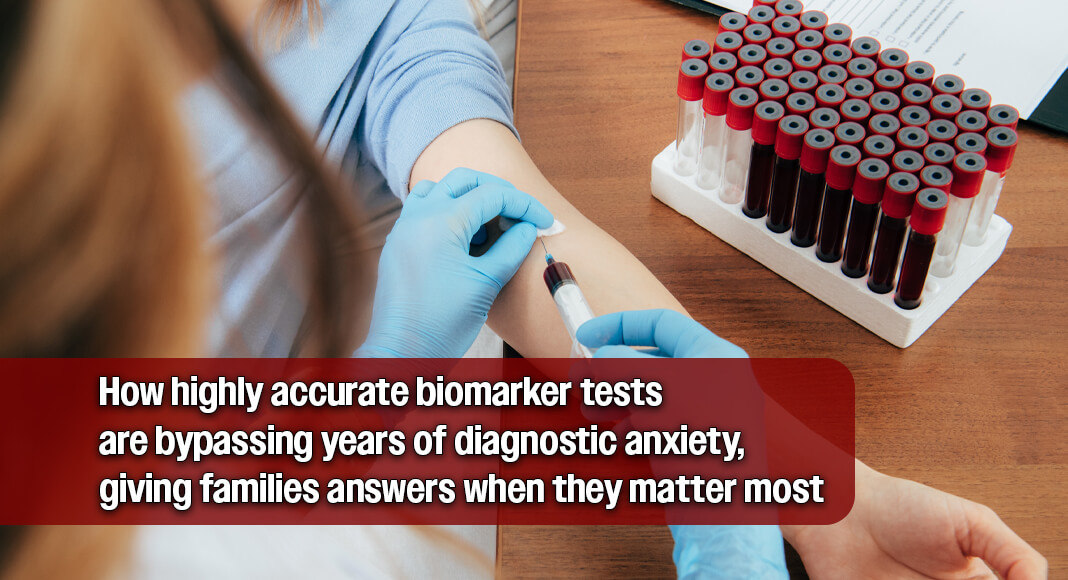
Two groundbreaking blood-biomarker tests – Lumipulse G pTau217/ß-Amyloid 1-42 Plasma Ratio and Roche Elecsys pTau181 – have been approved by the Food and Drug Administration (FDA) for patients 55 and older who have dementia symptoms.
These biomarker tests have been found in clinical studies to be more than 90% accurate in identifying the presence of amyloid and tau proteins associated with Alzheimer’s disease. The tests are in use to help doctors rule out Alzheimer’s or detect it early enough for meaningful intervention.
The result of years of collaborative, dedicated research, blood-based biomarker tests are the first steps toward a future of more personalized dementia care. With the tests as the foundation, clinical researchers at UT Southwestern’s Peter O’Donnell Jr. Brain Institute and around the world are making progress toward earlier, more precise interventions and treatment pathways.
Let’s discuss the current state of the science, what clinicians can offer patients now, and the future of Alzheimer’s care.
Causes and risk factors for Alzheimer’s

Misshapen, dysfunctional proteins within the cells of the brain are thought to be a main driver of dementias such as Alzheimer’s disease.
Buildup of these proteins causes dysfunction and death of healthy brain cells. Two commonly discussed proteins associated with Alzheimer’s are:
- Amyloid: Plaques of fibrous protein that can build up in the brain and other organs. These aren’t thought to cause Alzheimer’s, but they are frequently present in the brains of people with the disease.
- Tau: A type of protein associated with functionality of the cellular structure. It is often found in neurofibrillary tangles, which are formations that often grow in the brains of patients with Alzheimer’s.
In addition, there are many risk factors for dementia, both modifiable and not. Some of these include:
- Aging
- Inherited genetic variants, such as APOE ε4
- History of head injury
- Hearing loss
- Lifestyle factors, such as social isolation, physical inactivity, tobacco use, excessive alcohol consumption, and a low-nutrition diet
How Alzheimer’s blood tests work
Today’s blood-based biomarker tests for Alzheimer’s help us validate whether the disease contributes to a patient’s memory or cognitive symptoms.
While the tests are groundbreaking, they:
- Are not designed for patients with no symptoms of dementia.
- Do not replace other diagnostic tests; most patients also will need cognitive testing and brain imaging to diagnose the disease.
- May or may not predict the risk of Alzheimer’s disease.
These tests work in a similar way to the early iterations of testing for human immunodeficiency virus (HIV). Starting in 1985, a blood test became available to detect whether a person had antibodies against the virus. The tests couldn’t diagnose HIV or measure the disease process; they could only identify the body’s response to the virus.
In the late 1990s, polymerase chain reaction (PCR) technology – the type of rapid testing used during the COVID-19 pandemic – became available to detect the presence of DNA specific to HIV. This breakthrough allowed doctors to measure the disease process and make a more precise diagnosis.
Similar to early HIV testing, the current blood tests for Alzheimer’s measure the brain’s reaction to buildup of amyloid and tau proteins, but not their shape-shifting disease process.
Through our research at the Center for Alzheimer’s and Neurodegenerative Diseases (CAND) and the Diamond Lab, UT Southwestern is exploring more precise tests to measure dementia-related structural shifts of proteins within brain cells. Future testing technologies may support more definitive Alzheimer’s diagnoses earlier in the disease process.
Why not screen everyone for amyloid and tau buildup?
In a perfect world, we’d gather blood-biomarker testing for everyone in young adulthood, when our brains are healthy. This would help us easily detect biochemical changes in the brain earlier and start treatment.
But with today’s testing, technology, and understanding about Alzheimer’s disease, general population testing doesn’t make sense for several reasons:
- There is no specific prevention strategy proven to eliminate the risk of developing dementia for people who have no cognitive symptoms.
- Current IV medications for Alzheimer’s symptoms may be effective but may cause more side effects than benefits for people who don’t have cognitive symptoms.
- Individuals in any population, even those at high risk for Alzheimer’s who do not have the disease, may show a positive result with existing blood-biomarker tests, known as a false positive. The volume of false positives would be magnified in the general population, including young people with very low risk, because most will not have the specific biomarkers in question. This could lead to stress and unnecessary treatments that may cause adverse side effects.
Ongoing clinical studies are exploring whether medication can help prevent Alzheimer’s in asymptomatic patients who have significant amyloid and tau buildup. If any of these medications work, that would be a game-changer in our approach to dementia screening and testing.
We hope to one day be able to confidently identify who is most at risk of developing Alzheimer’s and create a personalized treatment pathway for each person, potentially halting the progress of dementia before symptoms begin. This is one of the real promises of these first-generation blood-based biomarker tests, and UT Southwestern is at the forefront of this population-level research through the Diamond Lab and the CAND.
Alzheimer’s disease: Ways we can help today
About 40% of cases of dementia can be delayed or prevented by controlling modifiable risk factors. Follow this guidance to give yourself the best foundation for long-term cognitive health:
- Eat for cardiovascular health: For example, follow the Mediterranean diet, which emphasizes fruits, vegetables, whole grains, and lean proteins.
- Stay mentally and socially sharp: Emerging research suggests that lack of mental stimulation and social isolation can increase the risk of developing dementia. Take part in social activities and flex your cognitive muscles regularly through reading, completing puzzles, and enjoying conversations with loved ones.
- Work with a dementia expert: Talk with a doctor who is fellowship-trained in Alzheimer’s care to understand your personal risk factors and how to reduce your risk.
- Manage chronic conditions, particularly heart disease, which can also help to reduce your chances of a devastating stroke or heart attack.
- Gain peace of mind: Families of people with advanced dementia symptoms often want to know what has caused their symptoms. Blood-based biomarkers are an excellent tool to provide an accurate diagnosis without having to put the patient through unnecessary brain scans.
If you notice symptoms of Alzheimer’s disease in yourself or a loved one, talk with a doctor about the testing you may need. Signs to watch for include:
- Confusion about time, place, and spatial relations.
- Memory loss that causes problems in your daily life.
- Difficulty with problem solving or understanding visual images.
- New challenges with written or spoken communication.
- Poor judgment.
- Social or professional self-isolation.
- Uncharacteristic mood changes.
If you are diagnosed with a memory disorder, you may benefit from medication. For example, two FDA-approved immunotherapy drugs, donanemab and lecanemab, target amyloid proteins and can help slow progression of the disease. Cholinesterase inhibitor drugs stop the breakdown of acetylcholine, a chemical in the brain that may support thinking and memory. Psychiatric medications can help with anxiety, depression, and behavioral changes associated with dementia.
Alzheimer’s disease blood-based biomarker tests now available are the first iteration of a new era in dementia diagnosis, treatment, and prevention. Talk with a doctor about the best screening tools and timelines for yourself or an aging loved one. While early intervention technology may not eliminate the risk of dementia, we can slow its progress and help families gain additional healthy years of life.