







Mega Doctor News

By Ron Acierno, PhD | Professor and executive director of the UTHealth Houston Trauma and Resilience Center, and Louis A. Faillace, MD, Chair in the Department of Psychiatry and Behavioral Sciences
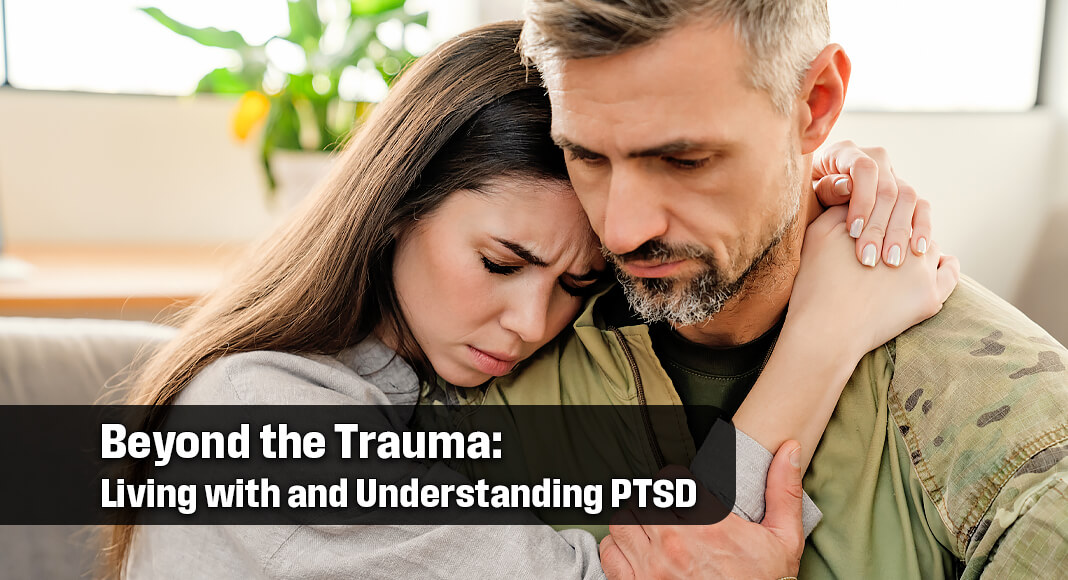
Newswise — June is National Post-Traumatic Stress Disorder Awareness Month, a time to raise awareness about the signs and symptoms of PTSD and educate the public about treatment options and when to seek help.
About 6 out of every 100 people will develop PTSD at some point in their lives, while about 5 in 100 people have PTSD in the United States in any given year, according to the National Center for PTSD. But PTSD is not always a permanent condition, and symptoms can be treated and managed over time.

What is PTSD, and what causes it?
PTSD, or post-traumatic stress disorder, is a very strong mixture of anxiety and depression symptoms following exposure to a very dangerous traumatic event. These events are typically defined as those that threaten one’s life and limb or threaten the life or limb of someone close to you. Witnessing these events in close proximity also can cause PTSD.
The traumatic event could be interpersonal violence, which is the most common cause, or a natural disaster, a bad accident, or combat. More recently, the criterion of trauma exposure was also widened to include exposure to reports of extremely gruesome events, like those that a 911 operator has to deal with. For most people with PTSD, the traumatic event is perpetrated by other individuals.
What are the symptoms of PTSD?
There are several symptom classes of PTSD: avoidance, hyperarousal, re-experiencing, and emotional numbing.
Avoidance occurs when you avoid the people, places, things, or experiences that remind you of the traumatic event. Avoidance is the most easily observable part of PTSD, and it’s the part we like to always include in treatment.
Hyperarousal is seen when somebody is extremely jumpy, has an exaggerated startle response, or has concentration impairments with an inability to focus. They may also always feel on edge.
Re-experiencing takes a variety of forms. It could be nightmares, but most commonly it’s intrusive memories triggered by circumstances in your daily environment. The memories of the event that caused PTSD constantly drift into your mind and cause you distress. Flashbacks can also occur, though they’re very rare. Most of the time, the symptoms of re-experiencing are more accurately described as intrusive ideation.
Finally, emotional numbing occurs when someone feels cut off from their emotions.
How is PTSD treated?
There are several evidence-based treatments for PTSD supported by replicated randomized controlled trials. These include prolonged exposure therapy, cognitive processing therapy, and written exposure therapy. The core aspect of most of these treatments is identifying the areas of a person’s life they are currently avoiding that they didn’t avoid before the trauma, and gradually having them engage in these approach behaviors.
With prolonged exposure therapy, if a veteran avoids crowded places like Walmart after being exposed to an IED in Afghanistan, we might have them go to the Walmart parking lot on a Tuesday morning when it’s not crowded. After doing this several times over several days, they might approach the doors and wait at the entrance, and then they might go inside for a little while each day. Over time, we would have them build up to going inside Walmart when it is crowded.
Prolonged exposure therapy would be complemented with imaginary rehearsal of the traumatic event over and over again, in great detail, so that the person gets used to the memories. The idea is that rather than these memories being randomly triggered by things in their environment, they bring the memories on in practice sessions themselves so that the memories no longer elicit such high anxiety.
Other treatments include cognitive processing therapy, where the meaning of the traumatic event and the way one applies this meaning to the current avoidance are discussed. In written exposure therapy, an individual writes about the event using specific prompts.
The common thread among these therapies is that a person’s behavioral impairments are identified, and a professional helps the individual regain access to these parts of a person’s life by doing these things in a gradual fashion and overcoming avoidance.
Can people recover from PTSD?
In addition to the treatments listed above, strong social support is a significant factor in a person’s ability to overcome PTSD. It’s important that people know up front that overcoming PTSD is hard work—no pain, no gain. The harder you work, the better you get, and if you don’t feel discomfort, you’re probably not doing it right.
By Ron Acierno, PhD | Professor and executive director of the UTHealth Houston Trauma and Resilience Center, and Louis A. Faillace, MD, Chair in the Department of Psychiatry and Behavioral Sciences. All quotes should be attributed to him.


