
Mega Doctor News

Mayo Clinic Staff / Mayo Clinic News Network
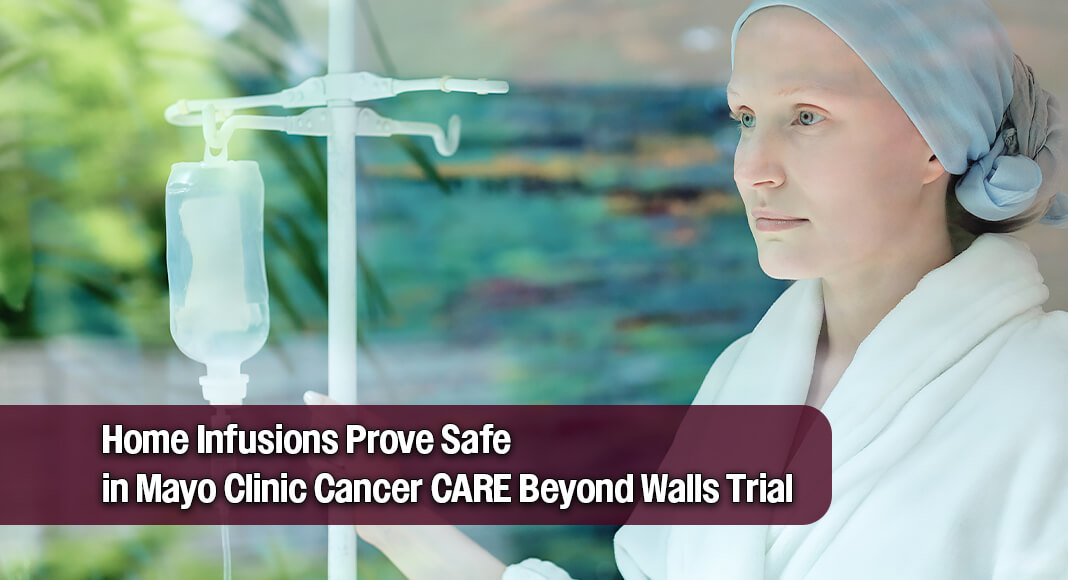
JACKSONVILLE, Florda – In a study published in NEJM Catalyst, Mayo Clinic researchers have demonstrated that chemotherapy can be safely delivered in patients’ homes.
The study evaluated Mayo Clinic’s Cancer CARE Beyond Walls (Connected Access and Remote Expertise), a model that combines virtual care, remote patient monitoring and in-home clinical services to deliver cancer treatment outside traditional infusion centers.

In the pilot study, a multidisciplinary team delivered 93 IV chemotherapy infusions to 10 patients in their homes. Researchers reported no treatment-related infusion reactions or catheter-related infections, supporting the safety and feasibility of this approach.
“Cancer care has traditionally required patients to spend long hours in infusion centers, often far from home,” says Roxana Dronca, M.D., site director of the Mayo Clinic Comprehensive Cancer Center in Florida and director of Mayo Clinic Cancer CARE Beyond Walls. “This model allows us to safely bring high-quality care directly to patients, reducing burden while maintaining the standards patients expect from Mayo Clinic.”
The study highlights the potential of home-based chemotherapy to reduce the physical, emotional and financial burdens associated with cancer treatment. Patients avoided travel time and experienced fewer disruptions to daily life while maintaining a continuous connection with their care team through virtual visits and remote monitoring.
Most participants surveyed reported high satisfaction with at-home care and said they would recommend the model to others.
“This approach is about more than convenience,” Dr. Dronca says. “It’s about improving quality of life during treatment and expanding access to care for patients who may face barriers to reaching traditional cancer centers.”
To build on these findings, Mayo Clinic is still enrolling patients in a randomized clinical trial that launched in August 2023 to evaluate home-based chemotherapy compared with standard infusion care. This study will examine safety, patient experience, outcomes and costs, with the goal of expanding access to high-quality cancer care and reducing barriers to clinical trial participation.
Dr. Dronca is the first author of the pilot study, and Cheryl Willman, M.D., the Stephen and Barbara Slaggie Executive Director, Mayo Clinic Cancer Programs, is the senior author. For a complete list of authors, disclosures and funding, review the study.