Mega Doctor News

By University of California San Diego
Newswise — Researchers at University of California San Diego School of Medicine, in collaboration with the Prevencasa free clinic in Tijuana, Mexico, have confirmed the presence of xylazine in the illicit drug supply at the U.S.-Mexico border. While xylazine remains less common in the Western U.S., border cities serve as key trafficking hubs and may have higher rates of emerging substances. The findings, published on March 20, 2025 in the Journal of Addiction Medicine, highlight the urgent need for public health intervention.
“Xylazine is a veterinary anesthetic that is not approved for human use and is increasingly detected alongside illicit fentanyl in parts of the United States and Canada,” said senior author Joseph R. Friedman, M.D., Ph.D., a resident physician in the Department of Psychiatry at UC San Diego School of Medicine. “Although xylazine has been most prevalent on the East Coast of the United States, this new evidence confirms its presence in Tijuana, on the U.S.-Mexico border, posing numerous health risks for people in this region.”

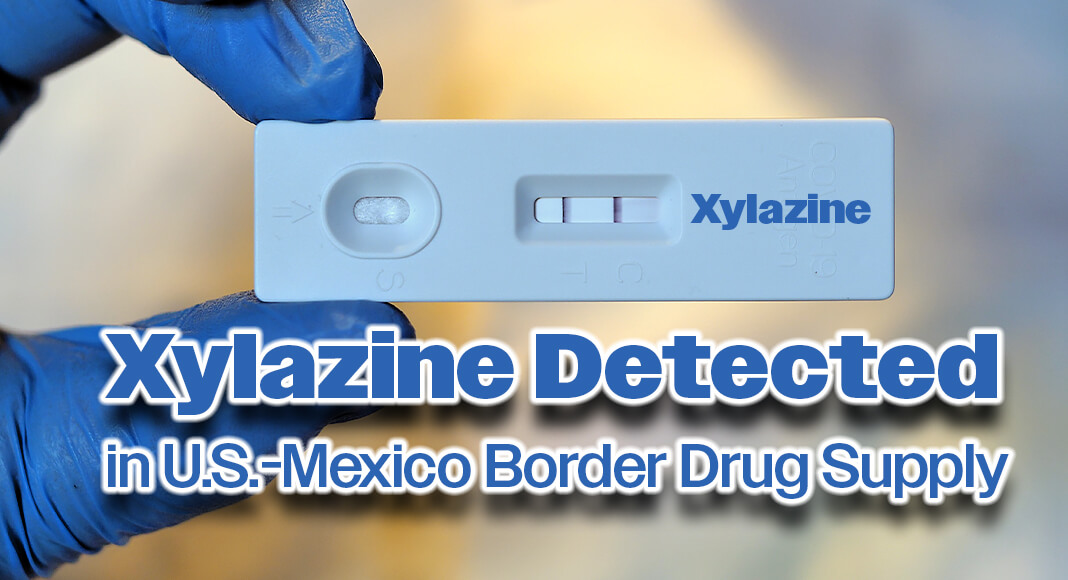
The study analyzed de-identified records of 23 users from Prevencasa, examining urine and paraphernalia samples from individuals who reported using illicit opioids within the past 24 hours. Researchers used test strips to screen for xylazine, along with other drugs such as fentanyl, opiates and methamphetamine. Paraphernalia samples were further analyzed using mass spectrometry.
Key findings include:
Xylazine was detected in 82.6% of participant urine samples using Wisebatch test strips and in 65.2% using SAFElife test strips.
Paraphernalia testing confirmed xylazine in 52.2% of samples via mass spectrometry, along with fentanyl (73.9%), fluorofentanyl (30.4%), tramadol (30.4%) and lidocaine (30.4%).
100% of participants’ urine tested positive for fentanyl.
Xylazine is associated with severe health risks, including profound sedation, more complex withdrawal syndromes, and a heightened risk of skin infections and wounds. Given Tijuana’s strategic location as a transit point for illicit drugs entering the U.S., researchers caution that xylazine prevalence could soon rise in Southern California and beyond.
“This study underscores the importance of expanding drug-checking efforts in border regions,” Friedman added. “Our findings also support the use of xylazine test strips as a harm reduction tool, providing people who use drugs and healthcare providers with critical information about exposure risks.”
A previous study published in the Harm Reduction Journal demonstrated that individuals can use fentanyl test strips to check their own drug supply before consumption. While further research is needed to standardize xylazine testing methods, the results highlight the rapidly evolving landscape of drug-checking technologies and the need for public health agencies to adapt accordingly.
Additionally, researchers noted a high prevalence of lidocaine in Tijuana’s illicit fentanyl supply, which may interfere with xylazine test strip accuracy. More studies are needed to understand why lidocaine is being added and how it affects drug-checking reliability.
Larger studies are required to further assess xylazine’s spread and refine testing methods. Researchers advocate for increased surveillance, harm reduction strategies, and clinical awareness to mitigate the emerging risks posed by xylazine in the illicit drug supply.
Additional co-authors on the study include: Alejandro G. Montoya, M.D., Carmina Ruiz, Mariana A. Gonzalez Tejeda, R.N., Luis A. Segovia, B.S. and Lilia Pacheco Bufanda from Prevencasa A.C. in Tijuana. Morgan E. Godvin, B.A. and Chelsea L. Shover, Ph.D. from UCLA Department of Internal Medicine. Edward Sisco, Ph.D., Elise M. Pyfrom, B.S. and Meghan G. Appley, Ph.D. from the National Institute of Standards and Technology.
The study was funded, in part, by the National Institute on Drug Abuse (DA049644) and (K01DA050771) as well as the National Institute of Mental Health (MH101072).