







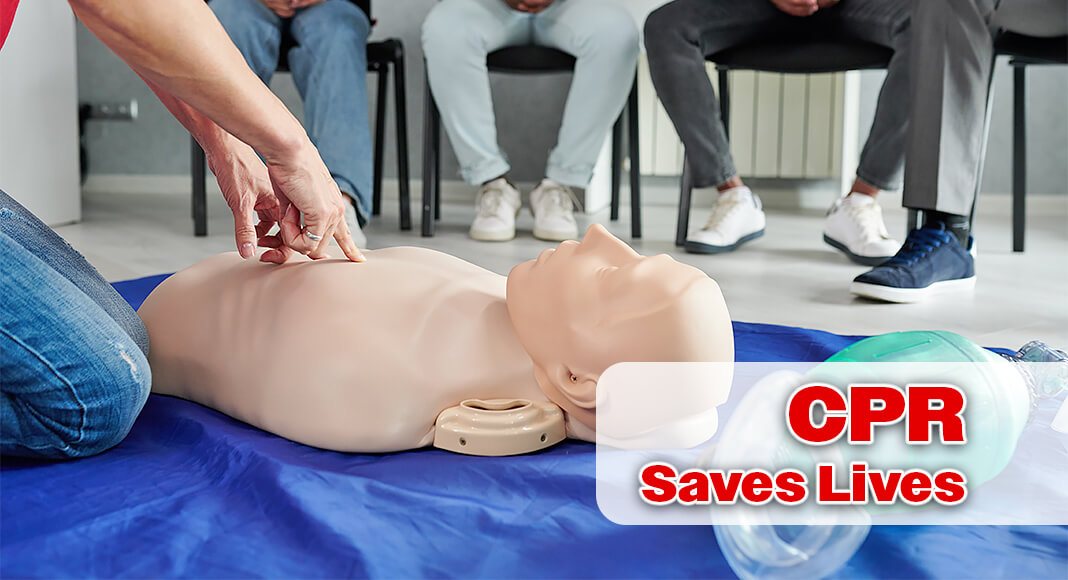

Why you Should Know How to do CPR

Translate to Spanish or other 102 languages!

June is CPR and AED Awareness Month.If you don’t know how to do CPR, now is a good time to learn. You never know when an emergency could happen. Image for illustration purposes
- Advertisement -

CLEVELAND CLINIC – June is CPR and AED Awareness Month.If you don’t know how to do CPR, now is a good time to learn. You never know when an emergency could happen. 

“There’s incredible data that delays in CPR will actually change the outcome quite considerably for a patient. And conversely, if you can intervene within those first few minutes even, the chances of that patient actually having a survival skyrocket,” said Nicholas Ruthmann, MD, cardiologist at Cleveland Clinic. 

Dr. Ruthmann said he can understand why some people might be scared to step in during an emergency to perform CPR, but the consequence of not doing so is much worse. 

- Advertisement -

So, what are the steps for CPR? 

First, check the person’s pulse and see if they are breathing. 

If you don’t notice any activity, begin CPR right away. 

It’s recommended to do 100 to 120 chest compressions per minute. 

- Advertisement -

Make sure you are pushing fast and hard. 

Mouth-to-mouth resuscitation is not necessary. 

If there is an AED device available, you could consider using that too. 

“This is a device that can help re-shock the heart. And if the heart needs to be shocked back, shocking them with this AED is truly the biggest lifesaver that can happen,” said Dr. Ruthmann. “And just like CPR, the sooner that can happen, the better. A lot of people fear this new device that they’ve never seen, they’ve never opened up, they’ve never used. It will do the work for you. All you have to do is open it up, press ‘on’, listen and follow the instructions. “

Reports show most cardiac arrests happen at home, which is why Dr. Ruthmann emphasizes the importance of knowing CPR.

- Advertisement -
- Advertisement -

- Advertisement -

More Articles

Sun Allergy Is Real: Signs, Causes, and How to Protect Your Skin

Is it possible to have a sun allergy? It may feel that way on a hot day, but for some people, that’s actually the case.

Beat the Summer Heat: Essential Hydration Tips

Summer heat has a way of sneaking up on you, making it easy to become dehydrated before you even realize you're thirsty.

STHS’ Transform Your Life Event Inspires Healthier Living Across the RGV

Whether you're making healthier food choices, becoming more active or focusing on your mental well-being, every positive change can help you live a longer, healthier and more fulfilling life.

No More Needles: FDA Approves First Daily Pill to Replace Injectable Cholesterol Drugs

The U.S. Food and Drug Administration approved Lipfendra (enlicitide), the first oral inhibitor of proprotein convertase subtilisin/kexin type 9 (PCSK9), as an adjunct to diet and exercise to reduce low-density lipoprotein cholesterol (LDL-C), or “bad” cholesterol, in adults with hypercholesterolemia, including those with heterozygous familial hypercholesterolemia (HeFH). Image source: Merck.com.
- Advertisement -
