



Mega Doctor News
When testosterone is mentioned, what comes to mind? Masculinity or “manliness,” muscle growth or sex drive? Technically, none of those are wrong. It does, however, impact much more than that.
Understanding testosterone’s role
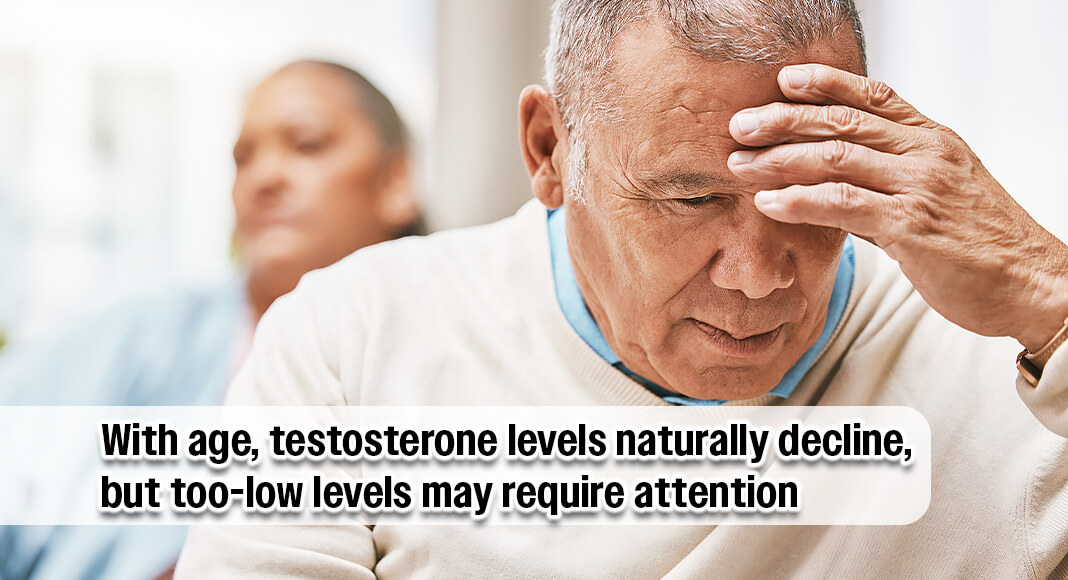
Testosterone is a vital hormone in the human body, especially for men. It influences muscle mass, bone density, mood and sexual health. With age, testosterone levels naturally decline, but too-low levels may require attention.
| Produced primarily in the testicles, testosterone affects: |
| Muscle and bone strength |
| Sex drive and performance |
| Mood and energy levels |
| Red blood cell production |
Women also produce testosterone in smaller amounts, which contribute to their overall health.

How age plays a part
Testosterone levels are measured in nanograms per deciliter (ng/dL). According to the National Institutes of Health (NIH), normal ranges for healthy, non-obese men ages 19 to 39 are approximately 264 to 916 ng/dL.
As men age, testosterone levels begin to decline, typically around 1% per year after age 30.
| Signs of low testosteroneAlso known as hypogonadism, low testosterone can lead to various symptoms, including: |
| Decreased sex drive |
| Erectile dysfunction |
| Fatigue or low energy |
| Mental health issues or mood swings |
| Loss of muscle mass |
| Increased body fat |
It’s important to note these symptoms can also be brought on by other health issues. Always consult with a healthcare provider when it comes to seeking diagnoses and determining the next steps.
Testosterone and mental health
Research indicates both high and low levels of testosterone as a possible risk factor for depression and anxiety.
| Lower levels of testosterone may be associated with the following symptoms: |
| Feelings of sadness or hopelessness |
| Increased irritability, anger or aggression |
| Difficulty concentrating |
| Lack of motivation |
| Sleep problems |
When to see a doctor
If you notice symptoms associated with low levels of testosterone, it may be time to reach out to your provider. With proper testing, they can help devise a plan of action that’s right for you.
Hormones like testosterone play a key role in more than just physical strength or libido – they affect our everyday experience as humans. With a hand in mood regulation, metabolism, energy and overall well-being, hormonal health is a part of the body’s entire system. Understanding your own is taking a powerful step toward maintaining your best health.
Sources: National Institutes of Health; medlineplus.gov via South Texas Health System