







Mega Doctor News

By Roberto Hugo González
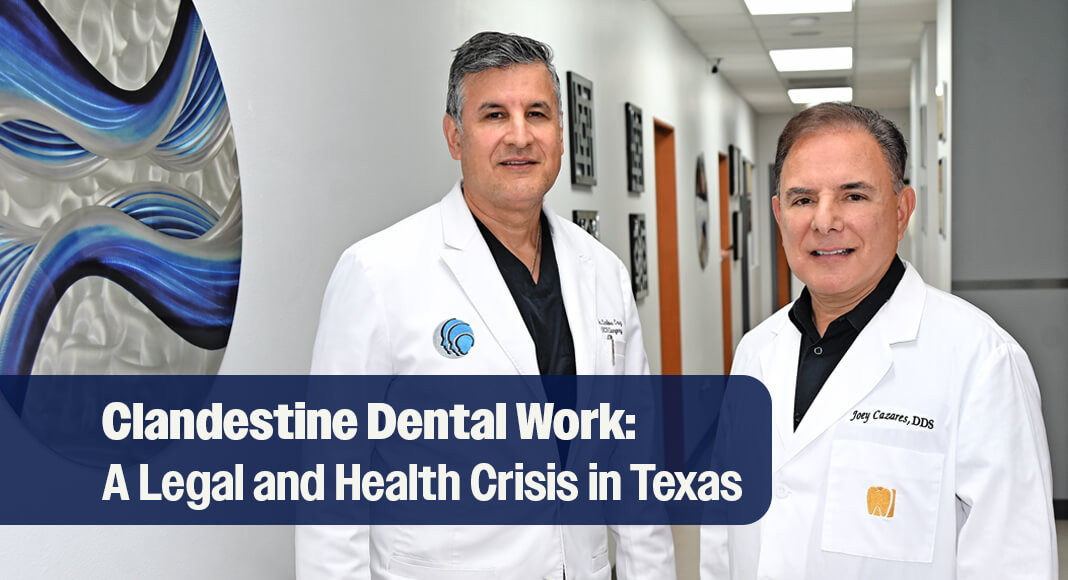
A recent medical emergency involving a patient who developed a life-threatening infection after receiving extractions in a private home has prompted two licensed dental professionals in McAllen, Texas, to raise public awareness about the risks of unlicensed dentistry jointly. Dr. Carlos Cruz, an oral and maxillofacial surgeon, and Dr. Joey Cazares, DDS, have taken coordinated action to expose the dangers of clandestine dental services operating in the Rio Grande Valley.
“This has been happening since I came back to the Valley as a dentist,” said Dr. Cazares. “It’s not new, and it’s something that has concerned me for years because it puts the health of our community at risk.”

The patient in this case received three tooth extractions in what appeared to be a makeshift dental setup inside a residential kitchen in Hidalgo County. According to the patient, the procedures were performed by an unlicensed woman assisted by her husband, without X-rays, medical history, or sterilization protocols. The patient later experienced swelling, extreme pain, and was hospitalized in critical condition.
Dr. Cazares evaluated the patient and directed her to seek emergency medical care immediately. “From what I understand, she stopped breathing at the ER,” he said. “It was serious. I’m just glad she made it.”
Dr. Cruz confirmed that such cases are part of a wider trend. “Only professionally licensed dentists are legally permitted to perform oral surgeries, extractions, or invasive dental procedures in Texas,” he stated. “Practicing without a license is not only illegal—it can result in serious injury or death.”
Both professionals emphasized that unlicensed providers not only lack the necessary training and oversight but are also prohibited from prescribing medications. “If they’re not licensed, they can’t prescribe anything,” said Dr. Cazares. “No antibiotics, no pain medication, no follow-up care. That puts the patient in danger—not just during the procedure, but afterward.”
Dr. Cruz and Dr. Cazares have collaborated to notify the relevant authorities, including medical and regulatory agencies. “Our first priority was getting the patient safe,” said Dr. Cazares. “But once that was done, we had to make sure the people responsible were reported.”
In Texas, the practice of dentistry is regulated by the Texas State Board of Dental Examiners (TSBDE), which oversees licensing, investigates complaints, and enforces disciplinary actions. Performing dental procedures without a license is a third-degree felony under the Texas Occupations Code. The board may also issue cease-and-desist orders and refer cases to local law enforcement.
“When someone is practicing illegally, they usually don’t hold a license,” said Dr. Cazares. “That limits what the state board can do directly, but they can refer it to local police or the county sheriff.”
The doctors say patients are often drawn to illegal providers due to lower prices, but warn that the trade-off can be deadly. “People go to these types of services because of cost,” said Dr. Cazares. “But the care being delivered does not meet professional standards. Patients are paying, thinking they’ll get the same treatment, and they’re not.”
Dr. Cruz agreed that financial hardship plays a role in patient decisions but emphasized the need for safe options. “Understandably, people seek affordability,” he said. “But affordability should never come at the expense of safety.”
To address the issue more broadly, both professionals are urging the dental community to take a proactive approach. “If one office can’t help, they should refer the patient to someone who can,” said Dr. Cazares. “Our dental society is active in helping connect people with legal, low-cost care.”
The Texas State Board of Dental Examiners maintains a public online license verification tool and encourages the public to report suspected illegal dental activity. “This is your health,” said Dr. Cazares. “Go to someone who is licensed, who knows what they’re doing, and who can help you safely.”
The incident that triggered this collaboration is still under investigation. Meanwhile, Dr. Cruz and Dr. Cazares continue to advocate for public awareness and stricter enforcement to prevent future harm.


