


Mega Doctor News
By BMJ
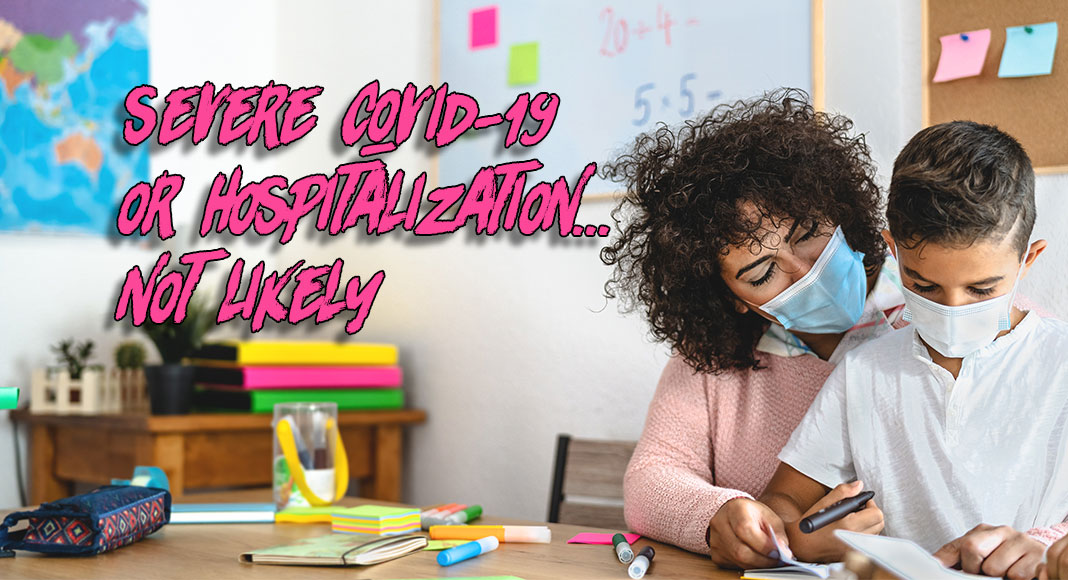
Newswise — Neither teachers nor their household members were at increased risk of hospital admission with covid-19 or severe covid-19 at any time during the 2020-21 academic year compared with similar working age adults, including during periods when schools were fully open, finds a study published by The BMJ today.
It is not possible to say from this study why teachers are not at higher risk than the average working-age adult. It could be that schools are not – compared to the “average” occupational setting – a high risk environment. It is also possible that teachers are not at higher risk because they are generally healthier or more careful about covid-19 related behaviours than other occupational groups, although attempts were made to account for such differences in the study.

In any case, as the authors point out, most of the teachers in the study were young women with few underlying health conditions, and so were at low absolute risk of severe covid-19 and hospital admission with covid-19. They say, “our observations are likely to be of interest to teachers, their household members, policy makers, and the wider population.”
Existing studies do not indicate that teachers have been at increased risk of hospital admission with covid-19, although some variation was found by type of teacher, and predate the widespread circulation of alpha and delta variants
So, researchers in Scotland set out to compare the risk of covid-19 among teachers and their household members with healthcare workers and adults of working age in the general population, using Scottish data from March 2020 to July 2021.
Most teachers were young (average age 42), 80% were women, and 84% had no existing conditions (comorbidities).
During the study period, the overall risk of hospital admission with covid-19 remained less than 1% for teachers, healthcare workers, and adults of working age in the general population.
After adjusting for factors such as age, sex, ethnicity and deprivation, the results show that in the initial period of school closure (spring/summer 2020), the risk of hospital admission with covid-19 was around 50% lower in teachers and their household members than in the general population.
In contrast, during this same period, the risk was almost 4 times higher in patient facing healthcare workers and almost twice as high in their household members.
During the later period of school closure (winter 2020/21), teachers and their household members again showed around a 50% lower risk of hospital admission than the general population.
In the first period of full school opening (autumn term 2020), the risk of hospital admission in teachers increased by around 2.4-fold, reaching a similar level to that in the general population.
And in the summer term of 2021, when schools were also open and vaccination of the Scottish population was underway, a smaller increase of around 1.7-fold was seen.
No accompanying increase in the relative risk of severe covid-19 among teachers and their household members was observed during either period, and the risks of hospital admission were broadly similar across different teaching sectors.
This is an observational study, so can’t establish cause, and the researchers point to some limitations, such as being unable to link a small number of teachers to healthcare records and a lack of detailed information on factors such as class size and control measures within individual schools.
But this was a large and almost complete sample of teachers and their household members that allowed for valid comparisons across different occupational groups, suggesting that the results withstand scrutiny.
The researchers acknowledge that prompt uptake of vaccination in teachers might have contributed to their protection during a period when the delta variant was common but say these findings “should reassure those who are engaged in face-to-face teaching.”