




Mega Doctor News
By Christina Elston / Cedars Sinai
A new Cedars-Sinai Cancer study shows that patients with advanced liver cancer who receive immunotherapy to shrink their tumors have improved outcomes after liver transplant or tumor removal.
The study, published in the journal Liver Cancer, found that these patients had overall survival rates that were 85% higher than patients who received immunotherapy alone.

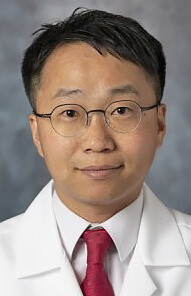
“The data we reviewed showed that patients who received follow-up transplants or tumor removal after immunotherapy reduced the size of their tumors lived much longer than patients who just remained on immunotherapy,” said Ju Dong Yang, MD, medical director of the Liver Cancer Program at Cedars-Sinai and senior author of the study.
Liver cancer is rarely detected in the earliest stages, when tumors are small enough that a transplant or removal is possible. In advanced liver cancer, immunotherapy—medications that harness the power of a patient’s immune system—can shrink tumors but not cure the disease.
Previous research, also led by Cedars-Sinai, found that liver transplant or tumor removal is possible after immunotherapy shrinks a tumor to “downstage” the cancer. In this new study investigators wanted to see how well patients treated with these follow-up procedures fared.
They reviewed data on more than 4,300 patients with advanced liver cancer from the National Cancer Database, which contains more than 70% of all newly diagnosed cancer cases in the U.S.
Despite the higher overall survival rates after follow-up procedures, only about 3% of patients on immunotherapy went on to receive transplants or tumor removal. Most of those patients were treated at academic medical centers like Cedars-Sinai, the investigators found.
“Performing liver transplant following immunotherapy isn’t yet common practice,” Yang said. “This is unfortunate, as patients with advanced liver cancer often die without such treatment—even if their cancer is under control—because they also have other liver ailments. A transplant leaves the patient with a healthy liver.”
Yang plans to further make his case for more aggressive treatment for these patients through a new study that will launch in the coming months. Investigators will enroll patients who receive immunotherapy followed by liver transplants and will record their outcomes.
“When our physician-scientists create studies based on patient needs and then apply their findings to patient care, it improves outcomes for everyone we serve and for patients around the world,” said Robert Figlin, MD, interim director of Cedars-Sinai Cancer. “As an academic medical center, that is our mission.”
Additional Cedars-Sinai authors include Gwang Hyeon Choi, Hyun-Seok Kim, Michael Luu, Alexander Kuo, Walid S. Ayoub, Hirsh Trivedi, Yun Wang, Aarshi Vipani, Pin-Jung Chen, Steven A. Miles, Emily A. Kaymen, Andrew Hendifar, Tsuyoshi Todo, Todd V. Brennan, Georgios Voidonikolas, Steven A. Wisel, Justin Steggerda, Cristina Ferrone, Kambiz Kosari and Nicholas Nissen.
Other authors include Neehar D. Parikh and Amit G. Singal.
Funding: Dr. Singal’s research is supported by NCI R01 MD012565 and R01 CA256977. Dr. Yang’s research is supported by NCI K08CA259534.
Conflict of interest: Ju Dong Yang provides consulting service for AstraZeneca, Eisai, Exact Sciences, Exelixis, and Fujifilm Medical Sciences.
Cedars-Sinai Health Sciences University is advancing groundbreaking research and educating future leaders in medicine, biomedical sciences and allied health sciences. Learn more about the university.
Information source: Cedars Sinai


