Mega Doctor News
by University of Texas Health Science Center at Houston
Newswise – Daily consumption of more than nine servings of ultraprocessed foods increased the risk of suffering from a major cardiac event by 67%, according to new research led by UTHealth Houston.
The findings were published in the Journal of the American College of Cardiology.

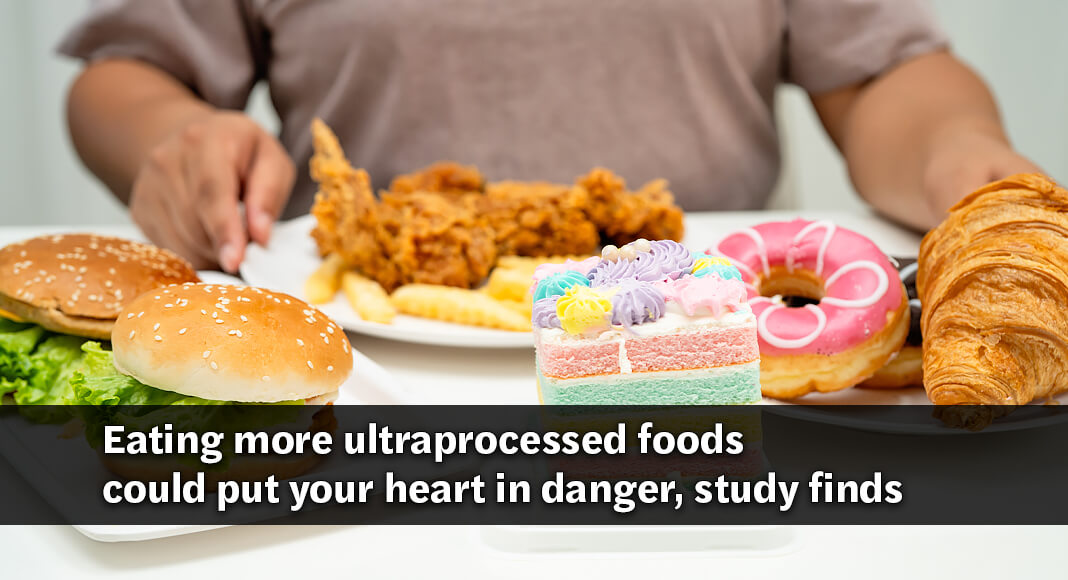
Ultraprocessed foods can include items such as packaged snack cakes, sugary cereals, instant noodles, frozen chicken nuggets, soft drinks, chips, candy, deli meats, and fast-food meals. According to the CDC, the average American consumes more than 50% of their daily calories from ultraprocessed foods. Among children and teenagers, ultraprocessed food consumption is even higher, nearly 67%.

The study, led by Amier Haidar, MD, a cardiology fellow at McGovern Medical School at UTHealth Houston, also found that consuming just one serving of ultraprocessed food increases the risk of heart disease by 5%.
“Most Americans in our data set consumed around 4 1/2 servings per day. But in other studies, we’ve seen up to 7 to 10 servings of ultraprocessed foods per day,” Haidar said. “These numbers are even higher when it comes to those at an economic disadvantage.”
The 12-year study evaluated how ultra-processed food intake was associated with the development of heart disease. It accounted for a wide range of factors that could be related to ultraprocessed food consumption, including race, gender, socioeconomic status, lifestyle behaviors, and traditional cardiovascular risk factors. Researchers used data from 6,800 Americans of mixed demographics. Adults ranged from 45 to 84 years old and did not have cardiovascular disease at the beginning of the study.
Participants who ate the most servings of ultraprocessed foods were about 67% more likely to experience heart problems. Sugary foods tended to carry more risk than other foods. The most staggering results were among races: Black Americans had nearly double the increased risk compared to other groups. They had a 6.1% increase in risk for each additional daily serving of ultraprocessed foods, compared with 3.2% per serving for other races and ethnicities.
“Due to socioenvironmental determinants of health, Black Americans are more likely to have limited access to healthy food options and are disproportionately burdened by unfavorable nutrition environments,” Haidar said. “It’s important for everyone to evaluate their diets and see how much is coming from ultraprocessed foods.”
Haidar recommends swapping certain foods and snacks with whole foods, unprocessed meats, vegetables and fruit; buying frozen for a cost-effective option; and reading ingredient labels when buying prepared meals.
Other authors include Rishi Rikhi, MD, Brigham and Women’s Hospital; Karol E. Watson, MD, PhD, UCLA Health; Alexis C. Wood, PhD, Baylor College of Medicine; and Michael D. Shapiro, DO, Wake Forest University School of Medicine.