



Mega Doctor News
Special to Mega Doctor News
Dr. Sandra Esquivel reflects on three decades in general surgery and advancing robotic care in the Rio Grande Valley
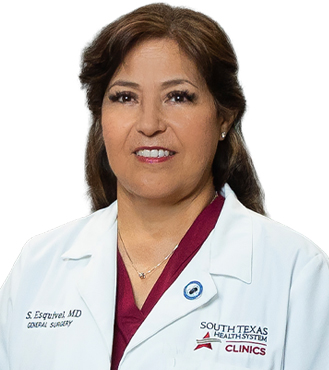
Dr. Sandra Esquivel, MD, FACS, has spent more than 30 years in surgery, building a career centered on patient care while helping introduce robotic technology at South Texas Health System (STHS) Edinburg. She began practicing in 1996, when women represented about 17% of surgeons nationwide. At the time, she recalled, “there were very few female surgeons around me,” and she believed the best way to establish herself was “simply to work hard—just as every other surgeon was expected to do.”

Surgical residency was demanding, and Dr. Esquivel said she did not expect special treatment once she entered practice. “From the start, I committed to working diligently and building a reputation for providing excellent surgical care to my patients,” she said.
Throughout her career, she has focused on delivering patient-centered care. “My priority has consistently been to listen attentively and provide the reassurance patients need,” she explained, emphasizing that compassion and clear communication are essential, particularly when sharing difficult news. Although she has occasionally encountered negative or disrespectful comments, she said she tries not to dwell on them, noting that “we can’t please everyone all the time.”
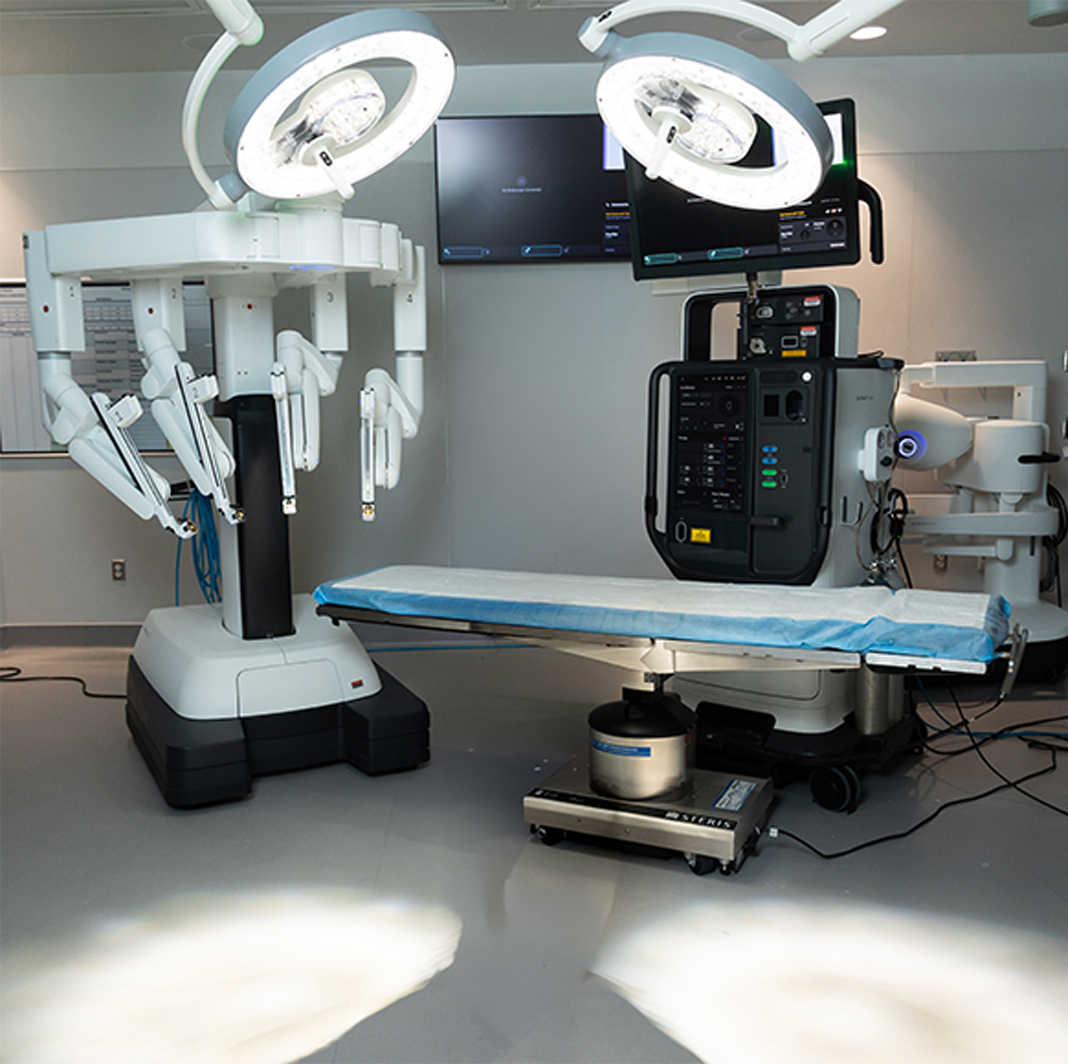
Dr. Esquivel played a key role in launching the robotic surgery program at STHS Edinburg in 2015. As she performed more minimally invasive procedures, she observed that patients recovered faster and experienced less pain. Robotic technology enhanced those benefits by allowing her to see the surgical field “in far greater detail than in an open procedure.” Greater clarity, she said, enables more precise operations that result in “less bleeding, less injury to surrounding tissue, and ultimately a smoother, quicker recovery.” She added, “If I wanted that level of care for myself or my family, how could I not offer it to my patients?”
Today, Dr. Esquivel accounts for a significant share of the hospital’s nearly 5,000 robotic surgeries and has personally performed more than 1,800. She described the program as a collective effort and said she is grateful to have worked with an operating room team “that was enthusiastic and motivated to embrace this innovative technology.”
According to Dr. Esquivel, robotic surgery has significantly improved outcomes compared to traditional methods. Complex procedures that once required large abdominal incisions can now often be completed using “four or five half-inch incisions.” Many patients, including those who arrive in the emergency room seriously ill, benefit from reduced postoperative discomfort and shorter recovery times. She also noted that elective colon surgeries performed through small incisions have produced “truly remarkable” recoveries.
Despite thousands of procedures, Dr. Esquivel said she continues to learn. “Just when I think I’ve ‘seen it all,’ a patient inevitably comes along who ‘has not read the doctor books,’” she said, adding that such moments reinforce the importance of staying alert and adaptable while relying on training and judgment.
Working in the Rio Grande Valley has brought her professional satisfaction. “When physicians advocate for their patients in a smaller community, the impact is often more meaningful,” she said, pointing to strong collaboration among physicians and hospital leadership committed to delivering high-quality care.
Dr. Esquivel hopes to inspire young physicians, particularly women, to consider surgery. Helping patients heal is “incredibly rewarding,” she said, though she acknowledged the path requires about 13 years of education and training and can be difficult to balance with family life. “I love performing surgery—it is an extraordinary field—but it comes with significant responsibilities,” she said.Reflecting on her career, Dr. Esquivel described it as “filled with profound purpose and meaning.” Being trusted by patients and colleagues, she said, has been one of her greatest honors. “In every decision, every procedure, and every conversation, I carry a deep sense
Dr. Krystha Cantu reflects on training, technology, and representation in modern surgical care
Special to Mega Doctor News
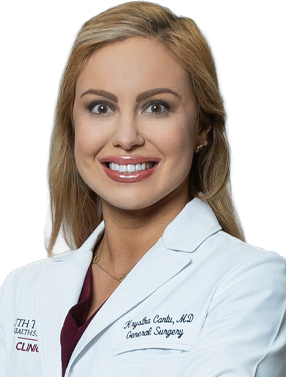
Dr. Krystha Cantu, MD, an early-career general and robotic surgeon with South Texas Health System McAllen (STHS), returned to the Rio Grande Valley to practice medicine in the community where she grew up. She describes the move as “a full circle journey of gratitude and responsibility,” shaped by witnessing local residents face “unique challenges with limited access to specialized care.” Her goal at STHS, she said, is to ensure that “future generations have the high-quality surgical options they deserve at home.”
Dr. Cantu’s medical training spans several major institutions, including Rice University, Texas A&M College of Medicine, the Mayo Clinic, and Baylor Scott & White. She said each stage contributed differently to her professional development. “At Rice, I learned to think critically,” she said. Texas A&M reinforced “a commitment to lifelong learning and interdisciplinary medicine,” while the Mayo Clinic emphasized “integrating precision and empathy.” At Baylor Scott & White, she refined her surgical skills and learned the value of “team-focused approaches to medicine.”
She chose general surgery for its broad scope, which includes both emergency and elective procedures. Robotic surgery, she said, appealed to her because of its potential to improve precision and reduce invasiveness. “What drew me most was the ability to democratize advanced care,” she said, adding that innovation can help address healthcare inequities in the Valley. Dr. Cantu has completed more than 1,000 surgical procedures, including over 250 robotic cases.
Dr. Cantu attributes much of her early experience to residency training at Baylor Scott & White Health in Dallas and John Peter Smith Hospital in Fort Worth, both Level 1 trauma centers. “We always had one robot room ready for emergency surgeries,” she said. According to Dr. Cantu, this environment strengthened her technical skills and reinforced the importance of data-driven decisions. She said robotic systems offer “unparalleled visualization, dexterity, and control,” which she has seen result in “faster patient recoveries, less postoperative pain, and improved long-term outcomes.”
At this stage of her career at STHS, Dr. Cantu said she is most excited about the future potential of robotic surgery. She pointed to advances in imaging that may allow surgeons to tailor procedures to individual anatomy. “This means we can tailor surgical approaches to individual patient anatomy,” she said, describing the opportunity to help patients return to daily life “with renewed vitality, health, and confidence.”
As a woman in a field where gender disparities remain, Dr. Cantu views visibility and mentorship as essential. Growing up in the Valley, she said, “there were very few female physicians, and I had never met a female surgeon.” That absence contributed to self-doubt. “I want to show the next generation that excellence knows no gender,” she said, adding that representation helps normalize diversity for both trainees and patients.
Dr. Cantu also emphasized patient communication, particularly for those facing surgery for the first time. She said patients often feel anxiety in the preoperative setting, and she prioritizes “clear, compassionate communication.” She added, “I always want to make sure my patients know they are in charge of all their medical and surgical decision-making.”
Lessons from her training continue to guide her practice. From the Mayo Clinic, she said, she carries the principle that “the patient always comes first.” From Baylor Scott & White, she applies a team-based mindset. “I am a single thread in the rich fabric of STHS,” she said, noting that quality care depends on collaboration across clinical and support roles.
Looking ahead, Dr. Cantu’s goals include mastering more complex robotic procedures, educating patients about robotic surgery, and mentoring young women interested in medicine. She hopes her presence in the Valley will demonstrate that “a career in medicine is attainable regardless of gender or origin.”
See related story: