
Mega Doctor News

Sudden cardiac arrest, while uncommon in children, can strike without warning and prove devastating.
Each year, more than 2,000 children lose their lives to sudden cardiac arrest in the United States, according to the Centers for Disease Control and Prevention (CDC), accounting for 3 to 5 percent of all deaths among children ages 5 to 19.
Even more tragic, it’s the leading cause of death in young athletes, where a child’s chance of survival outside a hospital remains heartbreakingly low at just 10 to 15 percent.
“These staggering numbers underscore the critical importance of rapid response and access to lifesaving equipment,” says Jason Waller, BSN, RN, CEN, CPEN, TCRN, CCEMT-P, NREMT-P, Emergency Department Clinical Supervisor, South Texas Health System (STHS) Heart. “Quick action can mean the difference between life and death, especially when children are involved.”
An Automated External Defibrillator (AED) is a compact, portable device that evaluates heart rhythm and delivers a lifesaving shock when necessary. Easy to use and highly effective, AEDs significantly improve survival outcomes.
Immediate access to an AED, particularly in high-activity settings like gyms and youth clubs, can increase survival rates by as much as 60%, according to the CDC.
But simply having an AED nearby isn’t enough; knowing how to use it can mean the difference between life and death.
“In a cardiac emergency, hesitation can be deadly,” said Waller. “When people know how to use an AED, they’re more confident stepping in right away and giving someone a real chance at survival.”
Proper training helps employees recognize sudden cardiac arrest, give CPR and use an AED—allowing them to respond faster and provide critical care with confidence until first responders take over.
“Early intervention keeps the victim alive long enough for advanced care to take over,” says Waller. “Those first few minutes of providing CPR, using an AED and staying engaged are about holding the line until emergency medical personnel can do their job.”
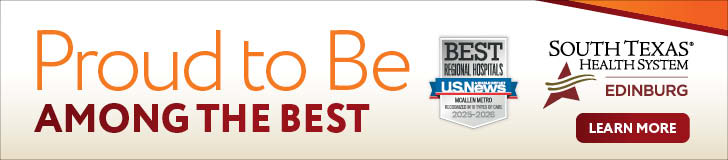
During a special press conference at the Boys & Girls Clubs of Edinburg RGV on Wednesday, April 1, 2026, STHS donated two AEDs each to the Boys & Girls Clubs of America locations serving Edinburg, Harlingen, Mission, McAllen, Pharr, San Benito and Weslaco to support the safety of children across the Rio Grande Valley.
The seven local chapters collectively serve more than 62,000 children ages 6 to 18, providing a safe, supportive environment where youth can stay active through leagues, clinics and fitness programs in sports like basketball, soccer, volleyball and flag football.
“This investment goes far beyond equipment—it demonstrates a commitment to the health, safety and wellbeing of the youth and families we serve,” says Daisy Martinez, chief executive officer of Boys & Girls Clubs of Edinburg Rio Grande Valley, Inc. “By placing two AEDs in each club, STHS is helping ensure our facilities are safe, prepared and ready to respond in an emergency.”
Following the $24,000 donation of the portable, lifesaving devices, representing a meaningful investment in the safety and wellbeing of children across the region, the STHS Education Department provided training to approximately 25 staff members from the seven clubs.
The three-hour session covered how to spot warning signs of sudden cardiac arrest, administer CPR, place AED pads correctly, follow the device’s voice prompts and coordinate with emergency services for the best possible outcome.
“This training equips youth-serving staff with the knowledge, skills and confidence to respond decisively during a cardiac emergency,” says Tom Castañeda, System Director of Marketing & Public Relations, STHS. “By preparing them to act quickly and effectively, we’re helping create safer spaces for children across the Valley every day.”
If you’re interested in learning more about AED education available through STHS, contact the STHS Education Department at (956) 388-6636.