



Senior VP of Education & Career Development at DHR Health, Addresses STC Nurse Graduates

Translate to Spanish or other 102 languages!

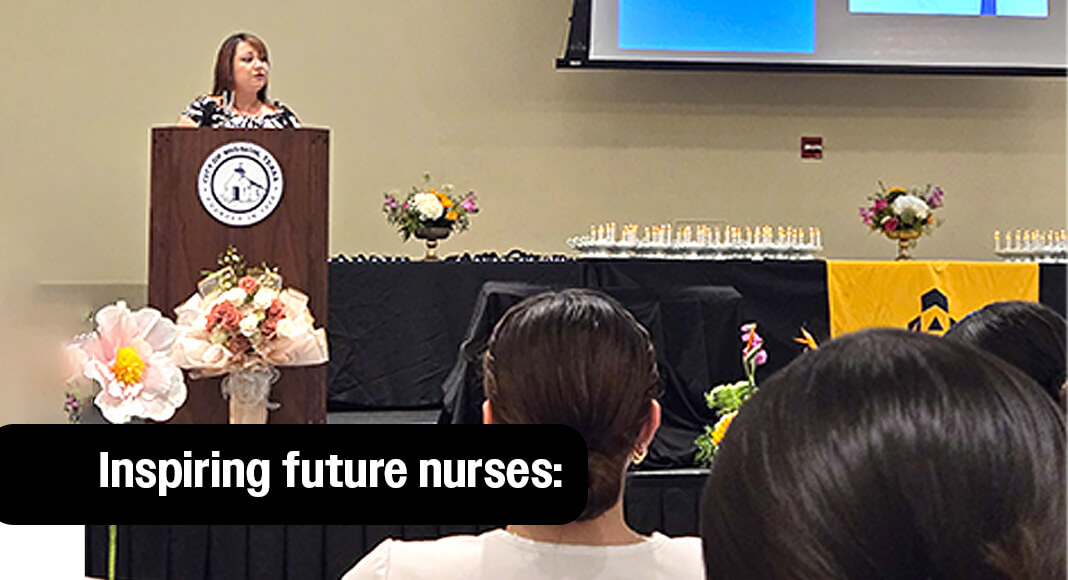
Nori Zapata Speaking to STC Nurse Graduates. Courtesy image
- Advertisement -

At STC’s nursing pinning ceremony, keynote speaker Nori Zapata, Senior Vice President of Education and Career Development at DHR Health, shared her personal journey from student to healthcare leader. She reflected on her challenges in nursing school, the support she received from Dr. Christie Candelaria, and her experience working in various nursing roles. Zapata also introduced the new Nurse Apprenticeship Program, a partnership between STC and DHR Health that allows students to earn wages while completing clinical hours and ensures job placement after graduation. She closed by emphasizing that nursing is not just a profession, but a commitment to service, resilience, and compassionate care.

- Advertisement -


- Advertisement -

- Advertisement -

More Articles

DHR Health Recertified for Advanced Hip & Knee Replacements

DHR Health has once again earned The Joint Commission's Advanced Certification in Total Hip and Total Knee Replacement, reaffirming its commitment to providing high-quality, patient-centered orthopedic care to the Rio Grande Valley.

STHS Named to Newsweek’s America’s Greatest Midsize Workplaces for Women

The American workforce is more diverse than ever, with women helping lead that transformation. 

Dysfunctional, Not Missing, Immune Cells Explain Skin Cancer Risk in Immunosuppressed Patients

Researchers at The University of Texas MD Anderson Cancer Center have discovered that immunosuppressed patients with non-melanoma skin cancer are not missing the key cancer-fighting immune cells found in immunocompetent patients, but those cells – known as macrophages – have lost the ability to communicate effectively.

New Study Reveals Real-World Safety Findings for Latest Alzheimer’s Treatment

As new Alzheimer’s drugs move from clinical trials into everyday care, families are asking whether these treatments are safe, how long patients can stay on them, and whether they truly slow the disease outside tightly controlled studies.
- Advertisement -