





Mega Doctor News
By Michael Merschel, American Heart Association News
This time of year, the great outdoors is full of wonderful things: fresh air, natural beauty and opportunities to disconnect and de-stress.
By definition, though, you won’t find a lot of supermarkets or refrigerators. So whether you’re tackling a 20-mile trail or just taking a stroll in the woods, finding a way to feed yourself requires planning – and not just because you have to carry everything you plan to eat.

“Hiking can significantly increase your calorie needs,” said Jackie Newgent, a registered dietitian nutritionist and trained chef who lives in Los Angeles. By how much depends on how tough the trail is and how hard you push yourself.
Dr. Micah Battson, an associate professor of nutrition at Metropolitan State University of Denver who has studied backpackers’ nutritional needs, said that many people will just grab some type of sports bar, “mainly for convenience purposes. But you don’t have to do that.”
Your needs will depend on how intense you plan to get, said Battson, a hiker who hits the trails around Denver with his wife and dog “multiple times a week” during the summer. He also goes on frequent backpacking trips for up to a week, including an 11-day trek in Alaska.
“For a day hike, you don’t necessarily even need to take any food if you don’t want to,” he said. “If it’s a short enough hike, you eat breakfast, go hike for a few hours, and then go eat lunch.”
For more demanding hikes, it helps to know how your body turns food into fuel.
During exercise, your body is primarily burning a combination of carbohydrates and fats for energy, Battson said. The relative amount of each depends on your activity level. “In general, the higher the intensity, the greater the amount of energy that’s coming from carbohydrates.”
Sugar is a simple carbohydrate. When you’re burning energy on a strenuous hike, calorie-rich, carbohydrate-intense foods aren’t problematic in the way they are when you’re sitting around the house, he said. “Oftentimes we say the types of foods that are good for you while you’re exercising might not be good for you if you’re living a more sedentary life.”
That shouldn’t be seen as a license to fill your fanny pack with candy bars, just like going to the gym doesn’t mean you can stop off for a box of doughnuts on the way home. If you do, “you’re offsetting some of the benefits that you’re getting from being physically active,” Battson said.
Snacks to pack for your hike
Newgent, who describes hiking as one of her favorite hobbies and used to camp as a child growing up in northeastern Ohio, recommends looking for multitasking foods that are nutrient-rich, portable and weather-resistant. Pairing carbohydrates with protein and healthy fats can provide long-lasting energy needed for both hiking and camping.
“Ultimately, you’ll want to get a balance of macro- and micronutrients for sustained energy, making sure to spread protein and fiber sources throughout each day,” she said.
Tuna pouches and crunchy roasted edamame or chickpeas are good sources of protein, she said, while whole-grain tortillas, quick-cooking oats and unsweetened dried fruits are good sources of carbohydrates.
Battson said that adding some complex carbohydrates, also known as starch and fiber, is a good idea, “because that’s going to help you maintain your blood sugar levels and fuel your muscles.” Complex carbs can be found in grains, beans, peas, lentils and, to a lesser extent, nuts and seeds, he said.
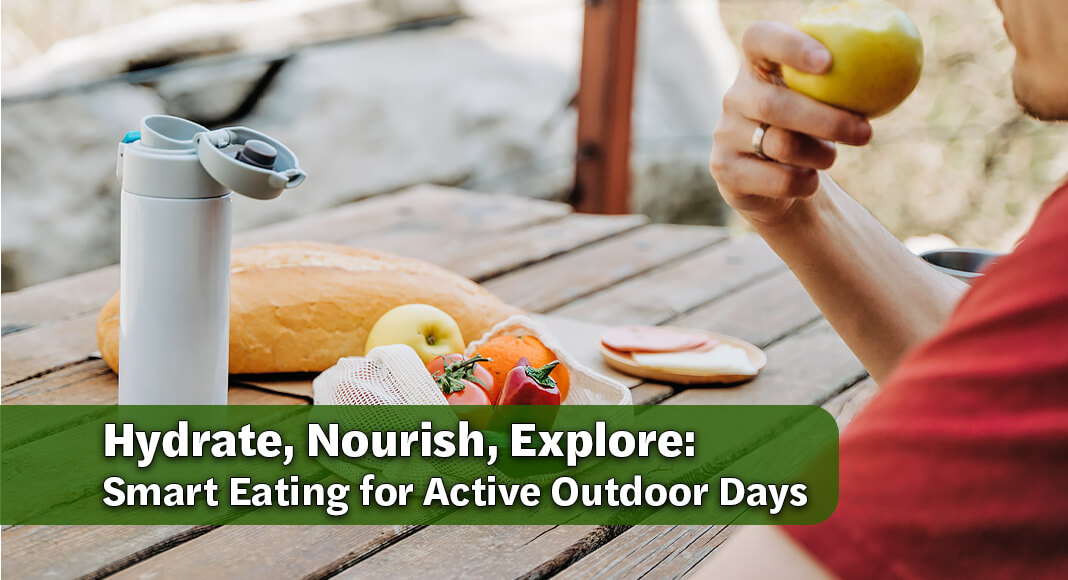
Fresh fruits like bananas, oranges or apples, also contain a mix of complex carbs and natural sugars.
Fresh fruit also can help you stay hydrated. Battson’s wife is a fan of Sumo citrus. “Those are really easy to peel compared to an orange, so that might be a little less messy while out on the trail.” (Just remember to pack out any peels, he said. They break down over time, but out on a popular path, no one wants to see them lying on the ground.)
An apple might also pair well with a little peanut butter. “You can buy those little packets from the grocery store that you just knead with your fingers to soften them up,” Battson said.
Of course, there’s also trail mix. “One that I like has cranberries, almonds and cashews,” he said, but even the versions that contain colorful candy can serve as a treat for people who are active.
Dried fruits are sometimes made with added sugar, so “choose no-sugar-added dried fruits like unsweetened tart cherries or dates for fiber and antioxidants,” Newgent said.
Battson, a fan of dried mangoes, said that if you’re being active, your body will make use of the simple sugars in such foods. Similar thinking applies to sodium and traditional hiking staples like jerky.
Most people in the U.S. get too much sodium in their diets, so choosing lower-sodium options in general can be smart, Newgent said. But on the trail, she said, jerky can provide protein and replace sodium that’s lost to sweat, especially on longer hikes.
“If you eat animal products, consider grass-fed beef or salmon jerky, which can offer more omega-3s,” she said. Plant-based jerkies, like mushroom or seitan (a wheat product), are options too, “but read the label, as they can be lower in protein than their animal-based counterparts.”
Long-distance hikers might carry expensive freeze-dried meals, which can be “totally fine,” Battson said. People building a backpacking meal from scratch might emphasize freeze-dried fruits, vegetables or beans to boost fiber.
A word about water and hydration
“Hydration is key,” Newgent said. “Hydrate in the morning, drink regularly, and consider use of electrolytes on longer hikes.”
Exactly how much you need to carry is going to depend on factors such as the weather, your speed and how steep the trail is, Battson said. In general, he said, expect to need half a liter per hour for an average hike in cool to moderate temperatures. “If you’re exerting yourself at a higher level or in really hot conditions, then you might want to up that closer to a liter per hour.”
A lot of hikers are interested in electrolytes, he said. Electrolytes – minerals such as sodium, potassium and calcium – help regulate blood pressure, blood glucose, heart rate and rhythm and the body’s water balance.
When you sweat, you lose sodium. So if you’re out doing strenuous activity for a long time and drinking large amounts of plain water, your sodium levels might dip, Battson said.
That doesn’t mean you need to add an electrolyte mix to your water, he said. A salty snack such as pretzels might already be doing the job.
But if adding in some type of drink mix encourages you to drink more water, go ahead, he said.
And remember that no matter how pretty it looks, don’t drink untreated water in the wild, Battson said. He carries a squeeze-type filter, but some people opt for chemical treatment. “Even up at those pristine lakes, streams or waterfalls, you never know what may have made its way into the water or what may have died or pooped in the water upstream.”
Keep your food safe
If you’re planning to grill, store your food carefully to prevent the growth of dangerous bacteria.
The U.S. Department of Agriculture’s Food Safety and Inspection Service suggests packing foods in the reverse order of how you plan to eat them – the first foods packed should be the last used. If you can, pack your raw meat or poultry in a separate cooler.
And leftover food is safe only if the cooler still has ice in it. Otherwise, discard it.
Newgent suggested freezing water bottles so you can use them for ice as well as drinking water. “And the No. 1 rule of thumb for food safety is to clean your hands often,” she said.
S’more advice
“Food is more than just energy,” Battson said. “It’s also a really important component of our culture and a means to celebrate and share experiences.”
So while eating chocolate and marshmallows at home year-round wouldn’t be great, “if you want to get your kids into camping, having s’mores might be a good way for them to build happy memories and get excited about going out and being active. And that might translate into them being active throughout the rest of their life.”
Nutritionally speaking, “nothing needs to be banned from your backpack,” Newgent said. “It’s about balance and context. Aim for a healthy adventure as well as a pleasurable one.”
Looking for a healthy snack to pack for your next outing? The American Heart Association’s Recipes page has a few offerings, including an almond mix, peanut butter banana protein bars, sweet and fiery roasted nuts, and Hit the Trail and date nut granola bars. The Healthy for Good newsletter at heart.org can deliver more recipes and tips for a healthier lifestyle to your inbox.

