
Mega Doctor News
By American Academy of Neurology (AAN)
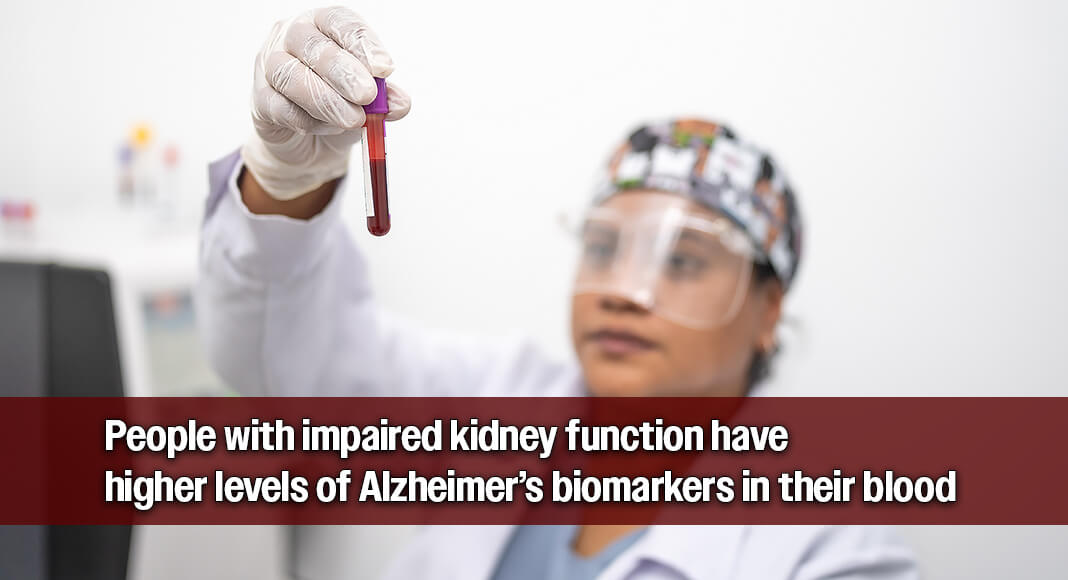
Newswise — MINNEAPOLIS — People with impaired kidney function have higher levels of Alzheimer’s biomarkers in their blood, but not an increased risk of dementia, according to a study published December 3, 2025, in Neurology®, the medical journal of the American Academy of Neurology.
The study does not prove that poor kidney function causes higher levels of Alzheimer’s biomarkers in the blood, it only shows an association.

Kidneys remove waste and toxins from the blood, which are then excreted in urine.
“Our study found that when the kidneys are not functioning properly, there may be higher levels of Alzheimer’s biomarkers in the blood,” said study author Francesca Gasparini, MD, of Karolinska Institutet in Stockholm, Sweden. “While we did not find that having reduced kidney function increased the risk of developing dementia, we did find that impaired kidney function may accelerate the onset of dementia in people who have higher levels of biomarkers. This highlights the need for doctors to consider kidney function when interpreting results of Alzheimer’s biomarkers in the blood.”
The study involved 2,279 people with an average age of 72 who did not have dementia at the start of the study. Participants had medical exams and took tests to measure cognitive skills. They had blood tests to measure kidney function and levels of Alzheimer’s disease biomarkers: tau and amyloid beta proteins, neurofilament light chain proteins and glial fibrillary acidic proteins.
Participants were followed for an average of eight years. Researchers categorized participants into two groups, 1,722 people with healthy kidneys, of whom 221 developed dementia during the study, and 557 people who had poor kidney function, of whom 141 developed dementia.
Researchers found that reduced kidney function was associated with higher levels of most examined Alzheimer’s biomarkers. After excluding people who developed dementia during the study, the results remained unchanged.
After adjusting for factors such as age, sex and APOEe4 — a genetic biomarker that indicates a strong risk of Alzheimer’s disease — having poor kidney function was not linked to an increased risk of developing dementia when compared to having good kidney function.
However, researchers did find that people with impaired kidney function and elevated levels of neurofilament light chain had nearly twice the risk of dementia compared to those with preserved kidney function and high levels of this biomarker. Gasparini noted that this may suggest that kidney health may influence the timing of dementia, but not the likelihood of developing dementia, in people with higher levels of Alzheimer’s biomarkers.
“When looking at these biomarkers in older adults, keeping an eye on kidney health may be more important than one might think,” Gasparini said. “Monitoring kidney health may help clinicians better interpret these biomarkers and identify who might be at risk for faster disease progression.”
A limitation of the study was that Alzheimer’s-related blood biomarkers were measured only once. Therefore, the study could not track how changes in kidney function might affect biomarkers over time. Also, most participants were highly educated and from urban areas in Sweden, so the results may not be the same for other populations.
Discover more about dementia at Brain & Life®, from the American Academy of Neurology. This resource offers a website, podcast, and books that connect patients, caregivers and anyone interested in brain health with the most trusted information, straight from the world’s leading experts in brain health. Follow Brain & Life® on Facebook, X, and Instagram.
The American Academy of Neurology is the leading voice in brain health. As the world’s largest association of neurologists and neuroscience professionals with more than 40,000 members, the AAN provides access to the latest news, science and research affecting neurology for patients, caregivers, physicians and professionals alike. The AAN’s mission is to enhance member career fulfillment and promote brain health for all. A neurologist is a doctor who specializes in the diagnosis, care and treatment of brain, spinal cord and nervous system diseases such as Alzheimer’s disease, stroke, concussion, epilepsy, Parkinson’s disease, multiple sclerosis, headache and migraine.
Explore the latest in neurological disease and brain health, from the minds at the AAN at AAN.com or find us on Facebook, X, Instagram, LinkedIn, and YouTube.