








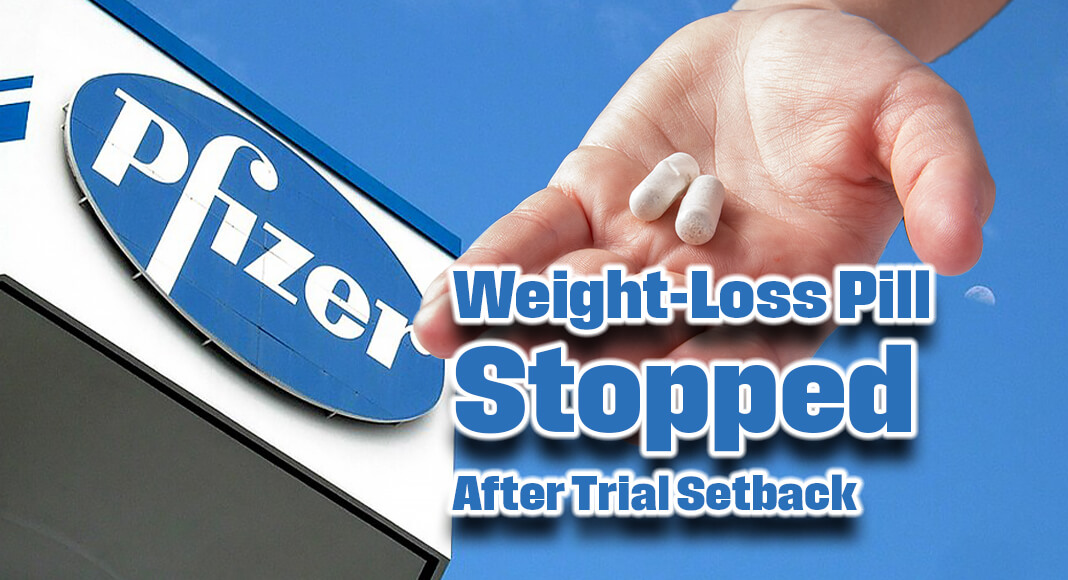
Pfizer Halts Development of Oral Obesity Drug Danuglipron After Safety Review

Weight-Loss Pill Stopped After Trial Setback

Translate to Spanish or other 102 languages!

Pfizer Inc. announced today that it will discontinue the development of danuglipron (PF-06882961), an oral GLP-1 receptor agonist under investigation for chronic weight management. The decision follows a comprehensive review of clinical trial data, including a case of potential drug-induced liver injury. Image; Pfizer image source: János Korom Dr. >17 Million views from Wien, Austria, CC BY-SA 2.0 https://creativecommons.org/licenses/by-sa/2.0, via Wikimedia Commons. medication for illustration purposes
- Advertisement -

Mega Doctor News

NEW YORK — Pfizer Inc. announced today that it will discontinue the development of danuglipron (PF-06882961), an oral GLP-1 receptor agonist under investigation for chronic weight management. The decision follows a comprehensive review of clinical trial data, including a case of potential drug-induced liver injury.

The company’s dose-optimization studies (NCT06567327 and NCT06568731) had achieved key pharmacokinetic goals and identified a once-daily formulation with the potential for competitive efficacy and tolerability in Phase 3 trials. However, among more than 1,400 participants, one individual experienced asymptomatic liver enzyme elevations consistent with potential liver injury, which resolved after discontinuation of the drug.


- Advertisement -
Dr. Chris Boshoff. Image: LinkedIN

While the overall safety profile was in line with other approved drugs in the GLP-1 class, Pfizer opted to stop development after evaluating the totality of data and receiving input from regulatory authorities.

“Cardiovascular and metabolic diseases, including obesity, remain important areas of unmet medical need,” said Dr. Chris Boshoff, Chief Scientific Officer and President of Research and Development at Pfizer. “We plan to continue advancing a pipeline of investigational treatments, including our oral GIPR antagonist candidate and other earlier-stage obesity programs.”

Pfizer intends to present findings from the Danuglipron clinical program at a scientific forum or submit them for publication in a peer-reviewed journal. The move reflects Pfizer’s continued commitment to innovation in the obesity and metabolic health space despite challenges in drug development. Source: Pfizer.com


- Advertisement -
- Advertisement -

- Advertisement -

More Articles

What You Need to Know About Aortic Dissection

An aortic dissection – a tear in the inner layer of the main artery – is a life-threatening emergency. It can happen with little warning, as apparently was the case with U.S. Sen. Lindsey Graham. His sudden death at age 71 was preliminarily attributed to an aortic dissection stemming from plaque buildup in his arteries.

DHR Health’s Free Seminar on Breakthrough Treatment for Stroke Survivors, Sept. 19th

DHR Health’s Neuroscience Institute will host a free seminar for stroke survivors who want improved hand and arm movement as many stroke survivors experience impaired mobility and loss of function in the arm which can significantly affect their ability to   perform everyday activities.

DHR Health Transplant Institute Bringing New Era to South Texas

Something significant is happening in medicine in the Rio Grande Valley. A level of specialized care that once routinely required Valley patients to travel hundreds of miles is now being delivered close to home — and earning recognition among leading kidney transplant programs in Texas and across the nation. DHR Health Transplant Institute has reached No. 2 in Texas and No. 16 nationally, marking an important moment for advanced medicine in South Texas.

DHR Health Transplant Success Signals a New Era for Advanced Medicine in the Rio Grande Valley

The significance of DHR Health Transplant Institute’s latest recognition extends far beyond a hospital ranking. It raises a larger question for South Texas: Has the Rio Grande Valley reached the point where patients can look to the region not only for local healthcare, but for nationally competitive transplant medicine?
- Advertisement -
