Mega Doctor News

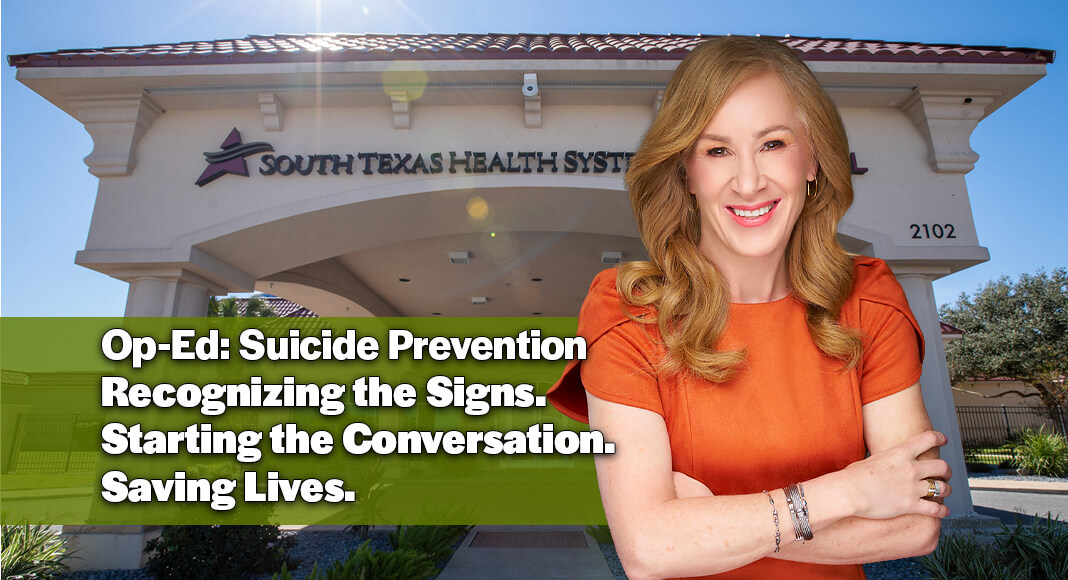
By Brenda Ivory, Chief Executive Officer, South Texas Health System Behavioral
EDINBURG, Texas – September is Suicide Prevention Awareness Month, a time to raise awareness, spread hope, and spark meaningful action around one of the most urgent mental health issues of our time.
As a leader of a behavioral health organization, I see every day that reaching someone in a moment of crisis can be the beginning of a different path forward. But suicide prevention needs to happen not only with trained healthcare providers inside a hospital, outpatient center or during a virtual appointment. It starts in our homes, schools, workplaces and communities with resources, compassion and a willingness to ask how someone is really doing – and listen.

The need is urgent.
According to the Centers for Disease Control and Prevention (CDC), suicide was responsible for 48,824 deaths in 2024, the highest annual total on record. The number of people experiencing suicidal thoughts is far greater: an estimated 14.3 million U.S. adults seriously considered suicide that year, while 2.2 million attempted suicide. The CDC also notes that nearly half of people who die by suicide have a current diagnosed mental health condition.
These numbers represent people – not statistics. They are parents, children, spouses, friends, colleagues and neighbors.
Prevention begins with recognizing when someone may be struggling. Changes in behavior, withdrawing from others, increased substance use, extreme mood changes, feelings of hopelessness or talking about being a burden can all be warning signs. We don’t need to be mental health experts to notice a change or to say, “I’m concerned about you. How can I help?”
Just as importantly, we need to make it easier to get help.
Too often, people wait until a crisis becomes overwhelming before seeking care. Behavioral healthcare offers a range of options – from outpatient therapy and intensive programs to inpatient care for those who need a higher level of support. The goal is not simply to respond to a crisis, but to connect people with the appropriate care, support and resources before a crisis occurs.
As a behavioral healthcare provider here in the Rio Grande Valley, our team at South Texas Health System (STHS) Behavioral cares for thousands of patients each year. We have the privilege – and the responsibility – of helping people and families navigate some of the most difficult moments of their lives.
But no healthcare system can do this alone.
Suicide prevention is a community responsibility. It means checking in on the person who seems different lately. It means taking concerns seriously rather than dismissing them. It means reducing the stigma that can make asking for help feel like a sign of weakness. And it means ensuring people know that support is available and recovery is possible.
If you or someone you know is struggling, call or text 988 to connect with the National Suicide Prevention Lifeline, available 24/7 for confidential support. Other resources include the Veterans Crisis Line for Military Veterans (call 988, press 1) and the Trevor Lifeline, the only national 24/7 lifeline for LGBTQ youth, at 1-866-488-7386.
This month, let’s do more than raise awareness. Let’s start conversations. Let’s listen. Let’s connect people to support and care. Let’s provide hope.
Because sometimes, one conversation can be the moment someone realizes they don’t have to face what they’re going through alone.
Sincerely,
Brenda Ivory
Chief Executive Officer
South Texas Health System Behavioral